



BI Strengthens Cross-Border Financial Transaction Efficiency with China
- 11 Mar 2026 16:53 WIB
- Voice of Indonesia
RRI.CO.ID, Changsha - Bank Indonesia (BI) is promoting cross-border financial transaction efficiency through the Local Currency Transaction (LCT) framework in China. The initiative aims to strengthen economic cooperation and support companies expanding into global markets.
Head of BI’s Representative Office in Beijing, Yulian Wihantoro, said an efficient transaction system is essential for companies expanding internationally.
“When companies expand internationally, and Chinese companies are known to have initiatives to expand globally, one important factor that is sometimes forgotten is cross-border financial transaction efficiency,” Yulian said at the Indonesia-China Business Dialogue organized by the Indonesian Embassy in Beijing and the Indonesia Investment Promotion Center (IIPC) Beijing in Changsha, Hunan province, on Wednesday, March 11, 2026, as quoted by Antara.
Yulian explained that an efficient financial system enables businesses to reduce costs, manage risks, and improve operational effectiveness. He emphasized that financial sector collaboration between Indonesia and China is key to supporting trade and investment activities.
In May 2025, BI and the People’s Bank of China (PBOC) signed a framework for bilateral transactions using local currencies. The scheme allows direct settlement of trade and investment in rupiah and renminbi (RMB) without involving a third-party currency.
For businesses, the mechanism reduces transaction costs and accelerates payment settlement. The one-hour time difference between Indonesia and China also helps streamline cross-border transactions.
“This allows companies to focus more on expanding their business, operations, and partnerships,” Yulian said.
He added that use of the LCT framework continues to grow, with more companies participating and transaction values increasing significantly. China currently accounts for a large portion of LCT transactions beyond the ASEAN region.
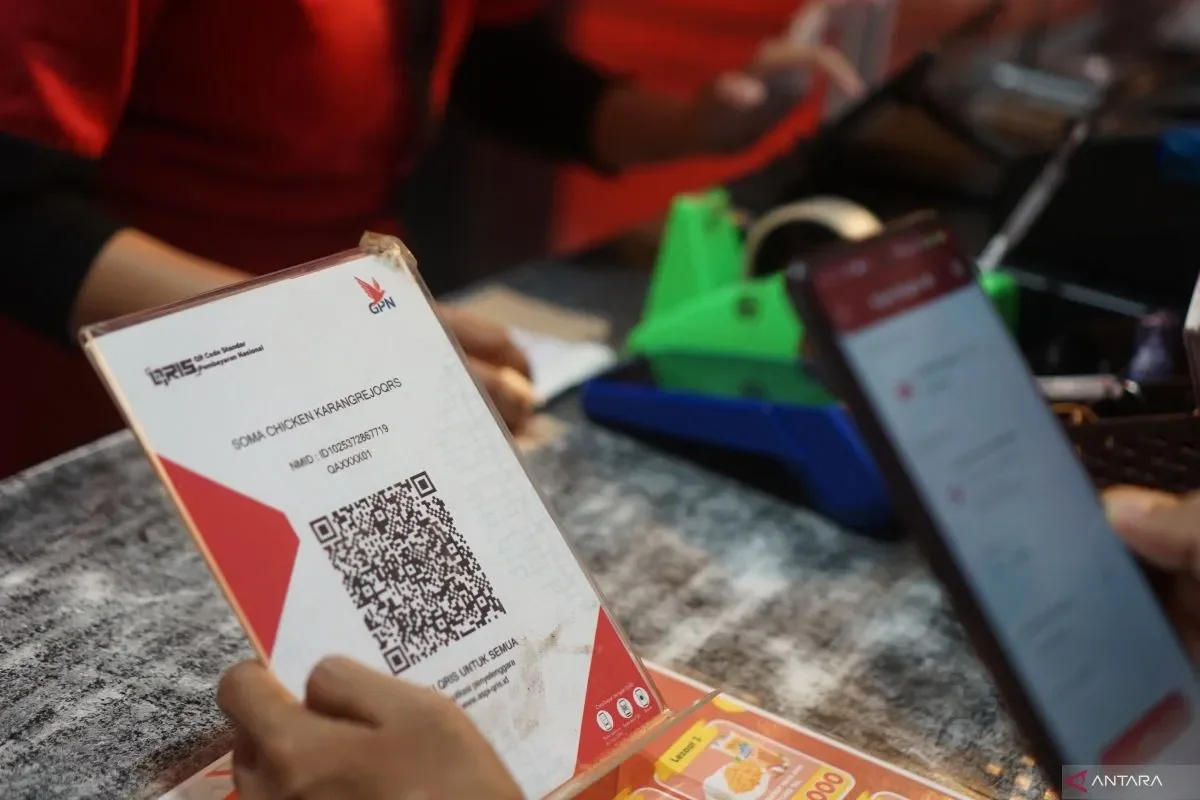
Both countries are also developing cross-border QR-based digital payment connectivity. The system is designed to facilitate payments for tourists, consumers, and businesses through domestic applications, with integration into Alipay planned for May 2026.
On the same occasion, Vice President of CNGR Indonesia, Chen Hailei, said Indonesia has been one of the company’s main targets for global expansion since the beginning. “In 2011, we came to Jakarta, and since then, we have started our entire investment in Indonesia,” Chen said.
He explained that the company’s operations in Indonesia have grown into an industrial base covering production, planning, and industrial estate development. CNGR has established new entities, introduced technology, created jobs, and relocated part of its production capacity to Indonesia.
“Even though our industrial team is now huge, many of these achievements were actually accomplished in a relatively short period of time, around five years,” he said.
Chen said facilities in Indonesia produce components for the electric vehicle (EV) battery industry chain, including batteries and ternary materials, all manufactured according to global industry standards.
He noted that Indonesia’s raw materials are more diverse than those in China, requiring innovations in production processes. The company has developed second-generation technology to adapt its industrial processes to these conditions.
According to Chen, Chinese companies investing in Indonesia need to prepare a globalization strategy, integrate their industrial chains, and anticipate local challenges.
“Based on our own internal calculations, the initial capital expenditure in Indonesia is currently about 25–30 percent higher than in China. That’s for capital expenditure (CAPEX), but on the operating expenditure (OPEX) side, it’s much lower,” he said.
Chen added that investment costs in Indonesia have declined in recent years, with project cost comparisons between China and Indonesia falling by nearly 30 percent from 2021 to 2025.
He reminded investors to understand Indonesia’s political and regulatory systems before doing business, noting significant differences with China.
“The political structure and regulatory mechanisms are also different from China. In China, the government may be more prominent as a supervisory body, while in Indonesia, the functions of service and supervision run more simultaneously,” Chen said. ***
News Recomendation
Loading latest news.....