



Industry Minister Ensures Textile and Footwear Supply for Ramadan
- 10 Mar 2026 12:35 WIB
- Voice of Indonesia
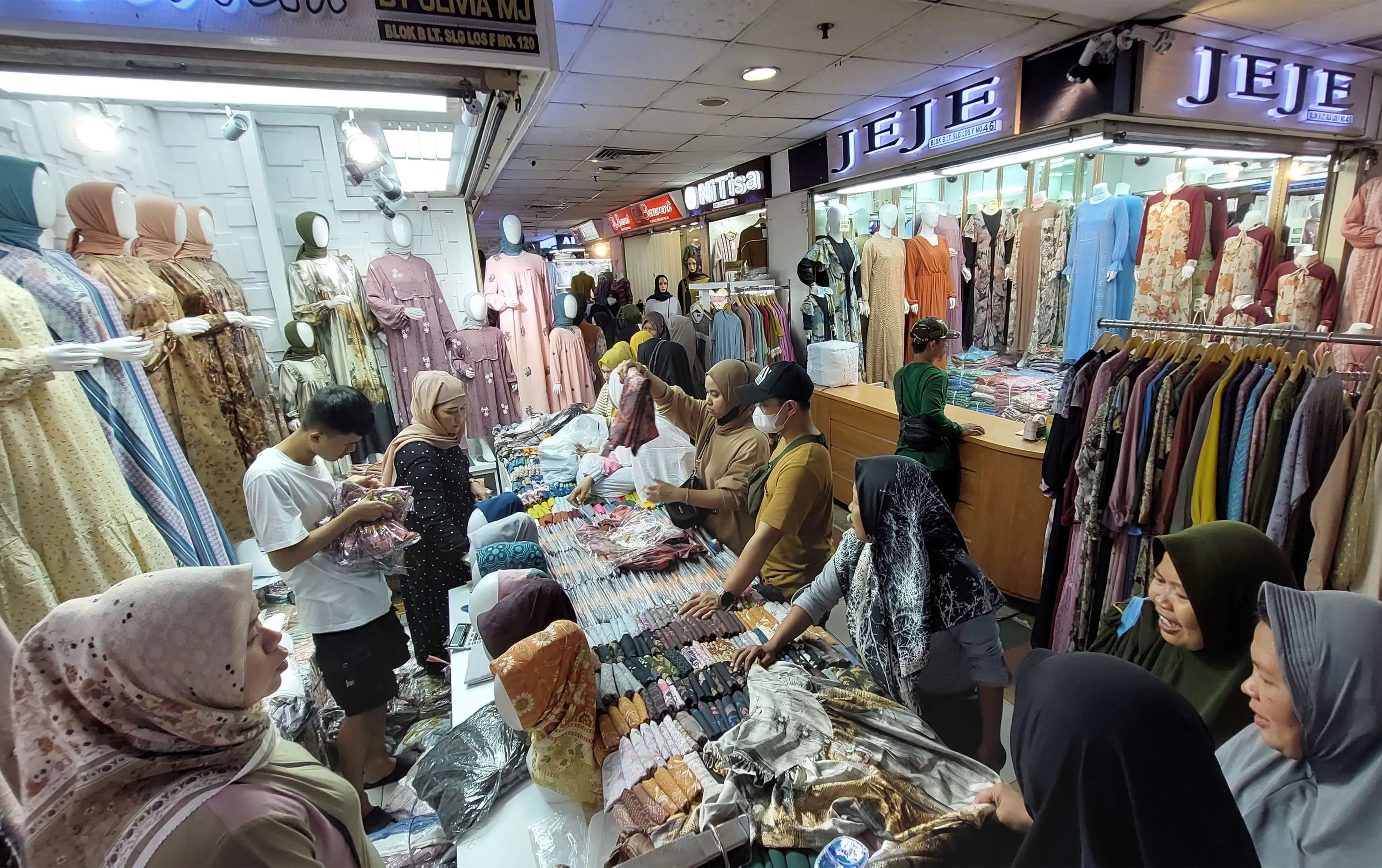
RRI.CO.ID, Jakarta - The government has ensured that the supply of clothing and footwear products will remain secure ahead of increased public consumption during Ramadan and Eid al-Fitr 1447 Hijri.
This readiness is supported by the production capacity of the textile and textile products (TPT) industry and the national footwear industry, which are considered sufficient to meet the surge in demand.
Industry Minister Agus Gumiwang Kartasasmita said the national textile and footwear sector is currently maintaining stable production. Based on coordination with business players and industry associations, production capacity is deemed sufficient to meet domestic market demand, which routinely rises during the Ramadan and Eid al-Fitr periods.
“Every year, the momentum of Ramadan and Eid al-Fitr is accompanied by increased public consumption of textile and footwear products. Based on our coordination with business players and industry associations, national production capacity is currently optimal and ready to meet this demand,” Agus said in Jakarta on Tuesday, March 10, 2026, as reported on the ministry’s official website.
The textile and footwear industry is a labor-intensive manufacturing sector thatcontributes significantly to the national economy. In 2025, the industry recorded gross domestic product (GDP) growth of 3.55 percent (C-to-C), contributing 0.97 percent to national GDP.
The Ministry of Industry's Director of the Textile, Leather, and Footwear Industry, Rizky Aditya Wijaya, explained that the sector also plays a major role in absorbing labor. By August 2025, the workforce in this sector stood at approximately 3.96 million, up from 3.76 million in February 2025.
According to Rizky, the ministry continues to implement strategic measures to ensure the industry’s readiness to face rising demand. These include monitoring production capacity, strengthening raw material supplies, and coordinating distribution and logistics. Coordination with producers of raw materials for fiber, yarn, fabric, and footwear is also being reinforced to maintain smooth supply and stable prices.
Supervision of illegal imports of used clothing has been tightened, as such practices are considered harmful to the domestic industry, particularly small and medium-sized businesses.
“We continue to strengthen supervision of the circulation of illegally imported used clothing. This step is crucial to maintaining the sustainability of the national textile industry and providing greater space for domestic products to develop in the domestic market,” Rizky said.
Reports from industry players under the Indonesian Textile Association and the Indonesian Footwear Association indicate that production in several product segments has increased since early 2026.
The rise is particularly evident in Muslim fashion, sarongs, children’s clothing, casual shoes, and sandals, which are essential needs ahead of Eid al-Fitr. The momentum of Ramadan and Eid also encourages additional labor to meet increased production orders.
Looking ahead, the Ministry of Industry reaffirmed its commitment to strengthening the competitiveness of the national industry through productivity improvements, technological transformation, the implementation of Industry 4.0, and the expansion of the domestic market.
The government also encourages industry players to utilize digital platforms to broaden marketing and enhance the image of domestic products.
Rizky expressed confidence that the national textile and footwear industry can maximize the momentum of Ramadan and Eid al-Fitr, not only to meet community needs but also to strengthen industry performance and support national economic growth. ***
News Recomendation
Loading latest news.....