Indonesia Simplifies TKDN Certification for Small Industries

  • 02 Mar 2026 13:11 WIB
  •  Voice of Indonesia

RRI.CO.ID, Jakarta - The Ministry of Industry has reformed its Domestic Component Level (TKDN) policy by introducing a system that is more transparent, accountable, simple, and efficient, aimed at strengthening national industrial competitiveness and promoting the use of locally made products.

The reform is formalized under Minister of Industry Regulation No. 35 of 2025 on the Provisions and Procedures for TKDN Certification and Company Benefit Weight (BMP).

In addition to the certification scheme through Independent Verification Agencies (LVI), the government now provides facilities for small industrial players to obtain TKDN certificates through a self-declare scheme. This mechanism is accessible free of charge via the National Industrial Information System (SIINas).

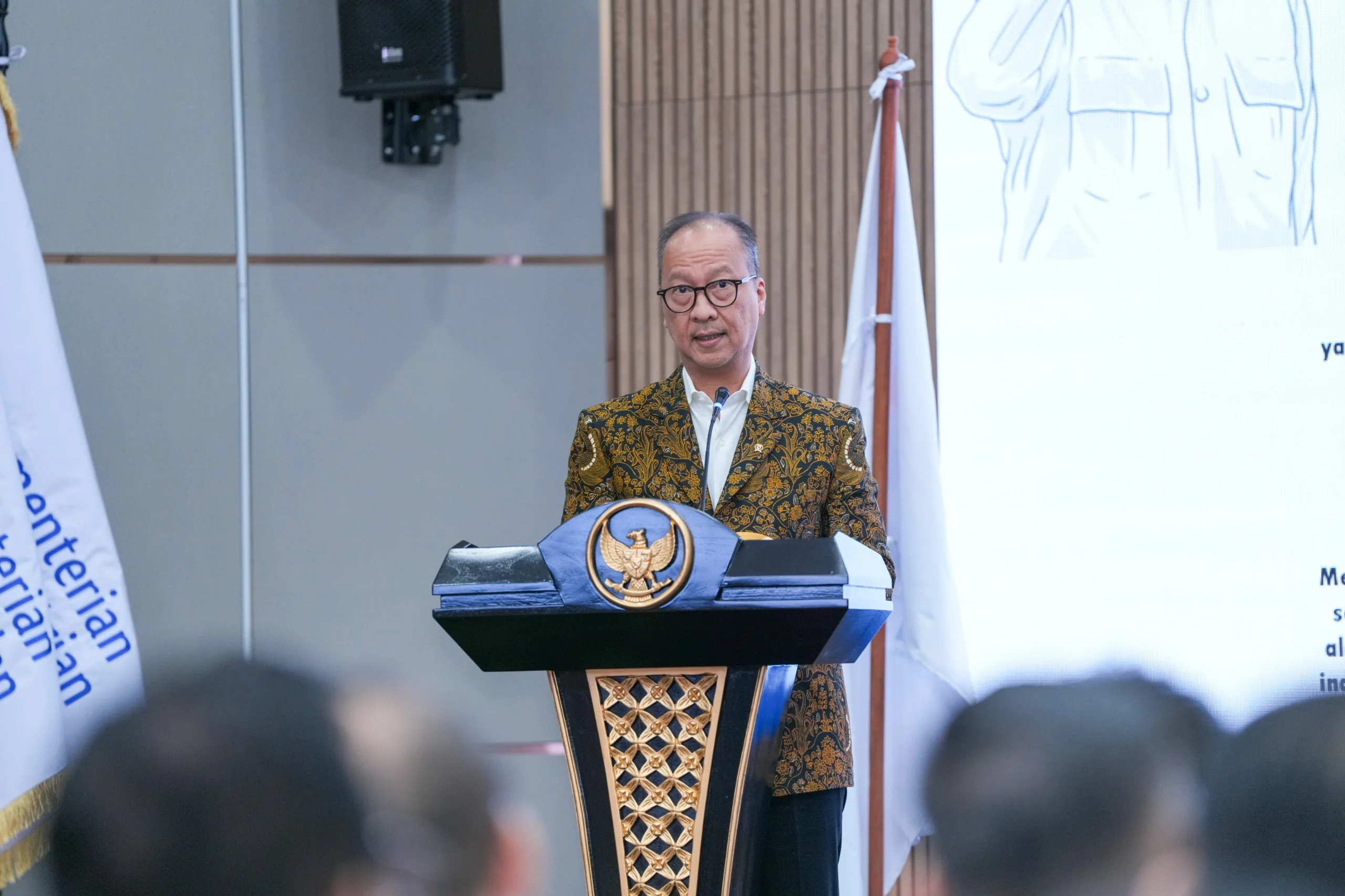
“The simplification of calculations and special treatment for small industries through this self-declare mechanism is intended to enhance their capabilities and boost their confidence to compete in larger markets. However, the policy reform remains subject to oversight through verification of industrial data accuracy before submitting TKDN applications,” Minister of Industry, Agus Gumiwang Kartasasmita, stated in Jakarta on Monday, 2 March 2026.

Agus emphasized that verifying the conformity and accuracy of industrial data is crucial to prevent misuse of the self-declare TKDN application process. “The self-declare TKDN certification offers small industries a faster certification process and no certification fees, with certificates valid for five years,” he stated.

To ensure accountability, the Ministry requires validation of small industrial business actors through SIINas before they can apply for self-declare TKDN certification. This is regulated under Director General of Small, Medium and Miscellaneous Industries Regulation No. 261 of 2025 on Technical Guidelines for Validation of Small Industrial Business Actors in Calculating Domestic Component Levels of Goods through Self-Declaration.

“The validation process must be completed before certification submission, ensuring that only verified small industries can apply for self-declare TKDN certification. This will enable certified small industries to participate more broadly in government procurement of goods and services,” the Minister explained.

Under the regulation, eligible applicants must be registered in SIINas, have a maximum business capital of Rp5 billion (excluding land and buildings), operate under industrial business classification (KBLI) codes in accordance with prevailing regulations, and have submitted industrial data through SIINas.

Director General of Small, Medium and Miscellaneous Industries (IKMA) Reni Yanita explained that applicants seeking validation approval must first complete their company data and submit the latest quarterly company report via SIINas. They must also upload video evidence of their production process and business location, including geographic tagging.

“After submission, the IKMA Validation Team will examine the conformity of company data and videos within a maximum of ten days from the application date. The team may also conduct on-site or virtual inspections,” Reni stated.

As of February 22, 2026, a total of 121 companies have been validated as Small Industries. Only these validated companies are eligible to apply for self-declare TKDN certification.

Furthermore, the Directorate General of IKMA has stipulated detailed main components of goods in the small and medium industry (IKM) sector for TKDN value calculations, both for self-declare and Independent Verification Agency schemes, under Director General Regulation No. 263 of 2025.

The regulation defines main components as essential parts or elements that shape, determine, and influence the function, quality, and characteristics of a product.

Annex 1 lists types of goods and detailed main components applicable for TKDN calculation by small and medium industries in sectors such as food, furniture and building materials, chemicals, textiles and handicrafts, as well as metals, machinery, electronics, and transportation equipment. Annex 2 applies to both small-medium industries and large industries in the miscellaneous sector.

Reni further noted that the weighting for self-declare TKDN is identical to that of LVI certification: 75 percent direct materials (including main components), 10 percent direct labor, and 15 percent factory overhead.

“The key principle is that as long as an industrial company invests and produces in Indonesia, owns its own factory and production equipment domestically, and employs Indonesian workers wholly or partially, achieving a minimum TKDN value of 25 percent is feasible,” she concluded.


google-preference

News Recomendation

Latest News

Loading latest news.....