



Indonesia Accelerates Palm Oil Downstreaming Strategy
- 26 Feb 2026 11:07 WIB
- Voice of Indonesia
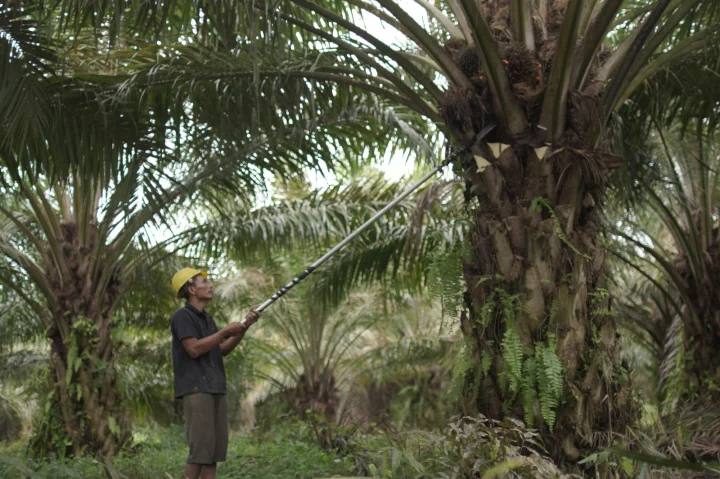
RRI.CO.ID, Jakarta - The Ministry of Agriculture is accelerating palm oil downstreaming (hilirisasi) to increase domestic value-added and strengthen Indonesia’s position in the global market.
With the highest productivity among vegetable oils, efficient land use, and significant contribution to foreign exchange, palm oil is often referred to as a “miracle crop” and remains a cornerstone of the national economy.
Minister of Agriculture, Andi Amran Sulaiman, has repeatedly emphasized that palm oil is one of Indonesia’s major strengths. “Palm oil is one of Indonesia’s great strengths. Its productivity is high, it is efficient in land use, and it can drive the people’s economy from villages to large industries. This is what makes palm oil worthy of being called a miracle crop,” Minister Amran said, as quoted on the ministry’s official website on Thursday, February 26, 2026.
According to statistics from the Directorate General of Plantations, Indonesia’s palm oil acreage reached 16.83 million hectares in 2024 and 2025.
National crude palm oil (CPO) production stood at 45.44 million tons in 2024, with anaverage productivity of 3.5 tons per hectare. In 2025, production rose to 46.55 million tons, with productivity increasing to 3.6 tons per hectare.
Riau remained the largest contributor in 2025 with 9.46 million tons, followed by Central Kalimantan with 7.59 million tons. West Kalimantan produced 4.94 million tons, while East Kalimantan added 4.29 million tons.
Palm oil’s role in trade is equally significant. In 2024, exports reached 32.34 million tons valued at USD 22.85 billion. In 2025, export volumes rose to 36.37 million tons, generating USD 28.50 billion in foreign exchange.
Amran said that the current policy is not only focused on upstream production but also on strengthening downstream activities so that value-added is realized domestically. Development of derivative products, including processed foods, oleochemicals, and bioenergy such as biodiesel, is considered key to expanding employment and reinforcing energy security.
Acting Director General of Plantations Abdul Roni Angkat highlighted palm oil’s superior productivity compared to other vegetable oils. He said downstreaming is essential to ensure that palm oil is processed into high-value-added products, allowing economic benefits to be felt more widely by planters, businesses, and communities. “Downstreaming is an important strategy so that palm oil is not only exported in the form of raw materials but processed into high-value-added products. That way, the economic benefits can be felt more widely by planters, business actors, and the community,” Roni explained.
He also underlined the importance of strengthening sustainability certifications and accelerating the Smallholder Palm Oil Replanting (PSR) program to maintain productivity. These measures aim to enhance Indonesia’s competitiveness in global markets while addressing environmental challenges.
With integrated strategies from upstream to downstream, the ministry expects palm oil to further consolidate its position as a strategic national commodity and a driver of sustainable, equitable industrialization. ***
News Recomendation
Loading latest news.....