



Indonesia Pushes for National Industrial Acceleration in 2026
- 13 Feb 2026 23:47 WIB
- Voice of Indonesia
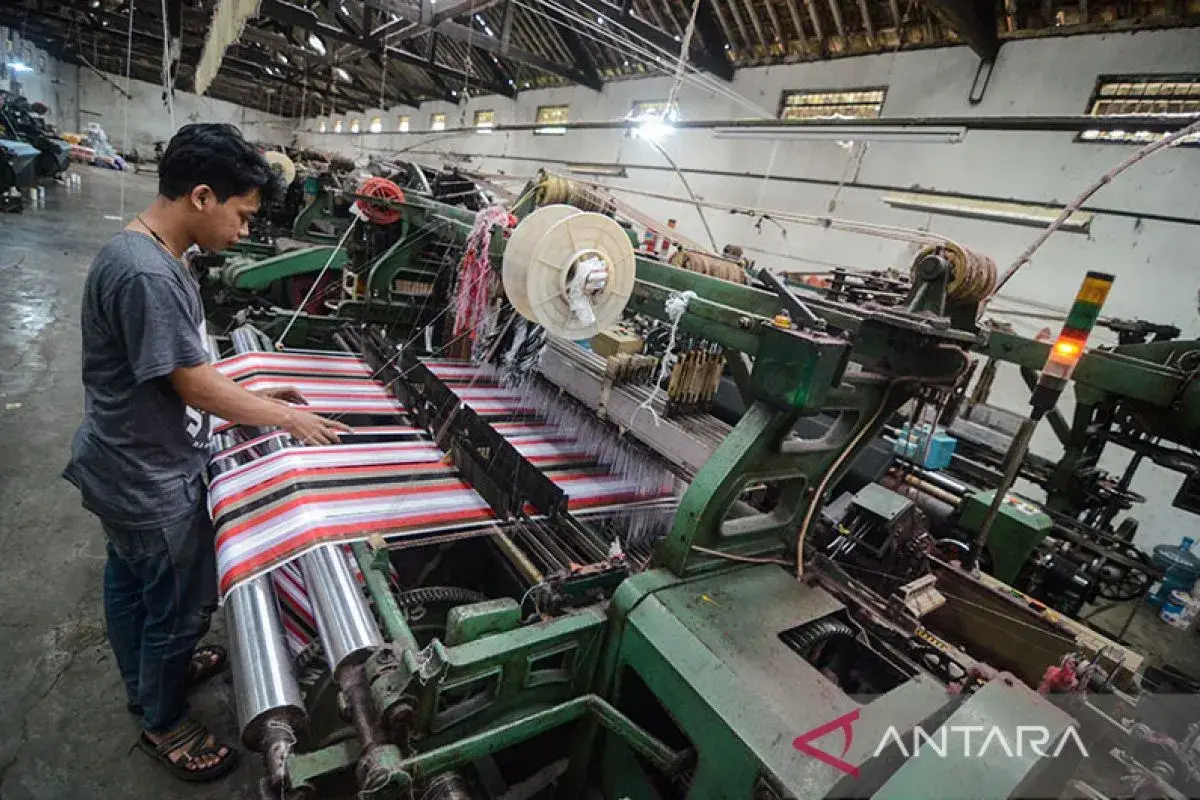
RRI.CO.ID, Jakarta - The Indonesian government has designated 2026 as a crucial phase for accelerating national industrial transformation. Industrial performance targets, economic growth, and strategic independence have been raised to ensure that all programs are oriented towards measurable results.
Indonesian Minister of Industry, Agus Gumiwang Kartasasmita, has urged all ministry officials to move faster with clear indicators, concrete action plans, and strict supervision.
“2026 is a year of problem-solving, target-setting, and also proving that the Ministry can be the main driver of national economic transformation,” said Minister Agus at the Ministry’s Working Meeting in Jakarta on Friday, February 13, 2026, as quoted by Antara.
Minister Agus emphasized that every priority program must have specific outputs, measurable milestones, and clear accountability. According to him, this approach is necessary so that acceleration does not stop at the conceptual level.
The agricultural sector is the primary focus, with downstreaming strengthened to support food and energy security. For palm oil commodities, the Ministry will develop a traceability system, a cluster-based industry readiness map, a domestic supply risk map, and a monthly dashboard to monitor biodiesel feedstock and crude palm oil (CPO) prices.
For non-palm oil commodities, the government aims to identify critical raw materials and measurable import-substitution projects. At least three agro-downstream clusters across sub-sectors will be strengthened and integrated.
In the chemical, pharmaceutical, and textile (IKFT) sector, acceleration focuses on import controls, job creation, and energy efficiency improvement. The textile and textile product industries will have a domestic market protection “war room” and a machine modernization program with financing schemes and productivity targets.
Upstream petrochemical projects are designated as a strategic priority to reduce the deficit. The pharmaceutical sector is required to compile a list of priority drug raw materials and a roadmap for import substitution that is actually implemented.
The transformation also targets the metals, machinery, transportation equipment, and electronics (ILMATE) sector. The government aims to shift the automotive, semiconductor, and domestic electronics industries to move from a consumption-based market to a national production and technology base. ***
News Recomendation
Loading latest news.....