



Indonesia Targets Shipbuilding Overhaul to Spearhead Logistics Revolution
- 11 Feb 2026 08:19 WIB
- Voice of Indonesia
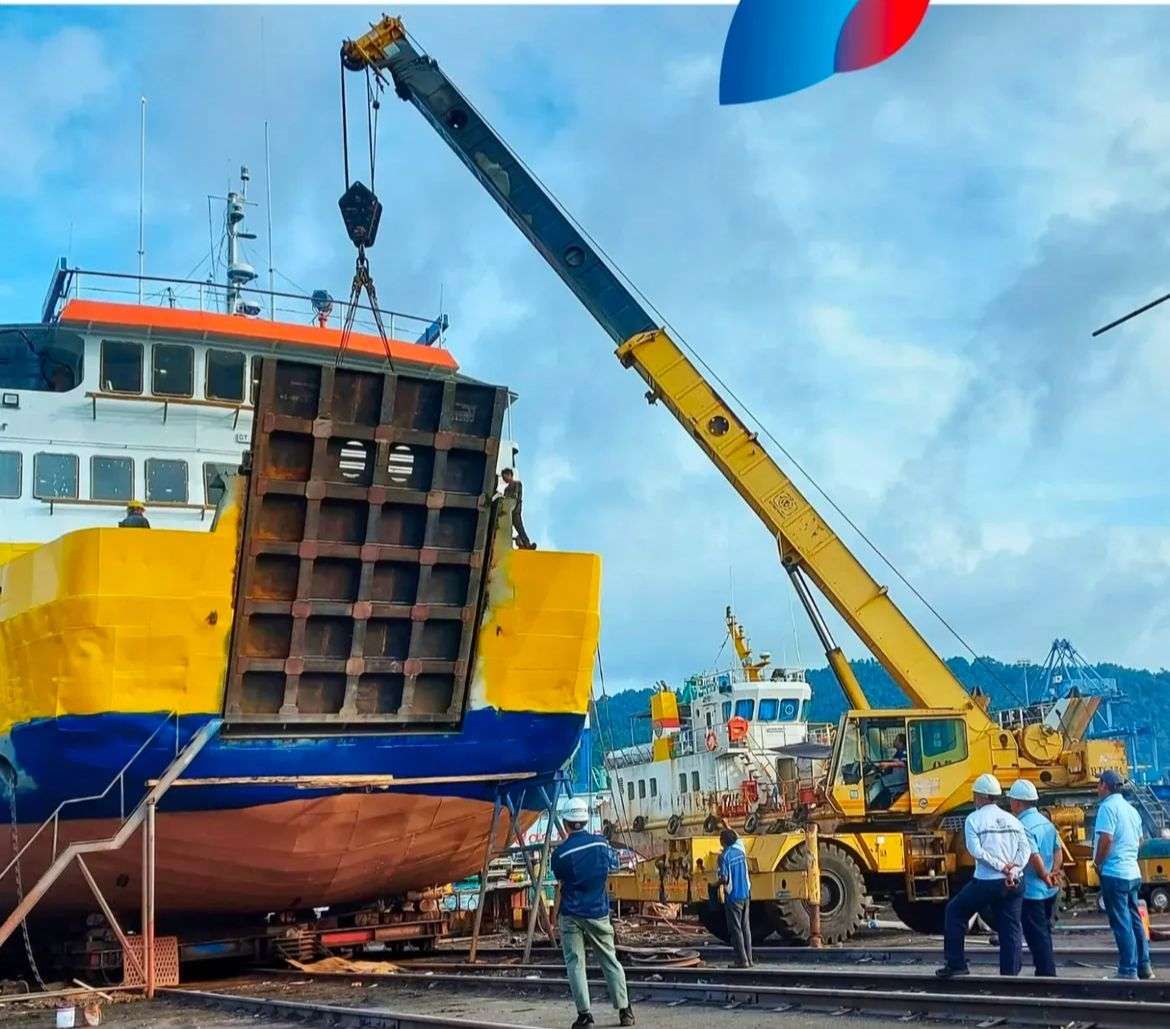
RRI.CO.ID, Jakarta - The Indonesian Ministry of Industry has unveiled a comprehensive plan to fortify the domestic shipbuilding ecosystem.
This initiative aims to transform Indonesia’s fragmented logistics network into a seamless distribution engine, positioning the maritime industry as the primary catalyst for sustainable manufacturing growth and national food security.
The urgency of this transformation was underscored by Minister of Industry, Agus Gumiwang Kartasasmita, during a high-level discussion in Jakarta on Tuesday, February 10, 2026.
Highlighting the sector's renewed vigor, the Minister revealed that the processing industry surged by 5.30 percent in 2025, outpacing the national economic growth of 5.11 percent for the first time in over a decade.
This resurgence has placed the shipbuilding sector at the heart of the government’s long-term economic roadmap.
“The shipbuilding industry has a broad multiplier effect because it involves various components in the industrial supply chain, such as raw materials, components, technology, funding, human resources, infrastructure, to logistics services," Minister Agus stated. "Therefore, its development is a strategic necessity for strengthening the national industrial structure," Minister Agus said, as quoted on the Industry Ministry’s official website.
With 342 shipyards sprawling across 29 provinces, Indonesia possesses the physical infrastructure to build diverse, large-capacity vessels. However, the industry currently faces low utilization rates and a heavy reliance on imported materials.
To combat this, the government is leveraging new regulatory frameworks, including Presidential Regulation 46/2025 and Ministerial Regulation 35/2025, to enforce Domestic Component Level (TKDN) standards for state-funded vessel procurement.
Addressing the structural hurdles, the Minister noted that the challenge lies not in capability, but in consistency.
“National shipyard capacity is actually quite adequate, but utilization is still low due to limited demand for sustainable new ship construction. Therefore, government policy must be able to create sustainable demand,” he explained.
To stimulate this demand, the Ministry is rolling out a suite of incentives, including low-interest financing schemes, simplified licensing processes, and the expansion of National Interest Account (PKE) assignments to serve as import substitution instruments.
Furthermore, a major priority program to build 975 vessels has been identified as a significant opportunity for local yards, which currently have production capacity of roughly 1,242 units per year.
Minister Agus also emphasized that the national maritime industry holds significant potential to serve as the backbone of Indonesia’s logistics and connectivity system. "With policy synergy and collaboration among all stakeholders, the ecosystem of the national shipbuilding industry can grow stronger and more competitive,” he concluded. ***
News Recomendation
Loading latest news.....