



Analyst Urges Focus on Real Income Growth, Quality Jobs
- 09 Feb 2026 04:49 WIB
- Voice of Indonesia
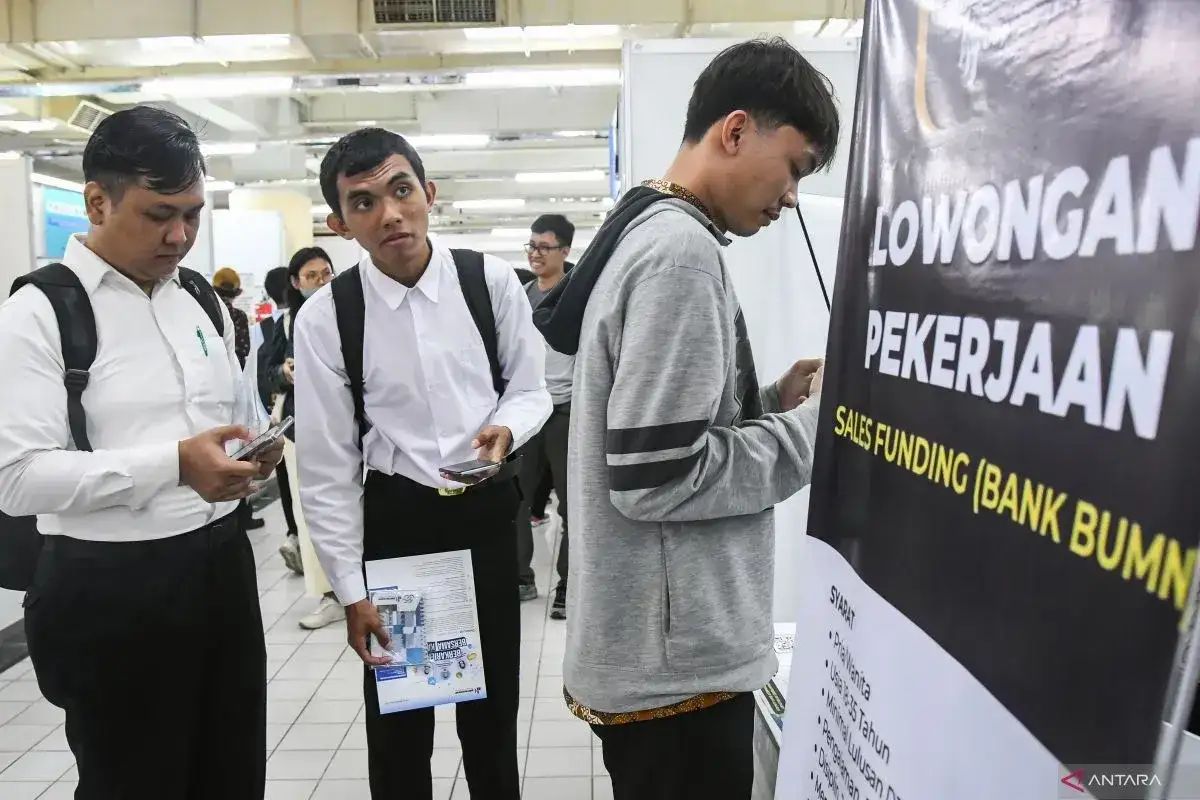
RRI.CO.ID, Jakarta - Indonesia must ensure more equitable real income growth and the creation of quality jobs to safeguard the sustainability of national economic growth, according to Sandy Pramuji, Senior Analyst at NEXT Indonesia Center.
He explained that the main challenge in boosting household purchasing power is no longer the absence of consumption, but rather uneven income distribution and limited access to decent employment opportunities.
“Without strengthening these two foundations, people will become increasingly cautious in spending, which could restrict the sustainability of future economic growth,” Sandy said in Jakarta on Sunday, February 8, 2026, as quoted by Antara.
Although household purchasing power remains stable, he noted that rising living costs, economic uncertainty, and post-pandemic caution have dampened consumer willingness to spend. Many households are prioritizing financial security over immediate consumption.
This trend is reflected in household consumption growth, which stayed consistent at around 4.53-5.22 percent year-on-year in 2023-2024, and held at 4.98 percent in 2025. Domestic demand, he emphasized, continues to be a key driver of economic growth.
However, real wages began to come under pressure in the second half of last year. In August 2025, wages rose only 1.94 percent year-on-year, below the inflation rate of 2.31 percent, resulting in a 0.37 percent contraction in real wages.
“This signals weakening purchasing power, as income is no longer keeping pace with rising prices,” Sandy explained.
The slowdown was also visible in the Current Income Index (IPSI), which fell from 120.2 in June 2025 to 112.9 in September, before recovering modestly to 120.2 by December. This indicates household earnings are being eroded by higher living costs.
On employment, labor absorption in August 2025 added only 1.89 million workers, a sharp decline compared with 4.79 million in August 2024.
Sandy further highlighted growing inequality in household finances, particularly in savings. While overall savings rose 12.1 percent year-on-year in November 2025, the increase was dominated by large deposits above IDR 1 billion.
In contrast, savings capacity among middle- and lower-income groups stagnated, with average balances for accounts under IDR 100 million falling from around IDR 2 million in early 2023 to IDR 1.7 million in 2024-2025.
“This trend of precautionary saving highlights the uneven improvement in household financial capacity," he said, adding that while high-income groups continue to save and invest, middle- and lower-income households are struggling to maintain their decreasing financial cushions amid rising inflation. ***
News Recomendation
Loading latest news.....