



Manufacturing Sector Strengthens, Dominates Indonesia’s Economic Growth
- 06 Feb 2026 07:57 WIB
- Voice of Indonesia
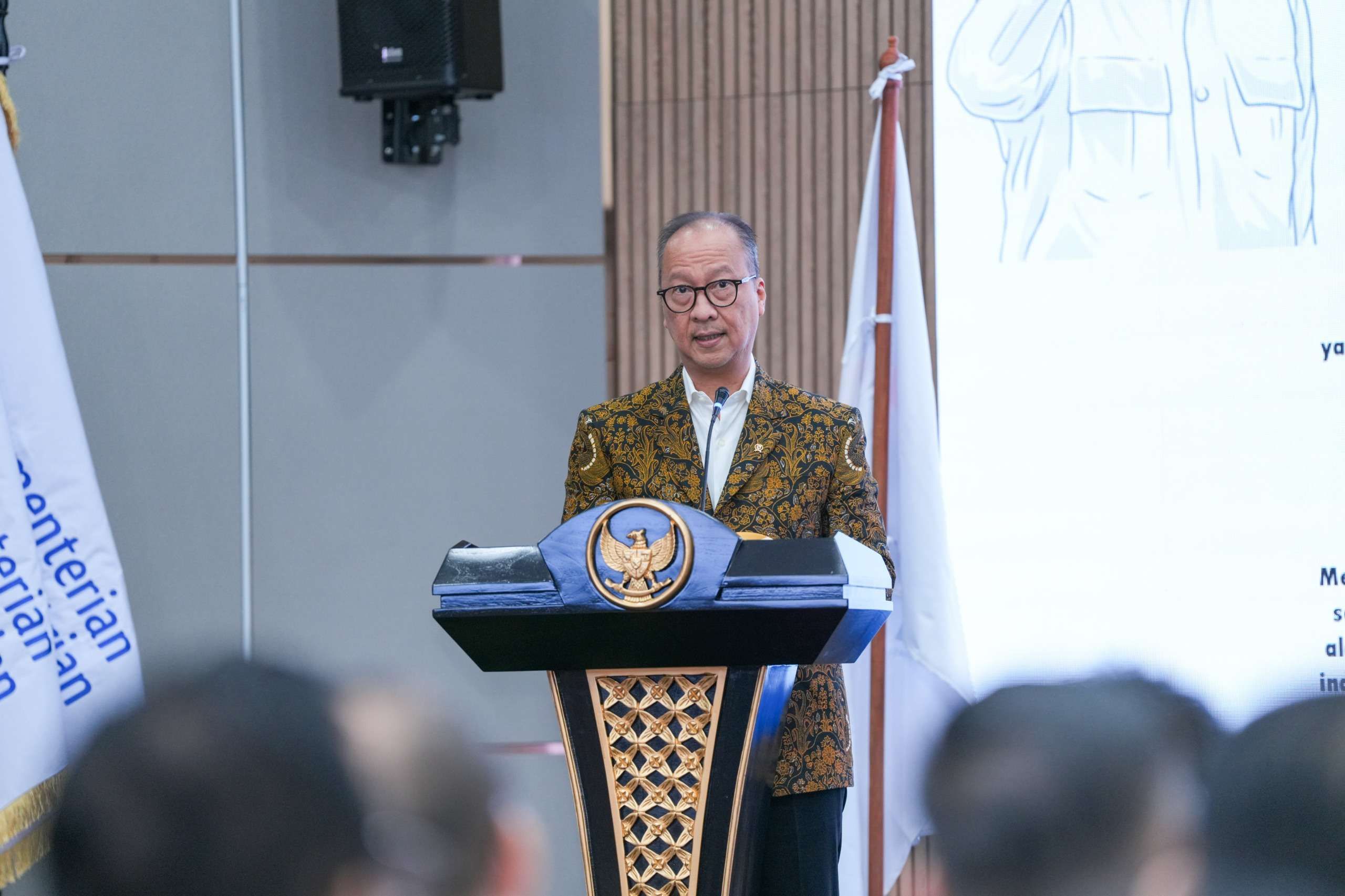
RRI.CO.ID, Jakarta — Based on data from Central Statistics Agency (BPS), the manufacturing industry remains the largest contributor to Indonesia’s Gross Domestic Product (GDP), accounting for 19.07 percent. Its contribution stood at 18.67 percent in 2023, rose to 18.98 percent in 2024, and continued to increase to 19.07 percent in 2025.
Manufacturing growth over the past three years has been positive and stable. In 2023, the sector grew by 4.64 percent, slightly eased to 4.43 percent in 2024, and then rose significantly to 5.30 percent in 2025.
The manufacturing industry has consistently been the largest contributor to overall economic growth compared with other sectors. In 2023, it contributed 0.95 percent to national economic growth, 0.90 percent in 2024, and increased further to 1.07 percent in 2025.
Minister of Industry Agus Gumiwang Kartasasmita emphasized that these achievements demonstrate the strong dominance and contribution of manufacturing to the national economy.
“Manufacturing is not only the largest contributor but also dominates Indonesia’s economic growth compared to other sectors,” Agus said in an official statement in Jakarta on Thursday (February 5, 2026).
Manufacturing export performance has been very strong. In 2023, exports grew by 1.73 percent, surged to 6.85 percent in 2024, and continued to rise to 7.03 percent in 2025.
Meanwhile, imports of goods and services continued to decline. In 2023, imports fell by 1.24 percent, slowed to 8.15 percent in 2024, and declined further to 4.77 percent in 2025. Rising exports alongside declining imports reflect the strengthening structure of Indonesia’s manufacturing industry.
“Based on BPS data, the increase in exports and the downward trend in imports over the past three years prove that the strengthening of the national industrial structure has taken place,” Agus explained.
In 2026, to sustain manufacturing growth, the Ministry of Industry will strengthen the integration of small industries into the supply chains of large and domestic industries, in line with President Prabowo’s directive to enhance more equitable economic development.
“In accordance with the President’s direction to strengthen small industries, we will enhance their integration into the national industrial supply chain. This will not only strengthen domestic industrial self-reliance but also promote more equitable economic growth,” Agus stated.
The Minister added that policies to empower small industries within industrial supply chains align with the Asta Cita agenda—particularly efforts to strengthen national industry as an engine of economic growth, increase domestic value added, create quality jobs, and enhance national competitiveness and self-reliance.
“In this context, the manufacturing sector is positioned as the main driver of economic transformation toward a more productive and sustainable economic structure,” he concluded.
Accordingly, based on its contribution to GDP, its role in economic growth, and export–import performance, the manufacturing industry is not experiencing deindustrialization—let alone premature deindustrialization.
“In 2025, manufacturing faced very tough challenges. However, thanks to the President’s direction through Asta Cita, translated into the New National Industrial Strategy (SBIN), the manufacturing sector managed to grow strongly and closed 2025 by dominating the national economy. We also appreciate industry players across the ecosystem for maintaining optimism and continuing production. BPS publications on national economic growth prove that manufacturing is not undergoing deindustrialization, much less premature deindustrialization,” Agus affirmed.
News Recomendation
Loading latest news.....