



RI Leads Charge for Global Islamic Market Integration via B57+ Forum
- 05 Feb 2026 08:49 WIB
- Voice of Indonesia
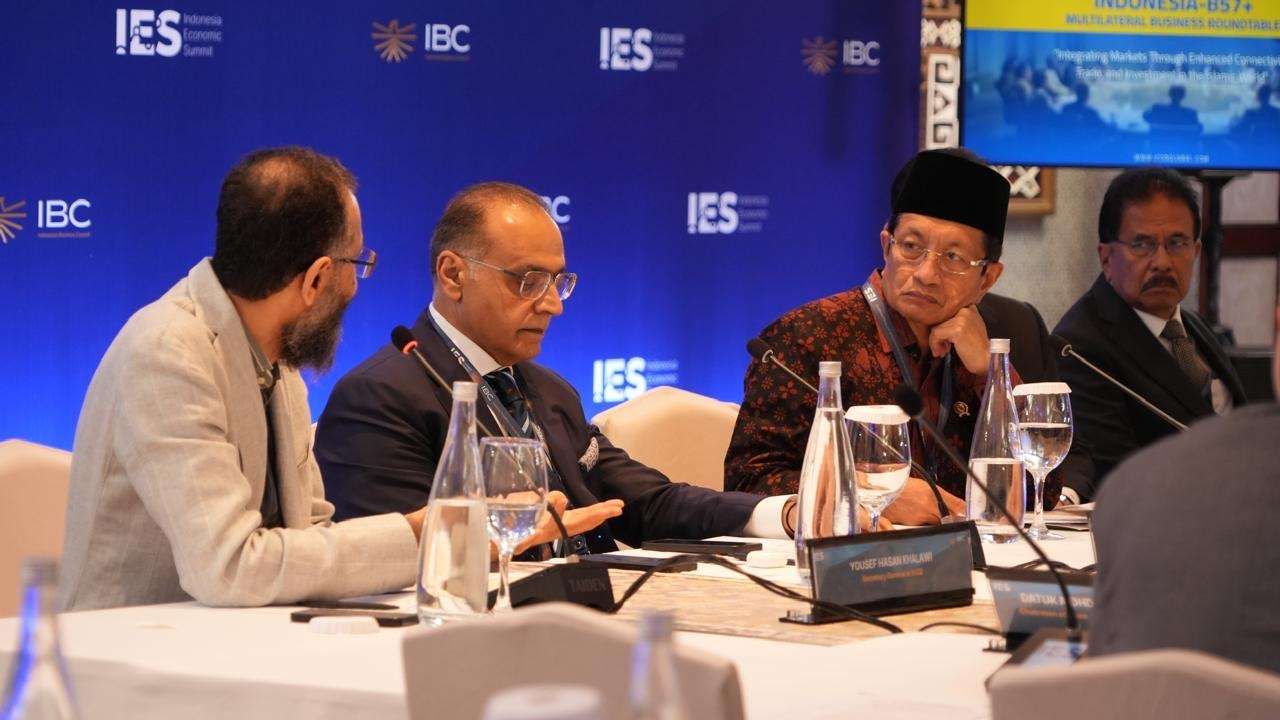
RRI.CO.ID, Jakarta - Religious Affairs Minister Nasaruddin Umar underscored Indonesia’s strategic role as a global hub for the Islamic economy during the Indonesia Economic Summit 2026.
Speaking at the Multilateral Business Roundtable Indonesia–B57+, he emphasized that Indonesia is driving integration of Islamic markets worldwide through strengthened connectivity, trade, and cross-border investment.
“Indonesia stands at the forefront of this effort, not because of mere claims, but because of real achievements recognized internationally. Indonesia has once again maintained its third-place ranking in the Global Islamic Economy Indicator (GIEI) 2024/2025, trailing only Malaysia and Saudi Arabia,” Nasaruddin said on Wednesday, February 4, 2026, as quoted by the Ministry of Religious Affairs’ official website.
The roundtable was attended by Sofyan A. Djalil, CEO of the Indonesia Business Council; Arsjad Rasjid, Founder and Chairman of Sriwijaya Capital and Chair of the Board of Trustees of the Indonesia Business Council; Sheikh Yousef Hasan Khalawi, Secretary General of the Islamic Chamber of Commerce and Development (ICCD); and delegates from various countries.
Indonesia’s sectoral achievements are led by the modest fashion industry, which currently ranks first globally. It also occupies leading positions in Muslim-friendly tourism, as well as halal cosmetics and pharmaceuticals.
The Minister highlighted the continued growth of the domestic Islamic financial sector. As of October 2025, Indonesia’s Sharia financial market share reached 30.3 percent of total national financial assets, according to the National Committee for Sharia Economy and Finance (KNEKS).
Indonesia has also become the world’s largest halal investment destination, recording approximately 40 investment transactions totaling USD 1.6 billion in 2023. This reflects growing global investor confidence in Indonesia’s halal economic ecosystem and its potential for cross-border collaboration.
Nasaruddin stressed that the B57+ initiative is consistent with Islamic economic principles of justice, cooperation, and strong ties to the real sector. He underlined the importance of the halal economy in supporting Indonesia’s growth and meeting business demand.
“The halal economy is one of the key drivers of Indonesia’s economy. With a large and integrated market from upstream to downstream, it can spur growth, expand access to financing, and enhance Indonesia’s competitiveness in the global value chain,” he said.
The halal industry's contribution to the national economy continues to grow. In the third quarter of 2025, the Halal Value Chain contributed 27.34 percent to Indonesia’s GDP, equivalent to IDR 4,832 trillion.
To sustain this growth, the government has prioritized digitizing halal certification through the SIHALAL system, which recorded 10.99 million certified products by December 2025.
Minister Nasaruddin emphasized that Indonesia’s strategic position is not only about rankings or investment volumes, but about collective commitment to building a more integrated, fair, and sustainable Islamic market.
He called for collaboration across borders and sectors, urging governments, private enterprises, academics, and financial institutions to harmonize standards and drive innovation to meet global challenges.
Looking ahead, Indonesia intends to leverage its upcoming chairmanship of the Developing-8 (D-8) for the 2026–2027 period to expand halal economic diplomacy and strengthen its role in the global halal value chain.
“Indonesia is not merely a player in the global Islamic economy. We want to be a partner that connects markets, facilitates investment, and opens new opportunities for shared prosperity among Islamic nations and the wider global community,” Minister Nasaruddin concluded. ***
News Recomendation
Loading latest news.....