



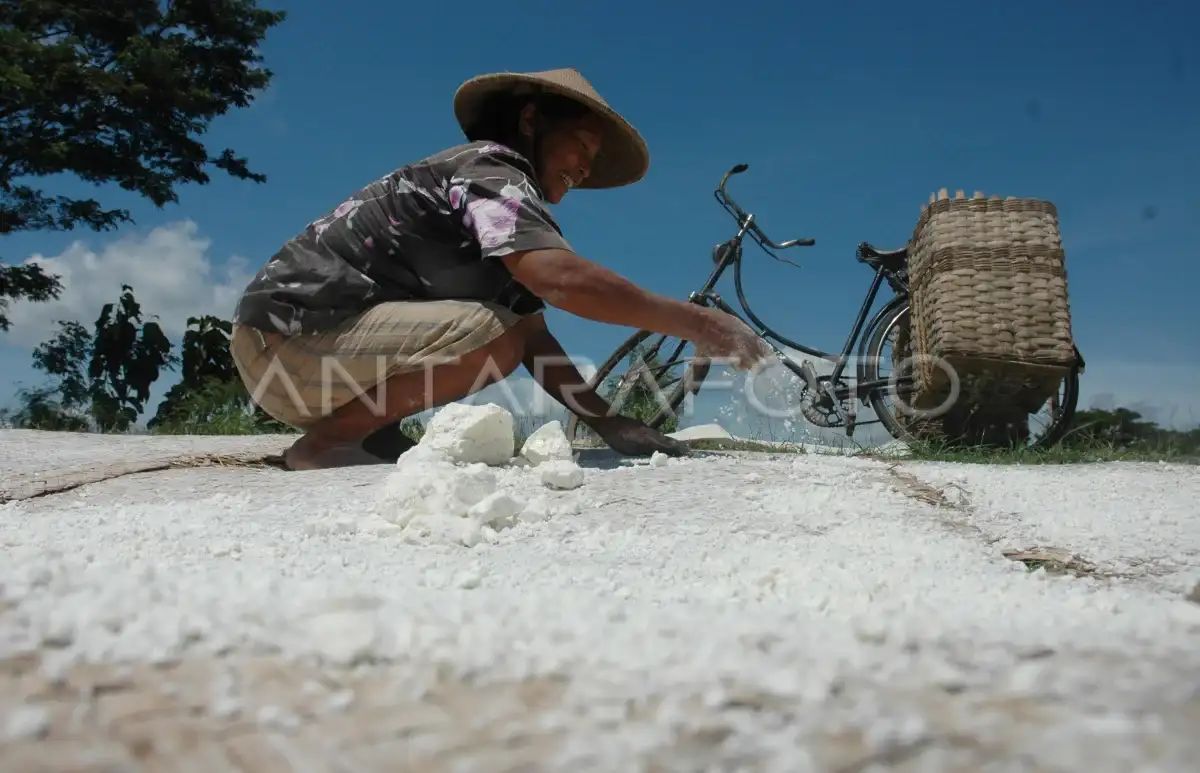
RRI.CO.ID, Jakarta - The Indonesian Ministry of Industry has launched a strategic initiative to strengthen ties between domestic cassava starch producers and industrial users, aiming to reduce reliance on imports and enhance the competitiveness of the national industry.
Minister of Industry Agus Gumiwang Kartasasmita underscored the importance of cassava starch as a strategic commodity during the opening of a “Business Matching” event in Jakarta on Thursday, January 22, 2026.
“Cassava starch has high added value and can be used as raw material for a wide range of food products, including sweeteners, spices, snacks, and noodles, as well as non-food products such as paper, chemicals, and ethanol,” he said, as quoted by Antara.
Despite strong demand, domestic production remains underutilized. Data from the National Industrial Information System (SIINas) and the Online Single Submission (OSS) platform show that Indonesia has 125 registered cassava starch companies, but their average utilization rate is only 43 percent.
The industry has shown promising export growth, with earnings reaching USD 18.7 million by November 2025, a nearly 60 percent increase from the previous year. Yet Indonesia paradoxically remains a heavy importer, spending USD 73.8 million on starch imports over the same period.
Minister Agus acknowledged that local producers face steep challenges, particularly in pricing, as they compete against cheaper international suppliers.
Another hurdle lies in meeting specialized specifications, since advanced industrial users often require high-grade starch that has traditionally been sourced from abroad to meet strict manufacturing standards.
To address these issues, the government is implementing the Commodity Balance (Neraca Komoditas) policy, designed to align domestic production with industrial demand. The regulation ensures that local factories can obtain the specific raw materials they need from Indonesian suppliers rather than relying on imports.
Through ongoing business matching sessions, the ministry is encouraging local manufacturers to diversify their product specifications.
By facilitating direct communication between farmers, starch processors, and end-user industries such as paper and chemical manufacturers, the government hopes to strengthen supply chains and guarantee that industrial needs are met domestically.
Minister Agus expressed optimism that with stronger synergy, Indonesia’s cassava starch industry will grow more robustly, increase utilization rates, reduce import dependency, and contribute significantly to national industrial resilience. ***
News Recomendation
Loading latest news.....