


Indonesia Seeks to Strengthen Domestic Steel Industry
- 10 Nov 2025 13:24 WIB
- Voice of Indonesia
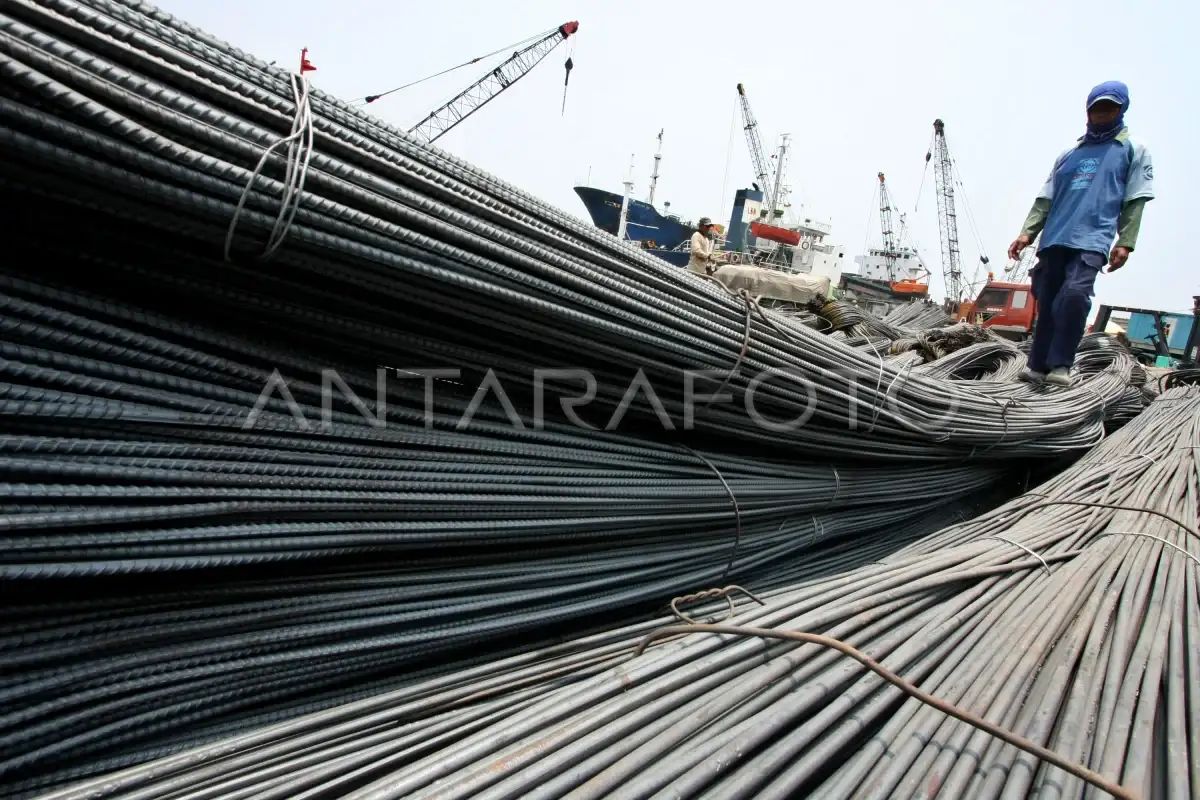
KBRN, Jakarta: The Indonesian Ministry of Industry is ramping up efforts to protect the domestic steel market and attract new investment, as more than 55 percent of national steel demand is currently met through imports, predominantly from China.
Deputy Minister of Industry Faisol Riza emphasized the urgency of reinforcing downstream product standards, boosting upstream investment, and promoting environmentally friendly steel production.
Speaking during a meeting with Commission VI of the House of Representatives in Jakarta, Faisol noted that Indonesia ranks 14th globally in steel production, reaching 18 million tons in 2024, a 110 percent increase from 2019. However, this growth has not translated into full market absorption, with domestic industry utilization hovering around 50 percent, leaving many producers idle.
According to Indonesia's Central Bureau of Statistics (BPS), as of 2021, there were 562 companies classified under KBLI 24 (basic metals) and 1,592 under KBLI 25 (metal goods excluding machinery and equipment). Despite this industrial base, the gap between consumption and production remains wide, filled largely by imports.
Deputy Minister Faisol highlighted that most domestic steel producers still focus on construction and infrastructure sectors, limiting development in high-value industries such as automotive, shipbuilding, and heavy equipment.
These sectors require specialized steel types, alloy and special steel, which hold significant market potential both domestically and internationally.
To address these challenges, the Ministry has introduced several policy instruments aimed at reducing import dependency and strengthening the national steel ecosystem.
These include: mandatory implementation of 29 Indonesian National Standards (SNI) for metal products, with 23 specifically for steel and 6 for non-steel items; import restrictions and limitations (lartas) to encourage domestic steel usage; and smart regulation initiatives to foster a more conducive and competitive investment climate, supporting integrated supply chains.
In addition, the government has imposed anti-dumping duties (BMAD) to counter unfair trade practices and protect local producers from low-cost steel imports. Products subject to BMAD include slabs, billets, and hot rolled coils (HRC) originating from China, India, Thailand, Taiwan, Russia, Belarus, and Kazakhstan.
Deputy Minister Faisol concluded that Indonesia’s steel industry must evolve beyond its traditional sectors and embrace innovation and specialization to meet domestic needs and compete globally. ***
News Recomendation
Loading latest news.....