



Indonesia Unveils New Industrialization Strategy to Realize 2045 Vision
- 28 Okt 2025 05:01 WIB
- Voice of Indonesia
KBRN, Jakarta: The Indonesian Industry Ministry has unveiled a comprehensive new framework to accelerate national industrialization, marking a pivotal shift toward sustainable, technology-driven, and globally competitive manufacturing.
The New National Industrialization Strategy (SBIN) is designed as a long-term roadmap to realize Indonesia Emas 2045 (Golden Indonesia 2025), the country’s centennial vision of becoming an advanced and self-reliant economy. The strategy aligns closely with President Prabowo Subianto’s Asta Cita, which envisions industry as the backbone of national prosperity and economic sovereignty.
“SBIN is not merely a sectoral policy of the Ministry of Industry, it is a national strategy to ensure that Indonesia’s industries not only survive but also grow and stand sovereign,” said Minister of Industry Agus Gumiwang Kartasasmita during the Ministry’s 2025 Annual Working Meeting in Jakarta on Monday, October 27 2025, as quoted by kemenperin.go.id.
SBIN emerges as Indonesia’s response to rapid global transformations characterized by uncertainty and disruption from the COVID-19 pandemic and trade wars to geopolitical tensions and the global energy transition.
According to Minister Agus, SBIN serves as Indonesia’s blueprint for post-pandemic and post-carbon industrialization, integrating economic independence, technological transformation, and environmental sustainability within a single strategic framework.
The strategy is built on four core pillar, resource-based industrialization, development of integrated industrial ecosystems, technology mastery, and implementation of sustainability principles.
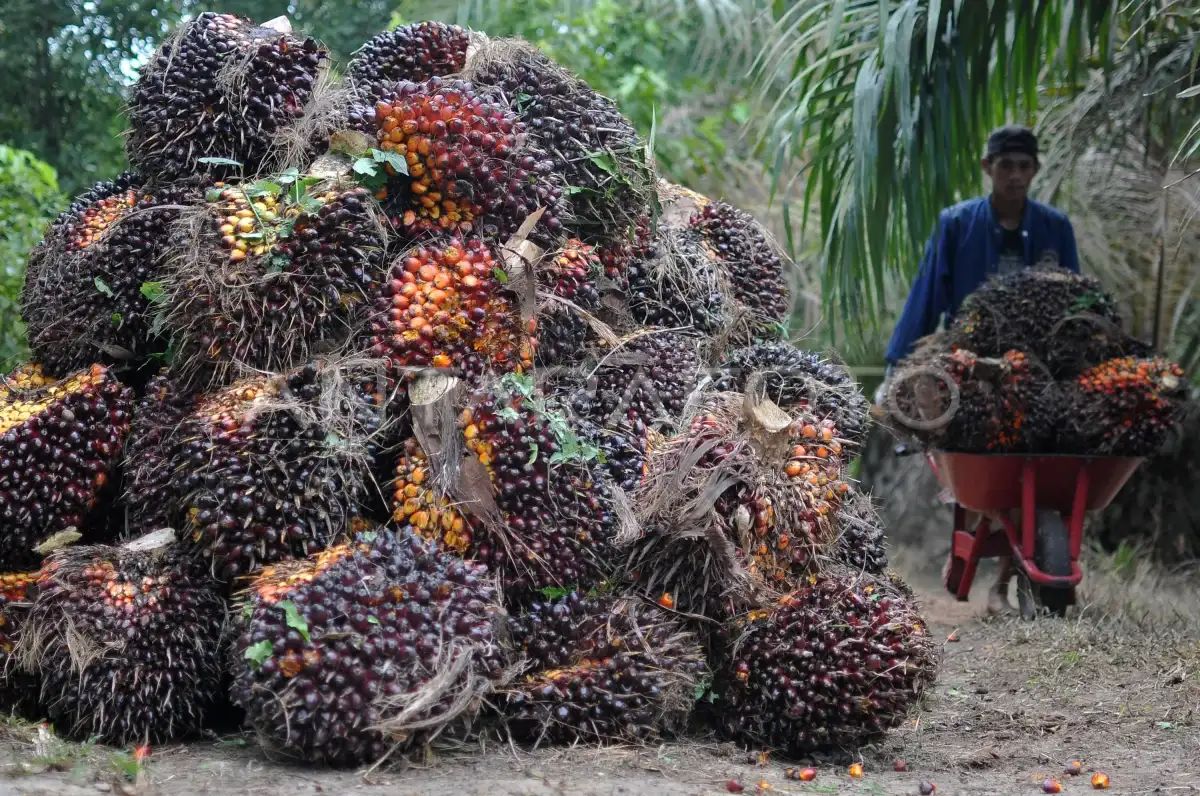
The first pillar aims to maximize Indonesia’s abundant natural wealth such as nickel, palm oil, and coal by shifting from raw material exports to high value-added products.
Industrial ecosystem development will focus on strengthening linkages between upstream and downstream sectors, supported by skilled human resources and robust industrial infrastructure.
“True industrialization must not come at the expense of the environment. It should create balance between economic progress and environmental preservation,” the minister added, emphasizing the importance of green industry and circular economy principles.
Protecting the domestic market remains a top priority, as roughly 80 percent of national industrial output is absorbed locally. The government plans to reinforce local content (TKDN) requirements to ensure public spending favors domestic manufacturers, while optimizing tariff and non-tariff instruments to manage imports.
However, he stressed that these policies do not signal protectionism, but rather aim to create room for domestic industries to innovate and compete fairly.
Simultaneously, Indonesia will expand its industrial exports by diversifying markets and intensifying industrial diplomacy. Non-traditional markets will be targeted, with a special focus on integrating Indonesian industries into global supply chains.
The electric vehicle (EV) battery sector will become a strategic export focus, leveraging Indonesia’s vast nickel reserves to position the country as a regional EV manufacturing hub in Southeast Asia.
SBIN also prioritizes high-value, import-substitution investments in sectors such as strategic minerals, basic chemicals, pharmaceuticals, electronic components, and food industries. Each investment must deliver measurable impacts, job creation, productivity gains, and structural industrial strengthening.
The Ministry is expanding machine restructuring programs and offering research incentives for modernization. Technology transfer from foreign investors will be strictly monitored to ensure that incoming capital also brings knowledge, partnerships, and innovation capacity.
Human capital development remains a cornerstone of industrial transformation. The Ministry continues to expand vocational education and industrial polytechnics, aligning training with industry needs to prepare workers for Industry 4.0 and digital manufacturing.
“Industrial human resources must become the drivers of transformation, not merely spectators,” he emphasized.
Minister Agus also underlined the urgency of regulatory reform, highlighting overlapping and inconsistent regulations as key barriers to productivity and investment. The Ministry is accelerating the adoption of smart regulations, simple, data-driven, and growth-oriented Frameworks to speed up investment processes and close loopholes exploited by importers.
Cross-ministerial collaboration is another central theme. The Ministry of Industry will strengthen cooperation with the Ministry of Energy and Mineral Resources (ESDM) for energy supply, the Ministry of Agrarian Affairs (ATR/BPN) for industrial land access, the Ministry of Finance for fiscal incentives, the Ministry of Trade for trade policies, and BRIN (National Research and Innovation Agency) for R&D
“The Ministry of Industry must be proactive in defending national industrial interests across ministries,” he continued.
The halal industry is also set as a strategic growth area. Coordination with Halal Product Assurance Organizing Agency (BPJPH) and relevant ministries aims to streamline halal certification, turning it into a growth accelerator rather than a barrier.
A revised local content (TKDN) policy will further strengthen domestic industrial structure through simpler, transparent, and accountable certification mechanisms.
Industrial integration from upstream to downstream remains a guiding principle, with sectors like palm oil and nickel exemplifying the potential of strong backward-forward linkages to create nationwide economic ripple effects.
Minister Agus shared insights from visits to Japan, China, and Turkey, which he said offer valuable lessons for Indonesia: Japan’s algae-based industry drives its green economy, China advances energy independence through coal-to-chemical technology, and Turkey successfully protects its domestic market while promoting national product pride
Indonesia, he said, can learn from these experiences to build thematic industrial zones integrating bioindustry, clean energy, and petrochemical innovation as new centers of global competitiveness.
In conclusion, the Minister affirmed that SBIN serves as a strategic foundation for achieving Asta Cita and Golden Indonesia 2045.
“We aim for an industrial sector that is resilient, competitive, and sustainable. Industrialization must bring tangible benefits to the people, creating quality jobs and a better future,” the Minister concluded.
The Ministry of Industry commits to implementing this strategy through measurable programs, strong inter-agency synergy, and clear performance indicators. With collaboration, innovation, and national self-reliance, Indonesia’s industry is set to become a driving force for economic sovereignty and long-term prosperity. ***
News Recomendation
Loading latest news.....