


Sarisa Merapi: Innovating Salak, Empowering Community
- 21 Mei 2025 15:55 WIB
- Voice of Indonesia
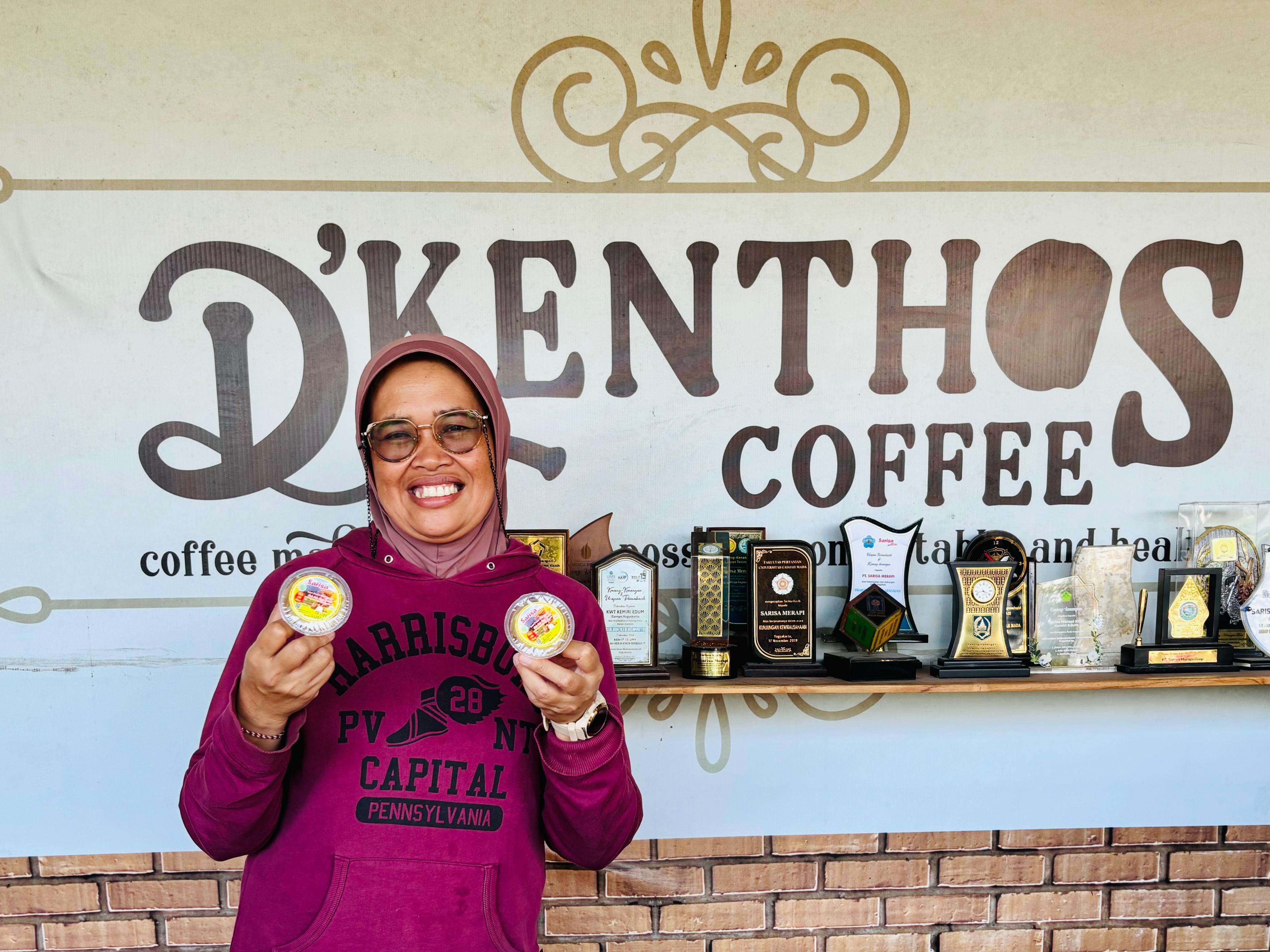
KBRN, Sleman: Do you know that nearly every part of salak, or snake fruit, including its seeds and skin, can be transformed into a variety of products? One standout small and medium-sized enterprise (UMKM) leveraging this potential is Sarisa Merapi, a business committed to crafting delicious food and beverages primarily from salak pondoh.
Located in the serene village of Kemiri Hamlet, Purwobinangun Village, Pakem Subdistrict, Sleman Regency, Yogyakarta Province, Sarisa Merapi has flourished since its establishment in 2016, a testament to its innovative spirit.
Within the Pakem subdistrict, Sarisa Merapi stands as the sole producer transforming salak into such a diverse array of processed products, highlighting their pioneering role in local culinary innovation.
The name "Sarisa Merapi" itself is a clever blend: "Sarisa" is a contraction of "Sari Salak" (essence of salak), and "Merapi" was added to signify that their primary ingredient, salak pondoh, comes directly from the diligent farmers cultivating their crops on the fertile slopes of Mount Merapi.
This origin story imbues their products with a unique local charm and a sense of connection to the rich volcanic soil.
Sarisa Merapi's journey began out of necessity, driven by the challenge of persistently low salak prices and a surplus of unsold fruit that often went to waste. This innovative venture transformed a potential loss into a thriving business, turning excess salak into valuable, diverse products.
"In 2016, the price of salak plummeted dramatically, even falling below IDR 1000 (0,061 USD) per kg. As salak farmers, with salak being Sleman Regency's leading commodity, we had to find a way to increase the value of this commodity," stated Rini Handayani, the owner of PT Sarisa Merapi Group, recently.
This inspiring UMKM has impressively developed 22 distinct product variants from salak pondoh, showcasing the fruit's versatility and their culinary creativity.
Sarisa Merapi has not only been a pioneer in salak processing but also achieved a remarkable milestone, securing a MURI record for crafting the longest dodol salak—a sweet, sticky, chewy cake—measuring an impressive 159 meters.
This extraordinary accomplishment consumed a staggering 1.5 tons of salak fruit, all entirely through self-funded efforts, showcasing their dedication and community spirit.
Earning the MURI record has significantly boosted Sarisa Merapi's visibility, serving as a powerful form of "soft marketing" that highlights their innovation and unique position in the market.
"After receiving the MURI record, Sarisa gained significant recognition, and our dodol salak received extraordinary orders, leading to an overwhelming number of visits and orders," said Rini.
In 2020, despite a decline in salak product orders due to the pandemic, Sarisa Merapi persevered by innovating with butterfly pea flower tea, or telang tea as it is locally known, which became their economic lifeline during that challenging period.
As tourism began to rebound in 2021, they proactively re-energized their efforts, creating and vigorously promoting a wider range of salak-based products, refusing to let their business remain dormant.
"We hope that when salak prices decline, farmers won’t feel discouraged, as their produce can still hold greater value through processing. Of course, mastering this skill isn’t easy, but entrepreneurs must embrace the spirit of entrepreneurship," she added.
Sarisa Merapi launched its venture with candied salak, a product that remains their flagship item to this day. Beyond this initial success, the company has innovated to create 22 distinct salak-based products.
Supporting the local economy, Sarisa Merapi sources its salak fruit directly from farmers in the Turi, Pakem, and Tempel areas, consistently processing a minimum of 100 kg of salak at a time.
"We process salak that is at a maximum of 70 percent ripeness. Raw materials that don't meet the grade for candied salak will be processed into other products," Rini explained.
Sarisa Merapi prides itself on crafting products free from preservatives and artificial colorings, instead utilizing natural dyes like secang. Their unique strength also lies in their human resources, specifically their origins as a women farmers' group (KWT).
This group, traditionally less involved in business and productivity, has built a thriving enterprise capable of paying its members. The KWT has since transformed into a P4S (Self-Reliant Rural Agricultural Training Center), now serving as a destination for various educational visits like study tours and industrial visits.
Furthermore, Sarisa Merapi embraces intergenerational collaboration, empowering elderly members to handle tasks like peeling and cutting salak, while younger members skillfully manage operations and social media promotions.
Their diverse offerings now include salak juice, dodol salak, salak pies, mocaf salak (flour from salak), salak bluder (soft bread), salak bakpia ( traditional filled pastry), and coffee.
Demonstrating their continued innovation, Sarisa Merapi also launched a separate brand, D’kenthos Coffee, in 2023, specializing in coffee made from salak seeds, further showcasing the fruit's diverse potential.
"Motivated by a commitment to zero waste and the opportunity to process the entire salak fruit, we collaborated with Gadjah Mada University to research the content and benefits within salak seeds for about a year. Only after that extensive research did we begin our efforts to create salak seed coffee," Rini explained.
The name "D’kenthos" itself is quite meaningful, with 'kenthos' literally translating to salak seeds. The 'D' in "D’kenthos" cleverly signifies a fusion between the salak seeds and coffee beans, emphasizing the unique blend of ingredients.
Notably, the coffee beans used in D'kenthos coffee are also sourced from the slopes of Mount Merapi, creating a strong connection to the local terroir.
At D’kenthos Coffee, all offerings are uniquely crafted from salak seeds, distinguishing them in the coffee market. Their best-selling menu item is the 'kopi kenthos gula aren,' a popular blend of salak seed coffee sweetened with palm sugar.
The prices for Sarisa Merapi's diverse processed salak products range from IDR 15,000 (0,92 USD) to IDR 250,000 (15,26 USD), offering a wide array of options for customers. For salak seed coffee, prices are between IDR 10,000 and IDR 15,000, with the IDR 15,000 option being for the ground coffee sold in a standing pouch.
Both Sarisa Merapi and D'kenthos Coffee are open daily from 9 a.m. to 9 p.m. local time, providing consistent access to their unique offerings.
Sarisa Merapi currently faces significant challenges beyond declining public purchasing power, as consumer preferences are rapidly shifting. This dynamic environment demands constant adaptation and innovation from the business to remain competitive and meet evolving market demands.
"Our turnover has been difficult since the pandemic until now. Before the pandemic, our turnover could reach IDR 200 million, but now it's capped at IDR 60 million per month. Public purchasing power has truly declined, so we must continue to innovate," Rini stated.
Rini expressed her future hopes that Sarisa Merapi and D’kenthos Coffee will primarily benefit the local community. By providing employment opportunities for residents, she aims for these businesses to significantly reduce poverty by boosting their economic well-being and income.
"We are currently developing a snack stick from coffee waste, where we make sticks from espresso waste mixed with salak seeds," Rini concluded. ***
News Recomendation
Loading latest news.....