



Canned Gudeg: Modern Twist in Yogyakarta Traditional Food
- 10 Jan 2025 15:05 WIB
- Voice of Indonesia
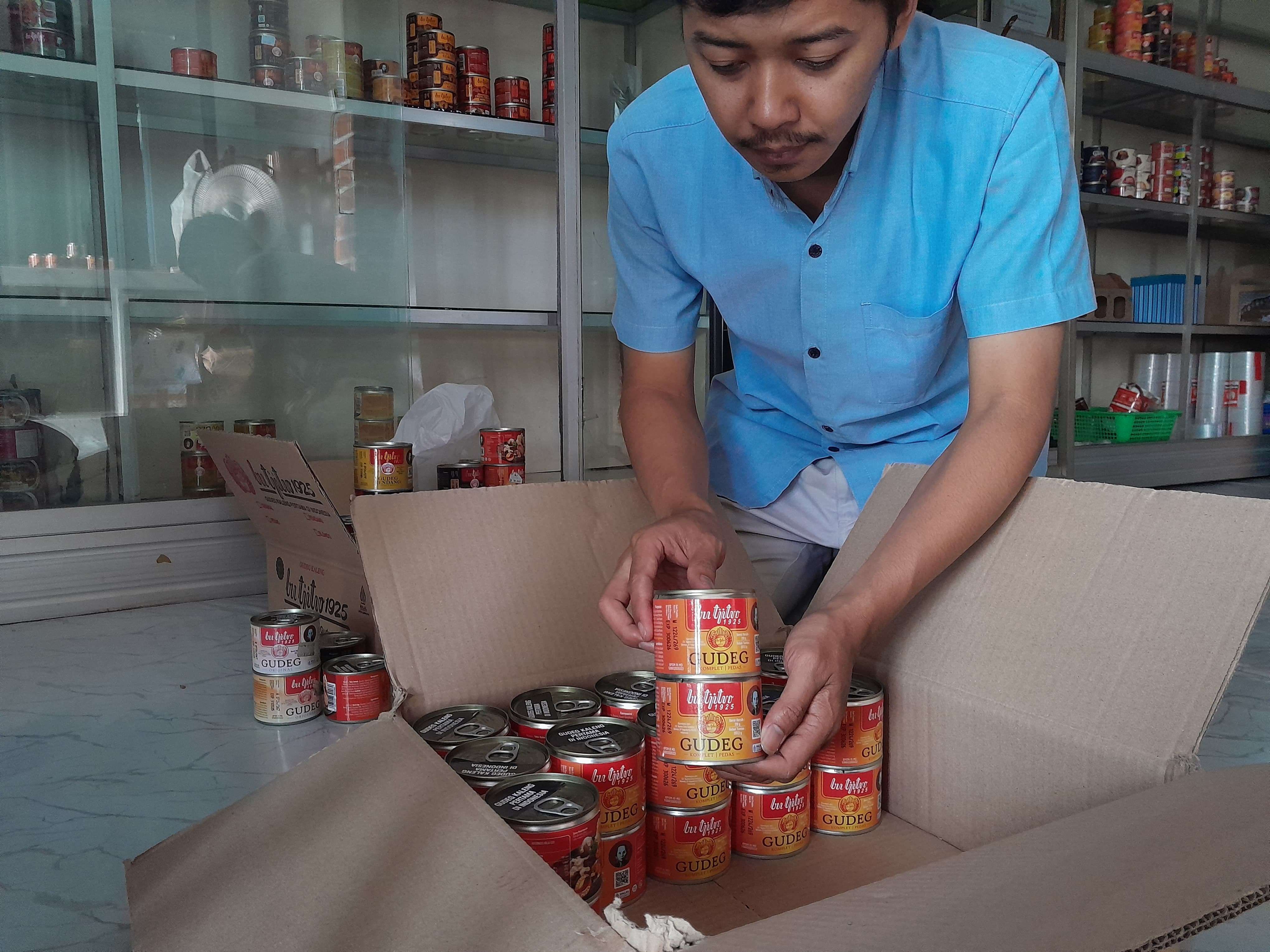
KBRN, Yogyakarta: Canning technology has opened up new opportunities for gudeg, Yogyakarta's authentic dish, to penetrate a broader market.
Established in 1925, Gudeg Bu Tjitro pioneered the innovation of canned gudeg, addressing the need for a practical and long-lasting version of this traditional dish.
Gudeg Bu Tjitro's canned products began their journey in 2010 when they successfully obtained a distribution permit from the Food and Drug Monitoring Agency (BPOM). Upon its market launch, consumers enthusiastically welcomed the canned gudeg.
"The uniqueness of our canned gudeg lies in its durability, which reaches 1.5 years without using preservatives," said Burhanul Akbar Pasa (Danu), owner of Gudeg Bu Tjitro, earlier this week.
Every day, Gudeg Bu Tjitro produces more than 650 canned products. The most popular canned menus and best-sellers are original gudeg, spicy gudeg, original sambal krecek (hot spicy beef skin), and sambal krecek mercon (super-hot beef skin).
Sales of Bu Tjitro's canned gudeg products through the marketplace increased significantly between October and December 2024. During this period, average monthly sales reached 1500 cans, driven primarily by increased consumer demand through online platforms.
"Our products are currently available in 150 stores in Yogyakarta, 50 in Solo, and other cities like Semarang and Jakarta. We are also experiencing strong demand from Sydney, Australia, with average annual orders ranging from 5,000 to 7,000 cans.," said Gita, one of Gudeg Bu Tjitro's employees.
In addition to its proven durability of up to 18 months, Gudeg Bu Tjitro's canned products offer distinctive, authentic flavors, competitive prices, and quality ingredients.
"Product prices we offer start from IDR 30,000 - IDR 50,000 per can," she added.
Gudeg Bu Tjitro's distinctive taste is formed from the use of kacang tolo (black-eyed peas) and areh (thick coconut milk), giving it a unique flavor characteristic that is the hallmark of Gudeg Bu Tjitro.
The use of areh in Gudeg Bu Tjitro produces a savory taste that distinguishes it from other Yogyakarta gudeg, which are generally sweeter.
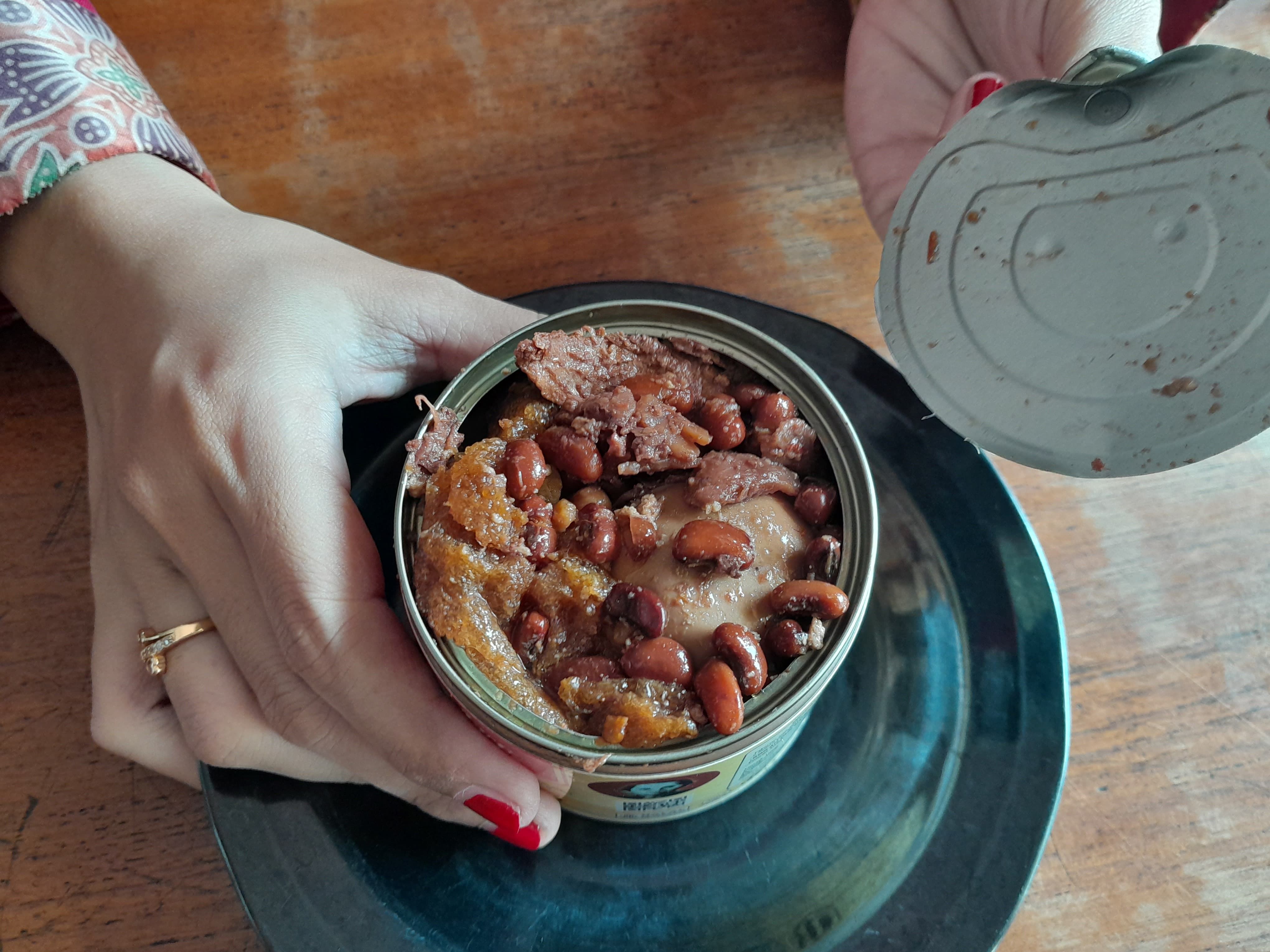 Bu Tjitro's original complete canned gudeg variant contains of kacang tolo (black-eyed peas), gori (young jackfruits), shredded chicken, duck Egg, krecek (spicy beef skin), and areh (thick coconut milk). (Photo: RRI English/Diva Rifdah Rizkia Puspitaningnala)
Canned gudeg isn't solely dominated by Bu Tjitro. Other gudeg sellers have also ventured into canned gudeg, such as Gudeg Bu Lies, Gudeg Bu Amad, Gudeg Yu Narni, Wijilan, and Gudeg Bagong (a canned version of Gudeg Yu Djum).
Despite the growing popularity of canned gudeg, many are still unfamiliar with this product. This is likely because gudeg is traditionally served in besek (woven bamboo containers) or kendhil (earthenware pots).
"I've never tried canned gudeg and hadn't heard of it before," said Aisha, a student from Kalimantan studying in Yogyakarta.
However, those who have tried canned gudeg find it to be a convenient option.
A customer, Hilda, felt that canned gudeg tasted no different from traditional gudeg served in besek or kendhil.
"I buy this Bu Amad canned gudeg as a souvenir because it's practical, durable, and perfect for long-distance travel. The one I buy contains chicken and egg," said Hilda in Yogyakarta on Friday (Jan 10).
The rise of canned gudeg by adapting to modern consumer demands for convenience and shelf-stability, has opened up new markets and introduced this Yogyakarta culinary treasure to a wider audience, locally and internationally. ***
News Recomendation
Loading latest news.....