



Festival Palang Pintu Expands Beyond Cultural Showcase to Boost Local Economy
- 04 Okt 2026 21:45 WIB
- Voice of Indonesia
Key Points
- The South Jakarta City Administration hosted the 17th Palang Pintu Festival along Jalan Kemang Raya from October 3 to 4, 2026.
- South Jakarta Secretary Mukhlisin highlighted the festival's economic impact on local communities.
- Festival coordinator Edy Mulyadi announced structural reforms aimed at improving management and long-term sustainability.
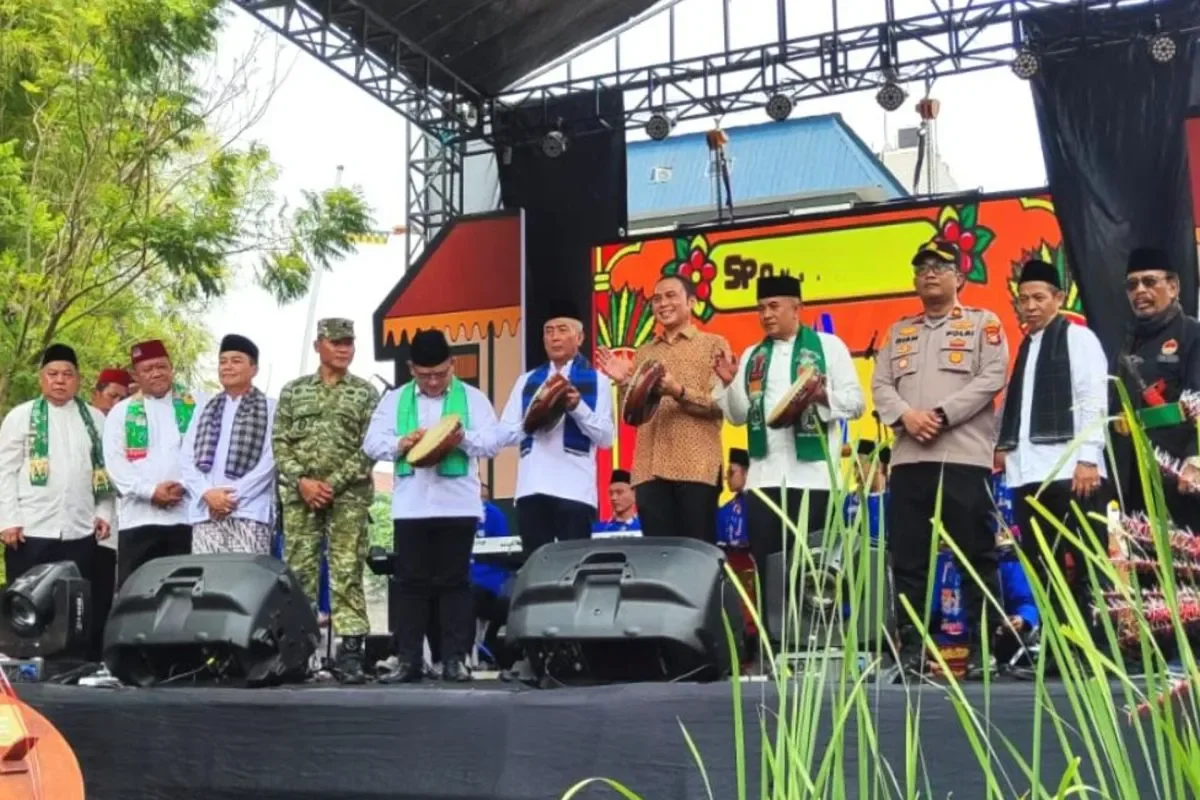
RRI.CO.ID, Jakarta - The 17th Festival Palang Pintu in South Jakarta highlighted not only the preservation of Betawi heritage but also the growing role of cultural events in supporting local businesses and community engagement.
Held along Jalan Kemang Raya in Bangka Village, Mampang Prapatan Subdistrict, from October 3 to 4, 2026, the event brought together hundreds of artists and cultural performers while providing opportunities for 250 micro, small, and medium-sized enterprises (MSMEs) to showcase their products.
South Jakarta Secretary Mukhlisin said the festival’s longevity demonstrates that Betawi culture remains a living tradition that continues to evolve alongside Jakarta’s diverse communities.
“The fact that this festival has now reached its 17th year proves that Betawi culture is not merely a legacy of the past. It is a living culture that continues to grow with the people of Jakarta,” Mukhlisin said on Sunday, October 4, 2026, as quoted by Antara.
He said Palang Pintu is more than a performance featuring traditional martial arts and poetic exchanges. It also represents core Betawi values such as courage, openness, mutual respect, family ties, and a spirit of protecting others.
This year’s festival also featured cultural performances from various ethnic groups and regions across Indonesia, reflecting Jakarta’s multicultural character.
“The presence of diverse cultural traditions shows that diversity is not something that divides us, but rather a strength that reinforces unity,” Mukhlisin emphasized.
He expressed hope that younger generations, particularly Gen Z, would take a more active role in learning about, appreciating, and preserving Indonesia’s cultural heritage.
Beyond cultural preservation, Mukhlisin emphasized the festival’s economic impact through the participation of local entrepreneurs.
“With the concept of culture growing, communities moving forward, and local economies becoming stronger, we hope this event will continue to be included in Jakarta’s official calendar and contribute to the continued development of South Jakarta,” he reaffirmed.
Festival coordinator Edy Mulyadi said this year’s edition focused on organizational renewal and regeneration to improve the event’s management and long-term sustainability.
According to Edy, the organizing committee restructured its management system to create a more professional and transparent framework, making it easier to handle permits, coordinate tenants, develop event concepts, and manage technical operations.
“Today, we are implementing a process of transformation and regeneration. We want to strengthen the identity of the Palang Pintu Festival while adopting a more professional working system that simplifies everything from licensing and tenant management to event planning,” Edy said.
The reforms also included strengthening human resources and restructuring the festival’s management team to ensure future editions can be delivered more effectively.
Alongside cultural performances, the event gave significant attention to community-based economic development by involving 250 MSMEs from sectors ranging from creative culinary businesses to other local products. ***
News Recomendation
Loading latest news.....