



Indonesia Begins Production of 19 Films on National Struggle
- 02 Okt 2026 11:31 WIB
- Voice of Indonesia
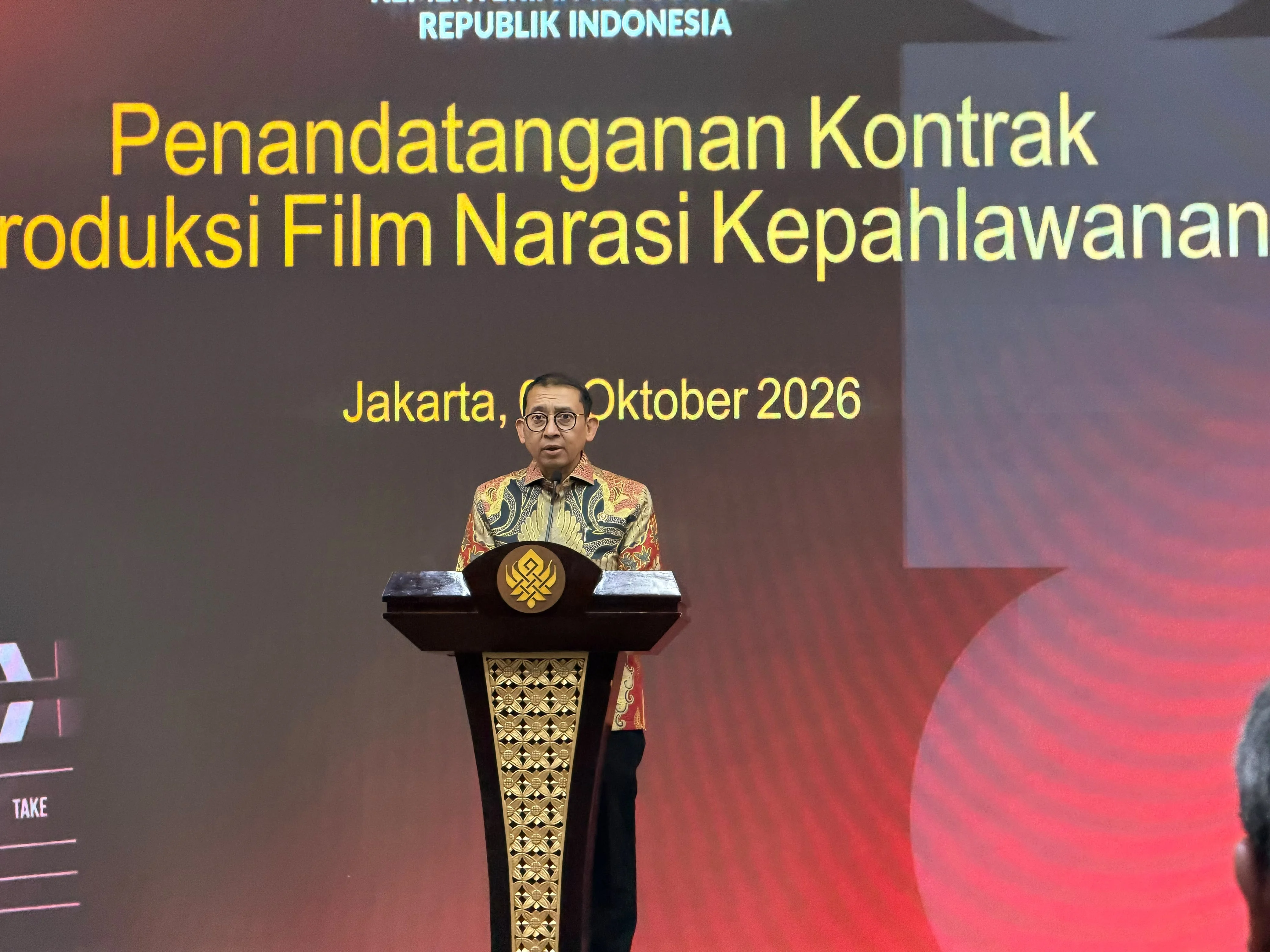
RRI.CO.ID, Jakarta - Indonesia’s Ministry of Culture, through the Directorate General of Cultural Development, Utilization and Guidance, has signed cooperation agreements with production houses selected as winners of the National Heroism Film Production Competition. The signing, held at the Graha Utama Building of the Ministry of Primary and Secondary Education in Senayan, Jakarta, on Thursday, 1 October, 2026, marks the beginning of the production of feature-length and short films portraying various struggles to defend Indonesia’s independence during the 1945–1950 period.
In his remarks, Minister of Culture Fadli Zon, said the signing of the cooperation agreements marked an important step in strengthening the national film ecosystem through historical and heroic narratives. “The signing of these cooperation agreements marks the beginning of the process of turning the selected ideas into films,” he said.
Fadli explained that the period from 1945 to 1950 was marked by numerous important events in Indonesia’s national history, including battles, armed conflicts, diplomacy, press movements, and the struggles of ordinary people. “This shows the attention of filmmakers to narratives of struggle and heroism,” he said.
According to the Minister, the dissemination and visualization of history through various forms of media can make historical knowledge more accessible to the public. He said film is particularly suitable for presenting history because it combines visual elements, storytelling, acting, music, and other cinematic elements that can stimulate public interest in historical narratives.
“Film is the right medium for narrating history because it contains images, stories, acting, music, and everything that can be portrayed through cinema,” Fadli said. He added that the film productions are expected to strengthen the nation’s collective memory, promote awareness of heroic narratives, broaden public access to history, support the national film industry, and generate wider economic benefits for the country and people working in the film sector.
The 2026 Heroism Film Production Program previously underwent a selection process that included administrative screening, evaluation of proposals and scripts, presentations or pitching sessions, and a final jury review. The selected production houses subsequently went through verification and fulfillment of program requirements before proceeding to the signing of cooperation agreements and the production stage.
In the feature film category, the selected projects include Barisan Penghibur by Alenia Citra Multimedia; Hoegeng: Yang Ada Tinggal Nama by Kun Tujuh Delapan Enam; Kapalselam Kalibayam by Panas Dalam Film; Rai by Alex Zawarda Sinema; Rengasdengklok by Visinema Pictures; and Sakura di Telawang by Travel Stories Films. Meanwhile, the short film category includes Arang Kobar Juang by Sami Sami Rejeki; Belantara Raya by Malayapura Films; Buleun Purnama, di Nanggroe by Aries Anugerah Indah; Darah Djoeang by Ekokapti Creative Production; Desing Peluru Tak Bertuan by Wijaya Solusi Bisnis; Ibu Raih by Indonesia Film Produksi; Jam 7 Pagi (Makassar, 1947) by Damsphere and Films; Menara Terakhir by Sineman Grup Indonesia; Operasi Malino: Lembar yang Hilang by Lumintu Citra Nusantara; Seriboe Soedirman by Onomastika; Suara Republik by Studio Sunting Imaji; Timur: 1950 by Wadah Inovasi Digital; and Yang Tenggelam Saat Fajar by Empat Ruang Dimensi.
During production, each production house will develop its project based on the approved script and production plan. The production process will be supported through mentoring to strengthen the narratives, production readiness, and responsible portrayal of the historical events and contexts depicted in each film.
The Ministry of Culture is also encouraging the production houses to maintain high artistic and cinematic standards, strong storytelling, and historical accuracy in presenting the events covered by their respective projects. Through the mentoring process, filmmakers will have opportunities to engage in dialogue with experts according to the specific needs of each production.
Fadli Zon expressed hope that the opportunities provided through the program would be carried out responsibly and result in films capable of reaching a broad audience. “Historical films are not merely a series of moving images, but a medium that can represent the history of the Indonesian archipelago to the public, younger generations, and the global stage,” he said.
“The program confirms that the government, through the Ministry of Culture and following President Prabowo Subianto’s directive, supports historical films,” Fadli said. “We hope the selected films will enrich cinemas across Indonesia with narratives of heroism and, hopefully, will also be able to compete at international film festivals.”
The event was attended by producers and representatives of the selected production houses, cinema practitioners, archivists, and historians, along with senior officials from the Ministry of Culture. The ministry hopes the 19 films will enrich Indonesian cinema while presenting diverse perspectives on the struggle to defend Indonesia’s independence between 1945 and 1950, preserve collective memory, and strengthen national spirit through contemporary cinematic approaches.
News Recomendation
Loading latest news.....