



BRIN Pushes for Earth Science Research Through Art Collaboration
- 04 Sep 2026 17:43 WIB
- Voice of Indonesia
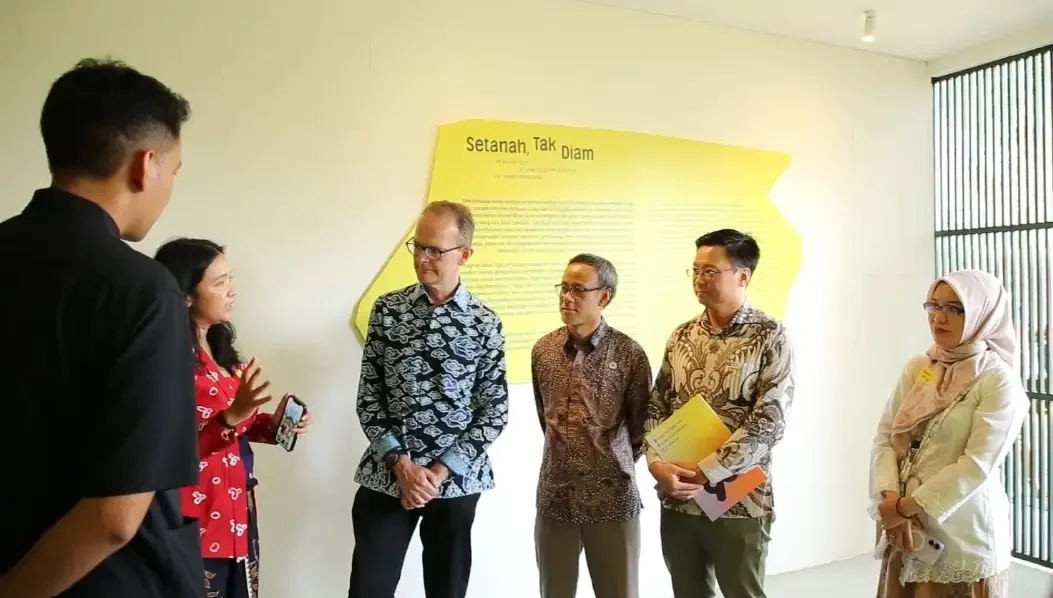
RRI.CO.ID, Bandung - Indonesia's National Research and Innovation Agency (BRIN) is encouraging earth science research findings to move beyond academic circles and reach the wider public through approaches that are accessible and interactive. One such approach combines research with art to communicate knowledge about disaster mitigation, particularly earthquakes, in ways that are easier for ordinary people to understand.
Quoted from an official statement on Thursday, September 3, 2026, Head of BRIN's Research Organization for Earth Sciences and Maritime (ORKM), Luki Subehi, made the statement when he opened a dissemination event and exhibition showcasing collaborative research between the Bandung Institute of Technology (ITB), BRIN, and the British Geological Survey (BGS) titled "Setanah, Tak Diam" ("The Ground, Never Still"). The event was held at Selasar Sunaryo, Bandung.
He also said disseminating research results is important not only to reach the general public but also local governments as policymakers. Through this activity, researchers, the public, and local governments were brought together to discuss disaster mitigation with a shared vision. "This is one form of disseminating information and education to the public directly, interactively, and in a way that feels very close to home," Luki said.
Beyond formal research channels, Luki emphasized that understanding of geological conditions can also be strengthened by drawing on local wisdom that has long existed within communities. He cited the example of toponymy, or place naming, in Bandung, which in fact carries information about the characteristics of an area one example being areas using the word "ranca," such as Rancaekek.
Luki explained that "ranca" means swamp, referring to areas that were once part of an ancient lake with soil conditions resembling porridge. "That condition makes the area prone to ground movement when shaking occurs. Place names from the past can serve as a reminder to the public about environmental characteristics that need attention," he said.
He added that this kind of local wisdom serves as an important reminder given how long the intervals between major earthquakes sometimes spanning two to three generations. Without continuous education, collective knowledge and memory about disaster preparedness risk fading with each generational shift. Indonesia's geographical position within the volcanic belt and along active fault lines further demands that disaster-related knowledge keep being passed down to the grassroots level.
Luki stressed that living in a disaster-prone area does not mean the public should be pessimistic or fearful, but rather should serve as a foundation for building preparedness and learning to coexist with disaster risk. "We need to convey to the public that we live in an area that is indeed disaster-prone. But that doesn't mean we have to be pessimistic or afraid . Instead, we need to live side by side with disaster," he said.
He expressed hope that the dissemination of research results can continue on an ongoing basis so that the public, from the younger generation to the elderly, can keep up with developments in knowledge while understanding different forms of disaster and how to prepare for them.
News Recomendation
Loading latest news.....