



Ngarot Tradition Marks Planting Season in Indramayu
- 02 Agt 2026 20:38 WIB
- Voice of Indonesia
Key Points
- The centuries-old Ngarot tradition in Indramayu marks the start of the rice planting season while preserving local agricultural heritage and cultural values.
- Recognized as an Intangible Cultural Heritage, the festival promotes youth participation, community unity, and cultural tourism.
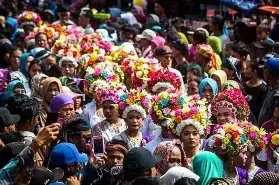
RRI.CO.ID, Jakarta - The community of Lelea Village in Indramayu Regency, West Java, continues to preserve Ngarot, a centuries-old agricultural tradition held annually to express gratitude and mark the official start of the rice planting season.
Recognized as an Intangible Cultural Heritage by the Ministry of Education and Culture, Ngarot takes place on the third Wednesday of December, a day considered sacred by local residents. Participation is exclusively reserved for unmarried young men and women.
Unmarried young women wear traditional kebaya adorned with elaborate crowns made of fresh flowers, while young men wear traditional Indramayu attire as they lead a vibrant street procession accompanied by traditional arts.
The floral crowns symbolize purity, beauty, and the obligation of the younger generation to uphold ancestral values. Historically, participants gathered during Ngarot to collectively cultivate land inherited from Ki Buyut Kapol, the revered pioneer of the tradition.
The ritual culminates with the village head handing over essential agricultural symbols, including water, seeds, and fertilizer, to represent hopes for a smooth planting season and a bountiful harvest.
Indramayu regional authorities emphasized that Ngarot serves both as a spiritual expression of gratitude for agrarian life and a vital medium for strengthening intergenerational community bonds. The Indramayu Regency Administration highlighted the foundational significance of the tradition for the local agricultural community.
"The Ngarot tradition carries the meaning of expressing gratitude for the arrival of the planting season, this tradition is exclusively participated in by young men and women who are unmarried," the Indramayu Regency Administration stated in an official release.
Local officials noted that the festival continues to be a cornerstone of Indramayu's cultural identity, successfully bridging ancestral heritage, farming practices, and regional tourism. (Naura Sofia-EN)
News Recomendation
Loading latest news.....