



Sleman Jathilan Putro Barong Budoyo Preserves Sacred Rituals & Art
- 29 Jul 2026 18:07 WIB
- Voice of Indonesia
Key Points
- Jathilan Putro Barong Budoyo preserves a generations-old ritual before every performance, including prayers at Mbah Barong’s grave and cleansing performance equipment at a natural spring.
- The troupe balances cultural preservation with innovation by introducing new choreography and songs while maintaining the core traditions of jathilan.
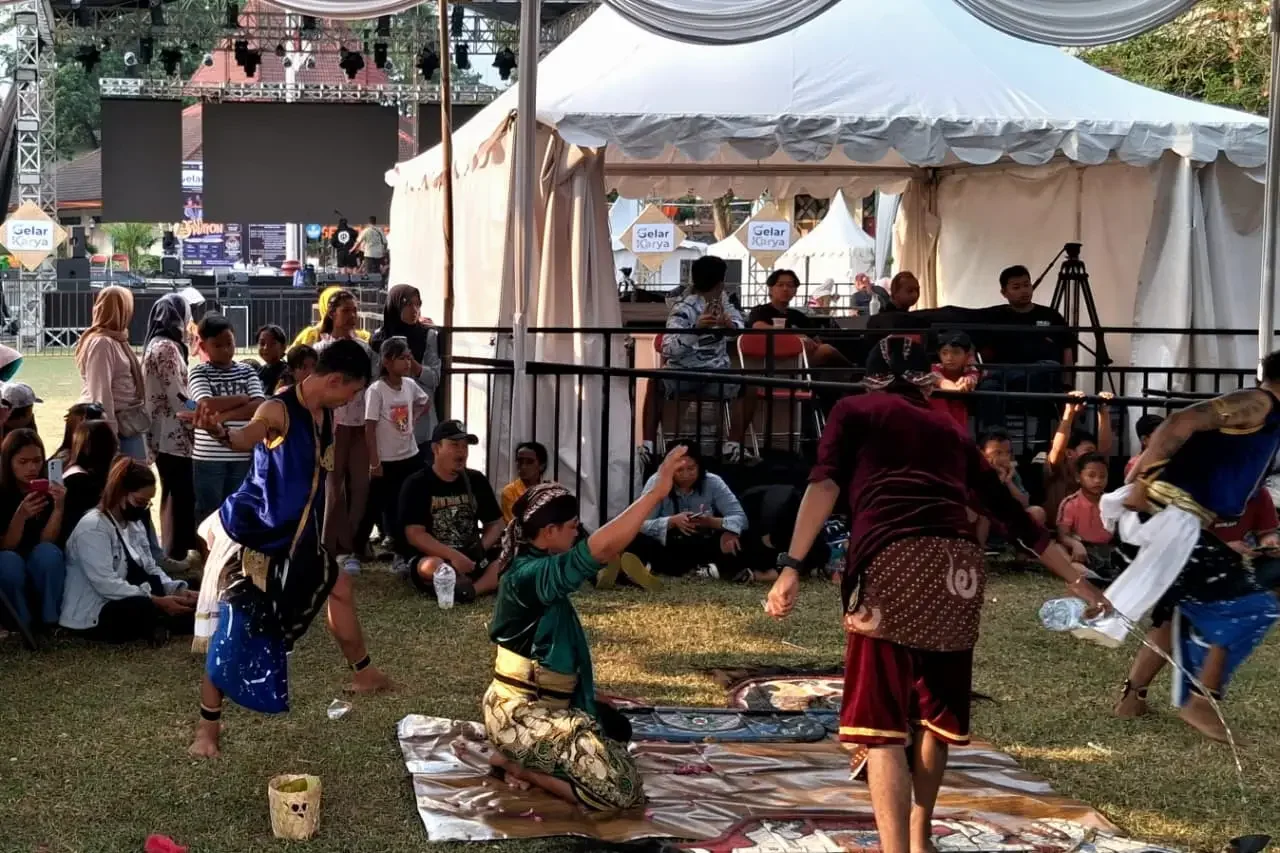
RRI.CO.ID, Sleman – For some audiences, the most anticipated moment in a jathilan performance is when the dancers enter a trance state. But before that moment arrives, Jathilan Putro Barong Budoyo of Sleman, Yogyakarta first carries out a ritual passed down through generations on the night before the performance.
Jathilan is a traditional Javanese dance performance art that depicts the agility of mounted warriors. The warriors ride horse puppet made of bamboo while dancing.
The ritual begins with praying together at the grave of Mbah Barong, an ancestor from whom the group takes its name. After that, members wash the jaran or horse puppet made from bamboo and the performance equipment at a sendang, or natural spring water, located about 20 meters from the grave.
The water from the spring is then brought to the performance venue and sprinkled by the pawang, or ritual master, during the show.
A board member of Jathilan Putro Barong Budoyo, Irwan Darmanta, said the ritual is preserved as part of the group’s identity. The troupe was founded on August 28, 2018, in Padukuhan Barongan, Banyurejo Village, Tempel Subdistrict, Sleman.
“Whether you believe it or not, this is indeed real,” he said on Tuesday, July 28, 2026.
The group began with the desire of local residents who had previously only been spectators and had invited jathilan groups from other areas several times to perform in their village. From there came the idea to form their own group as a community-based artistic platform. The name Putro Barong Budoyo was taken from Mbah Barong, while the women’s dance group was named Sekar Naron Indonesia.
Beyond the ritual, Irwan said the moment most awaited by audiences is when the dancers begin to trance or commonly called as ndadi. The atmosphere becomes even more intense when the performance is held at night. The gamelan music, lighting, and the dancers’ attractions give jathilan a unique appeal for audiences.
“If there’s no ndadi (trance), then it’s just like an ordinary dance,” he said.
While preserving tradition, Putro Barong Budoyo continues to adapt to the times. The group, which now has around 50 to 60 members, is open to people from various regions.
Some of its members are students at State Vocational High School 1 Kasihan and graduates of the Indonesian Institute of the Arts (ISI) Yogyakarta with dance backgrounds. They help develop dance pieces and introduce new songs, so the performance remains appealing without leaving the core rules of jathilan behind.
Putro Barong Budoyo also regularly collaborates with artists from other areas, such as ganong dancers from Purworejo and gedruk performers from Ambarawa, both from Central Java to add variety to the show.
Amid the emergence of modern arts groups such as Salého, Irwan believes each group has its own role in preserving culture. According to him, innovation is necessary so that the art form continues to attract public interest without abandoning its traditional values.
“We don’t see them as competitors, but as partners in preserving culture,” he said.
Jathilan Putro Barong Budoyo’s performance was one of the presentations at the Creative Work Exhibition of the Vocational Education Quality Assurance and Development Center (BBPPMPV) for Arts and Culture. For the group, maintaining rituals, opening space for the younger generation, and continuing to innovate are ways to keep jathilan alive amid changing times. (Annaila Azzahra-EN)
News Recomendation
Loading latest news.....