



Bali Arts Festival Revives Ancient Bangli Myth Through Children's Game
- 02 Jul 2026 23:16 WIB
- Voice of Indonesia
Key Points
- The 2026 Bali Arts Festival (PKB) showcased the traditional kelik-kelikan children's game from Bangli Regency to help preserve Balinese cultural heritage.
- Kelik-kelikan tells the story of a drought-stricken village where residents, an eagle (kekelik), and a crow (goak) compete over a water source.
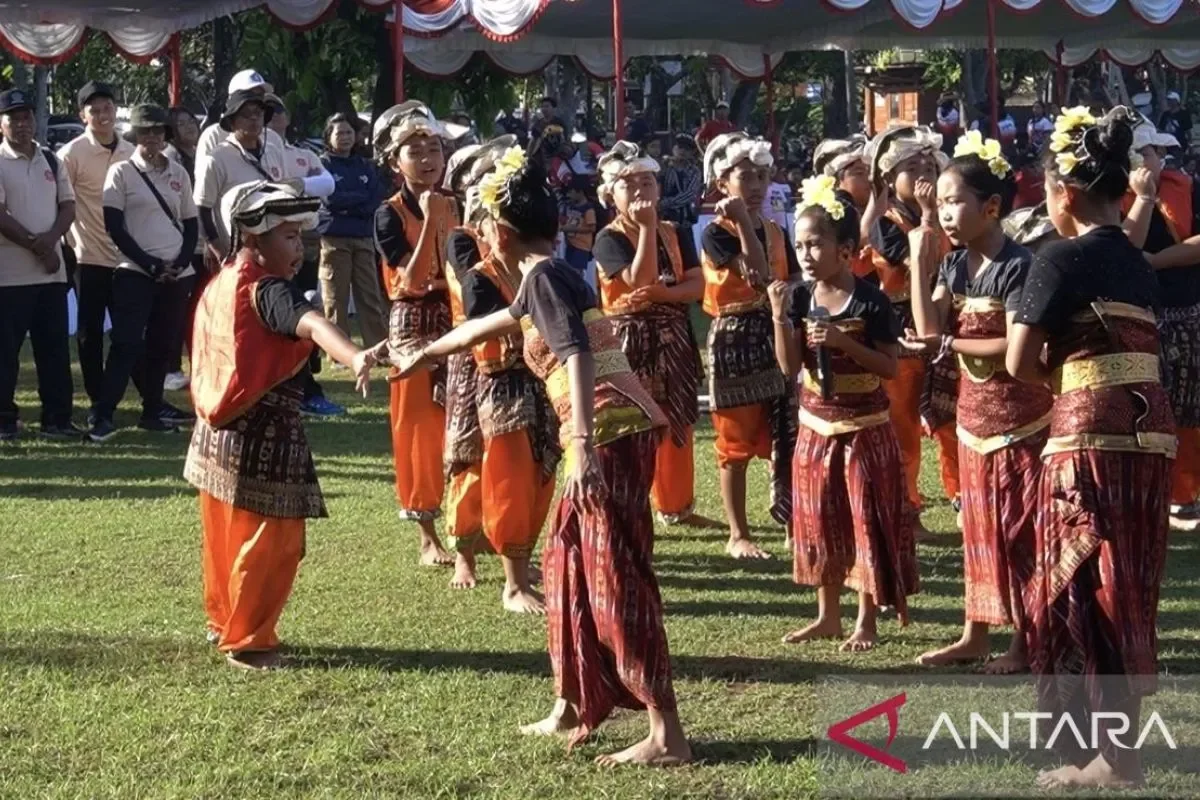
RRI.CO.ID, Denpasar - The 2026 Bali Arts Festival (PKB) became a stage for preserving local mythology by reintroducing the kelik-kelikan, a children traditional game from Bangli Regency, Bali Province. The folk game, which dramatizes a dispute over a water source between villagers, an eagle (kekelik), and a crow (goak), was staged to align ancestral messages with this year’s festival theme of spiritual purification (Atma Kerthi).
“We are redeveloping this culture, excavating the arts that exist in Bali, so we need to preserve cultural heritage through competitions like this,” said Head of the Heritage Traditions Division at Bali’s Culture Agency, I Putu Sutaryana, as quoted by Antara.
Sutaryana said the children’s games contested in the Jantra Tradisi Bali session at PKB 2026 included metajog, terompah, and gala-gala (hadang). The festival also introduced the kelik-kelikan game from Bangli Regency.
The traditional game was chosen because it closely relates to this year’s PKB theme, Atma Kerthi, or spiritual purification. These games are ancestral heritage intentionally revived because they have become increasingly unfamiliar to younger generations.
“These are our cultural games; since the era of our kingdoms we have known these traditions. Now we are redeveloping them and reminding young people so these cultures are not forgotten,” said Sutaryana.
In efforts to preserve traditional children’s games at PKB 2026, Bali Culture Agency identified budget constraints at the regency/city level as a key challenge. Each game requires many children and significant funding support, from training periods to competition day.
Unfortunately, the financial capacity of each region in Bali is uneven. Areas such as Denpasar, Badung, and Gianyar can participate in all categories, while Karangasem must choose competitions that fit its budget.
Nonetheless, Sutaryana hopes this will not diminish enthusiasm for preserving local traditional games beyond the festival stage. A mentor of the Sanggar Seni Suradiva community troupe, I Ketut Gede Agus Adi Saputra, added that his group brought 40 children to perform kelik-kelikan in the Jantra Tradisi Bali session.
This long-standing folk game from Sulahan Village, Bangli, tells the story of a drought-stricken village where residents and the kekelik bird contend over a single water source. When villagers fear the sharp‑beaked kekelik, the goak (crow) arrives to chase it away. For residents, the goak’s arrival is seen as a savior.
In play, dozens of children form a circle while others act as the goak and the kekelik. The two main characters chase each other as the children in the circle try to block them.
Gede Agus said that besides preserving the traditional game, kelik-kelikan also teaches children concentration and provides indirect physical exercise. He therefore hopes that beyond competitive staging, such games will be actively played by children from kindergarten through elementary school. ***
News Recomendation
Loading latest news.....