



Sastra Saraswati Sewana Revives 13th-Century Maritime Vision
- 01 Jul 2026 20:02 WIB
- Voice of Indonesia
Key Points
- The Puri Kauhan Ubud Foundation held the 6th Sastra Saraswati Sewana cultural festival in Bali on 29 June 2026.
- This year's theme, Cakrawala Mandala Dwipantara, revives the 13th-century Nusantara maritime geopolitical vision of King Kertanegara.
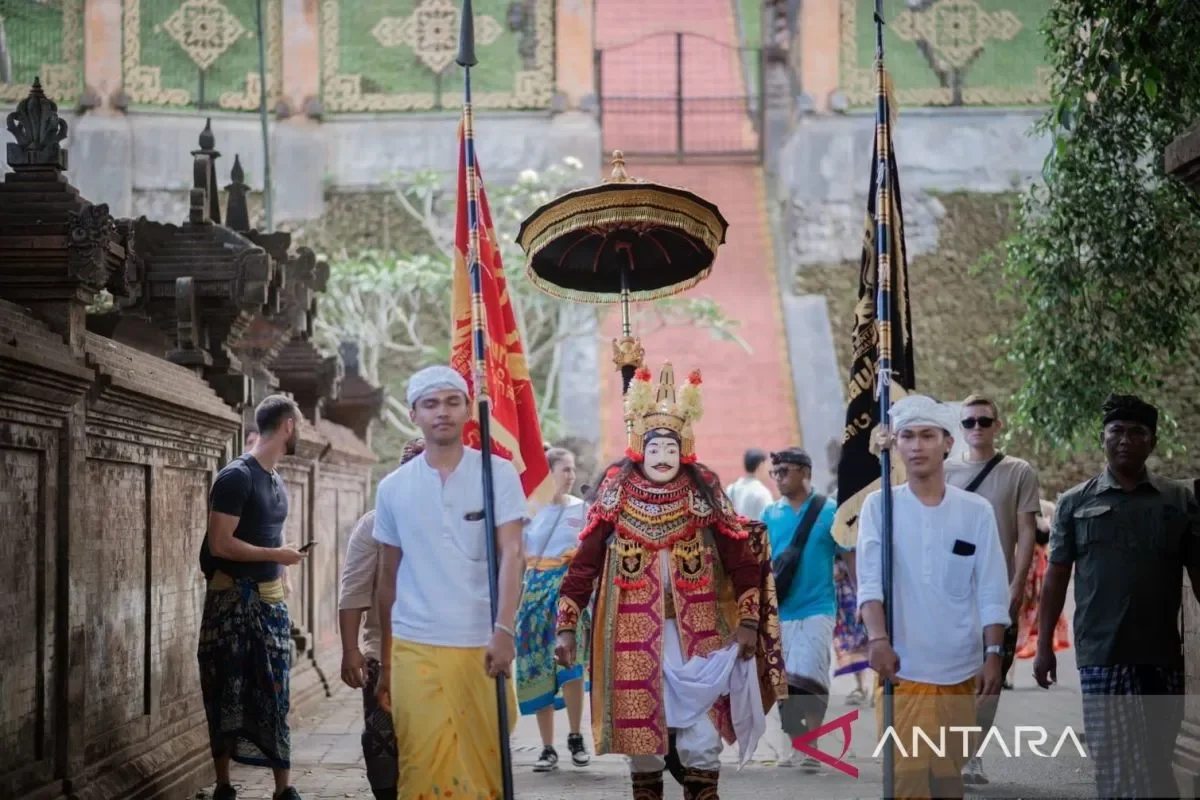
RRI.CO.ID, Jakarta - The Puri Kauhan Ubud Foundation has revived the 13th‑century Nusantara maritime geopolitics concept by staging the 6th Sastra Saraswati Sewana cultural festival, themed Cakrawala Mandala Dwipantara. This year’s event coincided with the Soma Paing Langkir and Purnama Kasa observances at the Wantilan of Tirta Empul Temple in Tampaksiring, Gianyar, Bali on Monday, 29 June 2026.
Highlighting the ideas of King Kertanegara, the festival aims to make the archipelagic unity perspective relevant again amid contemporary challenges facing Indonesia as the world’s largest maritime nation.
Chairperson of the Puri Kauhan Ubud Foundation, Anak Agung Ngurah Ari Dwipayana, said the theme Cakrawala Mandala Dwipantara was chosen for the event. This theme aims to reintroduce Nusantara intellectual heritage as a source of inspiration for addressing present and future challenges.
"The Mandala concept has deep roots in Asian history, drawing from Hindu and Buddhist teachings," he said, as quoted by Antara.
Known familiarly as Gung Ari, he explained that around the 4th century BCE Kautilya, during Chandragupta Maurya’s rule, wrote the Raja Mandala theory in the Arthaśāstra. Kautilya’s Raja Mandala is often regarded as one of the world’s earliest geopolitical and international relations theories.
He continued that centuries later Sri Maharaja Kertanegara, the last ruler of the Singhasari kingdom, developed the Mandala idea in the context of an archipelagic state. In Kertanegara’s thought, Mandala was not only a spiritual space but also a geopolitical vision that viewed the Nusantara archipelago as a unified civilization.
"The sea is not a divider but a connector. Islands are not scattered fragments but nodes forming a single cultural horizon. Sri Maharaja Kertanegara’s Mandala concept is an authentic Nusantara idea. Through the Cakrawala Mandala Dwipantara concept, separated islands are seen as a maritime, cultural, and civilizational unity," he said.
Gung Ari stressed that Kertanegara’s idea remains relevant for contemporary Indonesia. As the world’s largest archipelagic nation, society needs perspectives that unite diversity, build inter‑island solidarity, and strengthen national identity rooted in Nusantara’s noble values.
At the Sastra Saraswati Sewana opening, the Napak Pertiwi performance of the Sri Aji Dalem Jawi masked dance was staged. The figure of Sri Aji Dalem Jawi symbolizes the personified spirit of Javanese rulers who historically envisioned a united Nusantara.
As part of today’s program, the Puri Kauhan Ubud Foundation presented the Sastra Saraswati Sewana Nugraha awards to two prominent figures. The awards honored Sang Sampun Lepas I Gusti Bagus Sugriwa and Ida Wayan Oka Granoka for their lifetime dedication to scholarship, culture, and service to the Balinese community.
At the festival’s opening peak, the foundation held a Dharma Panuntun session that invited Para Wiku and Para Wikan to discuss the topic Bhuwana Sarira Mandala. ***
News Recomendation
Loading latest news.....