



Banyuwangi’s Kebo-keboan Ritual Attracts Global Tourists
- 30 Jun 2026 19:16 WIB
- Voice of Indonesia
Key Points
- Thousands of domestic and international visitors attended Banyuwangi's centuries-old Kebo-keboan ritual, celebrating gratitude for harvests and prayers for future prosperity.
- The annual festival boosted local MSMEs, with increased sales for food vendors, homestays, and small businesses while promoting cultural tourism.
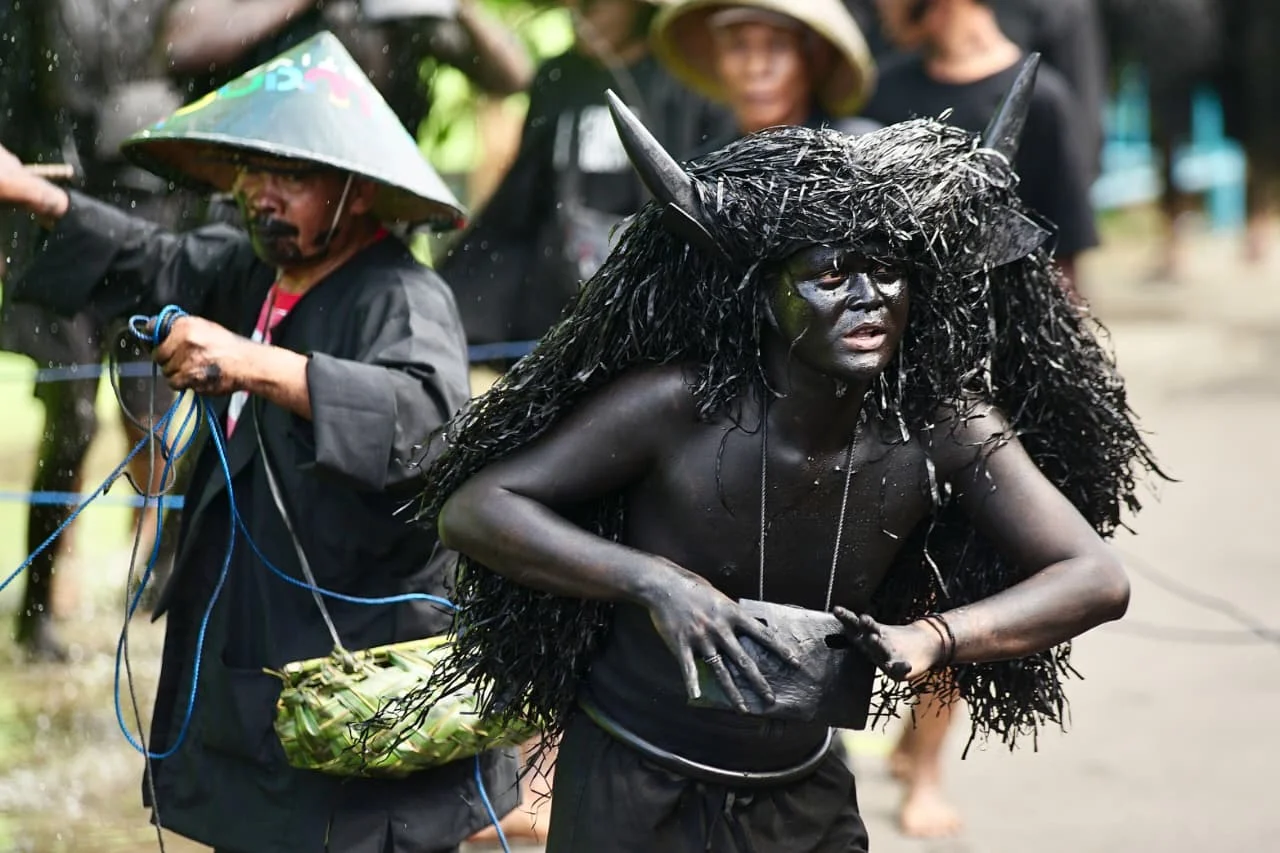
RRI.CO.ID, Banyuwangi - Thousands of spectators and international travelers packed the streets of Alasmalang Village in Singojuruh Subdistrict, Banyuwangi, East Java, to witness the raw, hypnotic energy of the traditional Kebo-keboan ritual.
Held on Sunday, June 28, 2026, this centuries-old agrarian festival serves as a profound collective expression of gratitude for a successful harvest and a spiritual plea for continued soil fertility and community protection. The complex communal event began with a village-wide feast, where residents and guests shared tumpeng (sacred cone-shaped rice mounds) and the iconic local culinary delicacy, Pecel Pithik.
The atmosphere shifted dramatically during the ider bumi procession. Dozens of chosen village men transformed themselves into human-buffalo avatars, covering their bodies entirely in thick, pitch-black charcoal soot, donning large artificial horns, and tying metallic bells around their wrists and ankles.
As they paraded toward the four cardinal points of the village, the participants channelled the spirit of the water buffalo, wallowing in deep mud, rolling across the parade paths, and mimicking the heavy movements of livestock plowing the rice fields.
"This tradition has been going on for hundreds of years. Residents have preserved it by carrying it out from generation to generation. I express my appreciation to the traditional elders, cultural figures, youth of Alasmalang, and all parties who continue to keep the flame of this tradition alive," Banyuwangi Regent Ipuk Fiestiandani said during the festivities, as quoted by Infopublik.id.
Regent Ipuk affirmed that the Kebo-keboan performance is not merely a colorful spectacle staged for tourist cameras. Instead, it serves as a foundational cultural pillar that teaches hard work, deep-rooted discipline, and community cooperation.
"These values align with the spirit of Banyuwangi, namely Tandang Bareng (working together and growing together)," she added, linking the ancestral ritual to the modern governance motto of collective regional growth.
The sheer visual intensity of the ceremony has increasingly caught the attention of international cultural explorers. "This is incredibly unique. I have never seen a tradition quite like this anywhere else in the world. It is absolutely mesmerizing," remarked Tara, a traveler from the United States who joined the crowds in the mud.
Beyond its massive value to cultural preservation, the influx of international and domestic tourists has injected vital weekend revenue directly into the village's micro, small, and medium enterprises (MSMEs). Local culinary stalls, snack vendors, and homestay operators reported a massive spike in baseline daily profits.
"From drinks to snacks, everything is selling well. Thank God," said Siti, a local shopkeeper operating along the main parade route.
Dating back to the 18th century, the Kebo-keboan tradition is believed to have originated from a spiritual vision received by a revered local elder, Buyut Karti. Facing a severe plague and crop failure, he was instructed to stage a village cleansing ritual featuring men transformed into water buffaloes to restore cosmic balance, secure crop fertility, and protect the populace.
Today, this rich tradition continues to be passionately preserved by agrarian communities in both Alasmalang and Aliyan Village in Rogojampi Subdistrict, proving that hyper-local wisdom can successfully drive modern sustainable tourism. ***
News Recomendation
Loading latest news.....