



'Pasar Kangen' Returns, Bringing Nostalgia and Community Spirit to Yogyakarta
- 26 Jun 2026 05:36 WIB
- Voice of Indonesia
Key Points
- Pasar Kangen 2026, running from June 22–28 at Yogyakarta Cultural Park (TBY), carries the Javanese philosophical theme Ono Upoyo Ono Upo.
- The Yogyakarta Cultural Agency curated 300 selected tenants to showcase the region's culinary and creative economy.
- Local artists and performers enriched the festival experience with diverse traditional Javanese showcases.
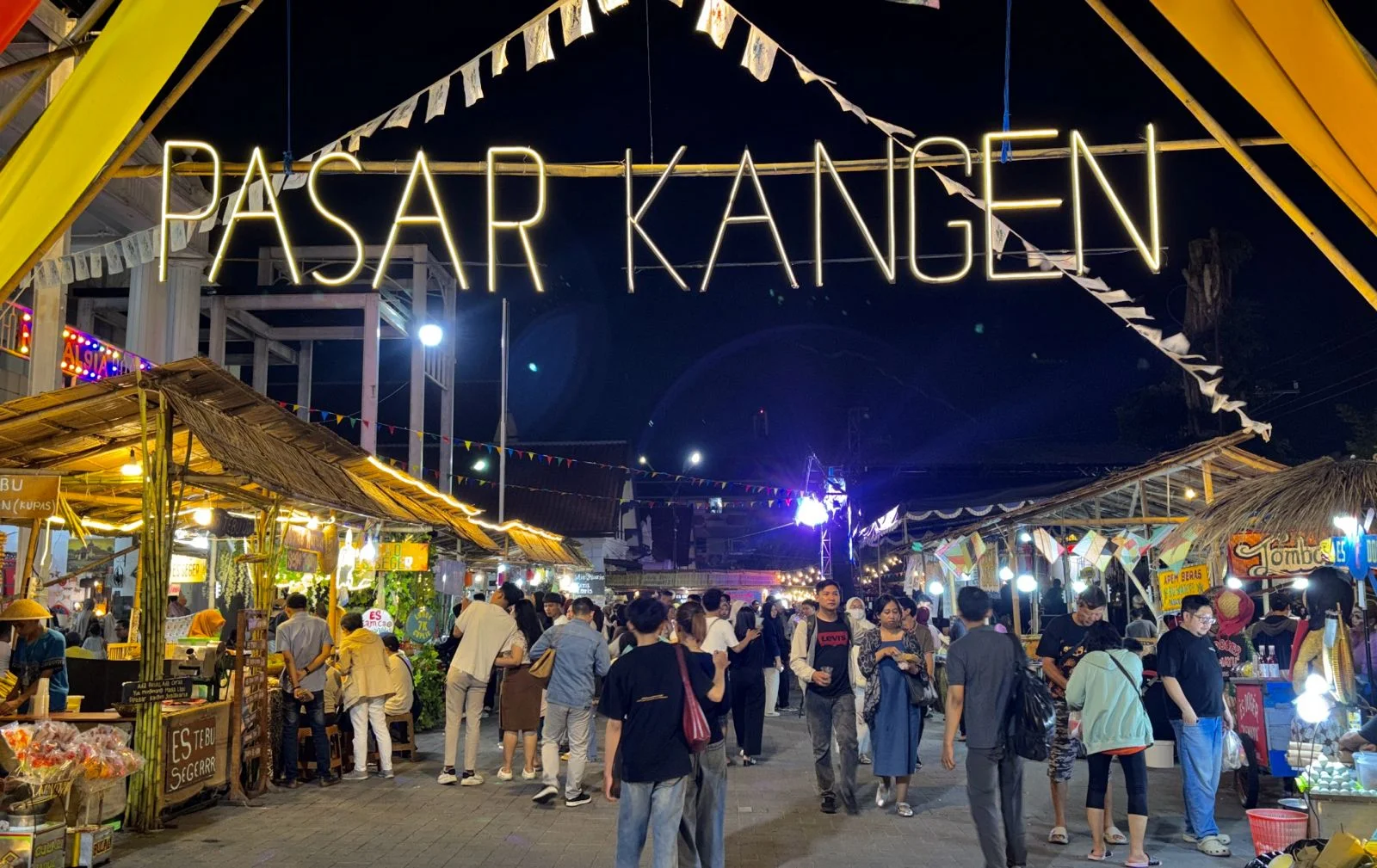
RRI.CO.ID, Yogyakarta - Yogyakarta Cultural Park (TBY) once again transforms into a hub of tradition and togetherness as Pasar Kangen unfolds from June 22–28, 2026.
The beloved festival invites visitors to enjoy evening markets, savor heritage foods, and immerse themselves in art and cultural performances. Admission is free, with activities open daily from 3 p.m. to 10 p.m. local time.
Located less than 500 meters from the city’s Ground Zero, TBY offers easy access for both local residents and international tourists.
This year’s edition was officially opened by Deputy Governor KGPAA Paku Alam X, carrying the theme Ono Upoyo Ono Upo--a Javanese proverb meaning “Where there is effort, there is a way.”
“Pasar Kangen is a meeting space between memory and hope, where familiar traditions return to life,” he remarked, as quoted on the provincial administration's website.
First held in 2007, Pasar Kangen was born out of the spirit of recovery after the 2006 Yogyakarta earthquake, designed to revive the nostalgic atmosphere of traditional markets and strengthen community bonds.
Over the years, it has grown into one of the city’s most anticipated cultural events, blending culinary heritage, antiques, crafts, and performing arts.
“The essence of Pasar Kangen is not to return to the past, but to learn from it. I hope this event not only benefits the community economically but also reinforces the cultural ecosystem that is the heartbeat of Yogyakarta,” the deputy governor added.
Yogyakarta Provincial Cultural Agency Head Dian Lakshmi Pratiwi emphasized that Pasar Kangen carries a mission far beyond nostalgia. She described the festival as a cultural space that educates, preserves, and regenerates local wisdom, making it more than just a marketplace of memories.
“Pasar Kangen is not merely a medium of nostalgia, but a means of education, preservation, and regeneration of local wisdom values,” Dian said.
She also highlighted the scale of participation this year, noting that 300 curated tenants were selected from 687 applicants. Of these, 165 stalls feature culinary delights, while 135 showcase crafts, antiques, and services--ensuring a diverse representation of Yogyakarta’s cultural and creative economy.
Referring to the theme, Dian said that the Javanese philosophy Ono Upoyo Ono Upo conveys that sincere effort brings livelihood and blessings. She linked this wisdom to the values embedded in the festival.
Artistic involvement, she added, is central to enriching the visitor experience.
“The involvement of artists strengthens Pasar Kangen as a cultural interaction space for all communities. Visitors gain a cultural experience--not only enjoying food but also sensing traditions through performances we have prepared,” she remarked.
This year’s program features a wide range of traditional arts, including ketoprak (Javanese folk theater), wayang (shadow puppetry), reog (lion‑tiger dance), keroncong (Indonesian music blending Portuguese roots with local harmonies), jathilan (trance dance), campur sari (Javanese crossover music), and other heritage performances.
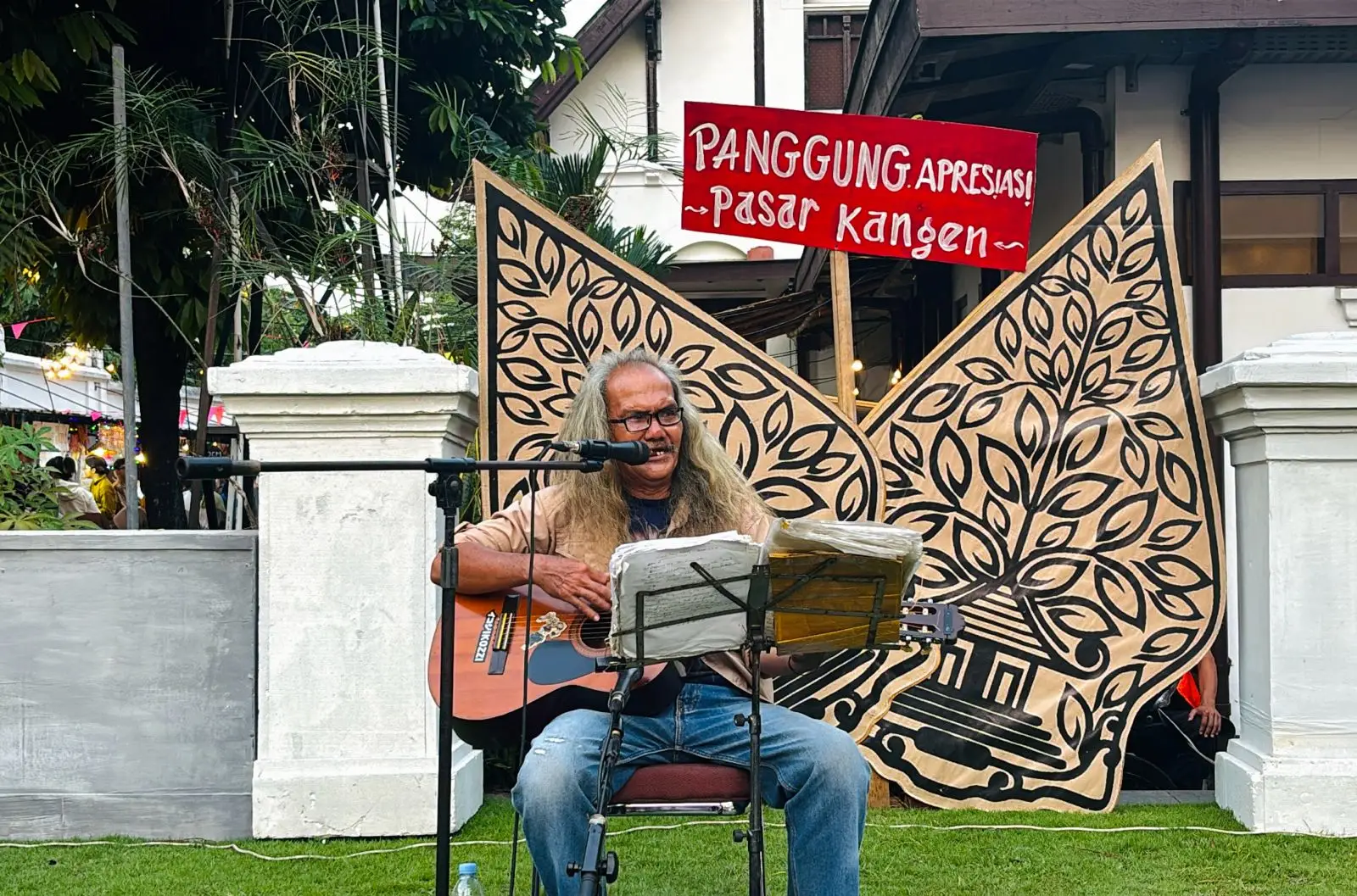
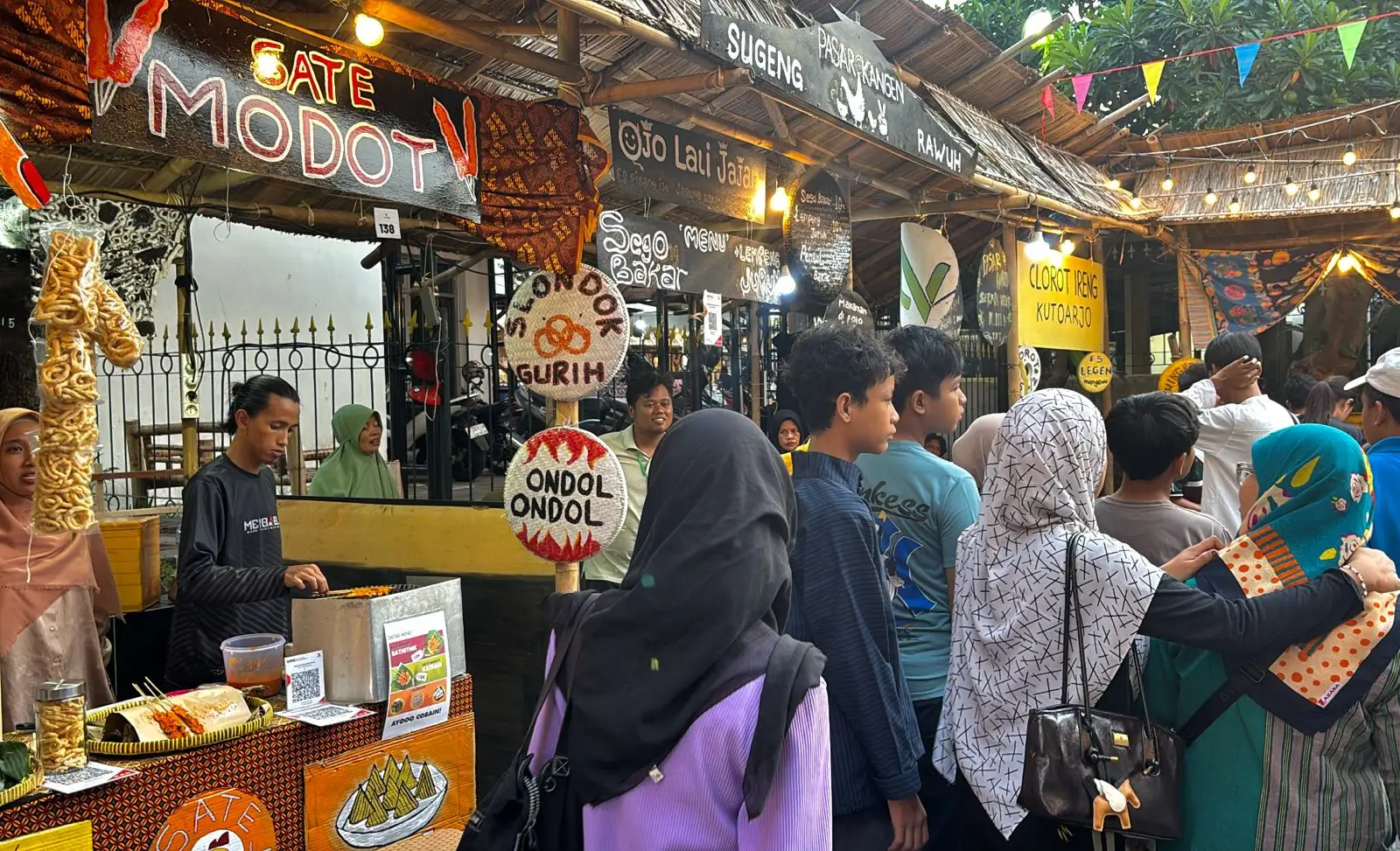
These diverse showcases ensure that visitors experience the richness of Yogyakarta’s living traditions alongside its culinary nostalgia. Food remains a centerpiece, with prices ranging from IDR 5,000 (USD 0.28) to IDR 30,000 (USD 1.67), keeping the festival accessible to all.
Among the highlights are mie penthil (old‑style noodles), es goyang (swinging ice cream), es gabus (rainbow popsicle), jamu (traditional herbal drink), kerak telor (spiced rice and egg omelette), bir jowo (non‑alcoholic Javanese herbal drink), limun (traditional soda), and skewers.
Other highlights are heritage snacks such as kipo (sweet glutinous rice dumpling), putu mayang (steamed rice flour noodle cake), carabikang (rice flour pancake), gethuk (mashed cassava cake served with grated coconut), and cenil (tapioca pearls).
Regional specialties also enrich the menu, including clorot (palm sugar cake) from Purworejo, Central Java; geblek (savory cassava fritter) from Kulon Progo, Yogyakarta; and serabi (coconut pancake) from Surakarta, Central Java.
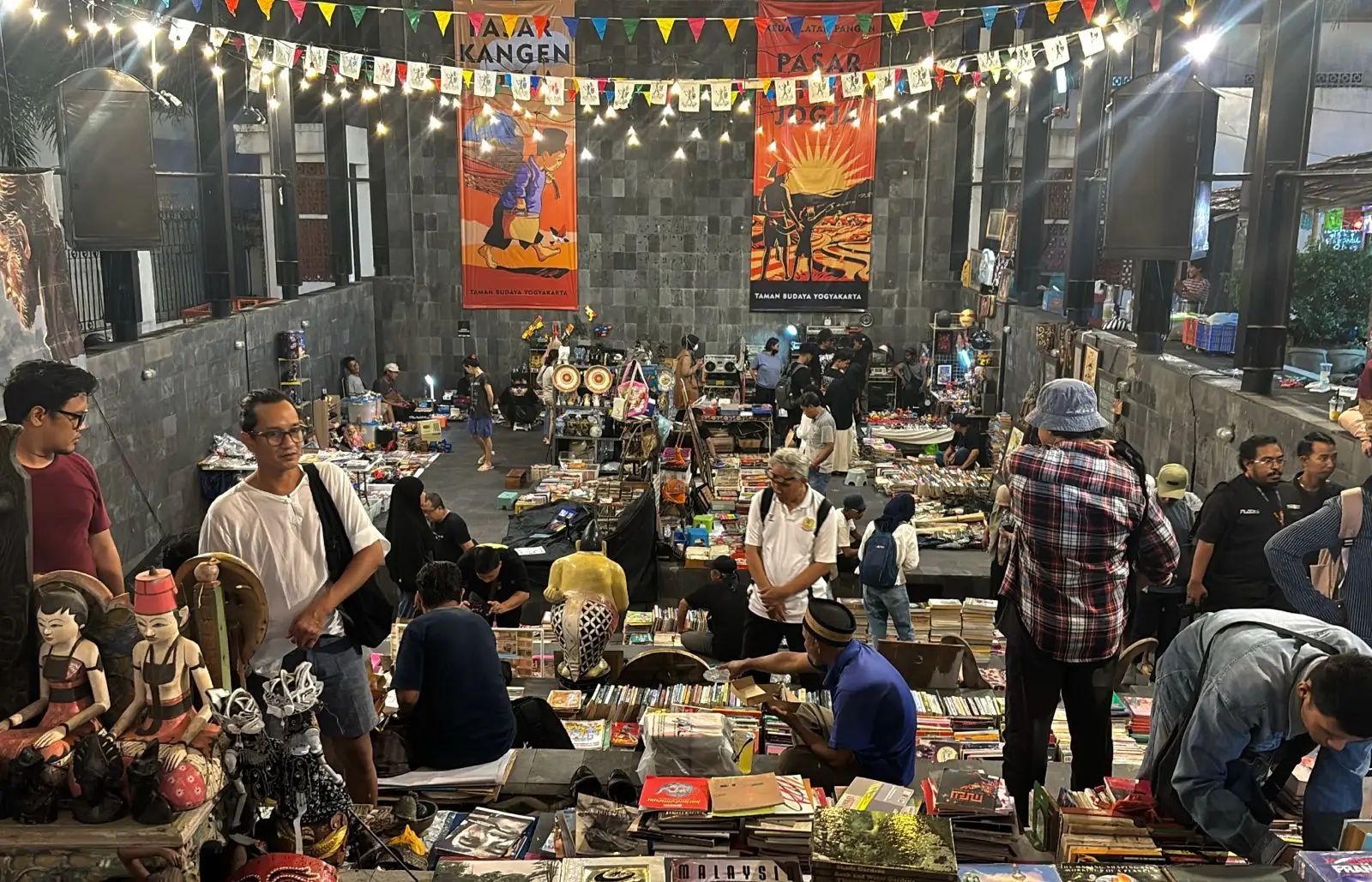
Beyond food, Pasar Kangen offers antiques in excellent condition, traditional toys, and services such as portrait sketching. Together, these elements transform the festival into a marketplace that blends nostalgia with creativity, cultural pride, and community spirit.
Among the many visitors was Rena, a second‑semester student from a Yogyakarta university, who admitted her curiosity was sparked by social media.
“It often appeared on TikTok and Instagram, so I got curious. It’s unique because traditional snacks are rarely found nowadays, and here we can rediscover foods not usually sold in public places,” she explained.
Her experience extended beyond culinary delights. After exploring deeper into the festival, Rena was drawn to the antique section, where nostalgia came alive through objects of the past.
“Today I bought mie penthil and jamu beras kencur (rice and aromatic ginger herbal drink), and I explored the antique section where the items are really unique--like cassettes, walkmans, currency, Yogyakarta’s traditional attire, and secondhand books in good condition. The art performances were fun too,” she said.
With its central location near Yogyakarta’s landmark, affordable culinary offerings, and diverse cultural showcases, Pasar Kangen has reaffirmed its role as one of the city’s most cherished cultural events--bringing together memory, heritage, and community spirit in the heart of Yogyakarta. ***
News Recomendation
Loading latest news.....