



Mexican Gamelan Troupe Showcases Balinese Arts at World Cup Festival
- 25 Jun 2026 10:19 WIB
- Voice of Indonesia
Key Points
- Mexican-led troupe Gamelan Luz y Fuerza captivated World Cup festival crowds with Balinese gamelan music, Kecak chants, and traditional dances.
- The group is set to perform at Mexico City’s Zócalo Plaza in July 2026 before an audience of more than 10,000 football fans.
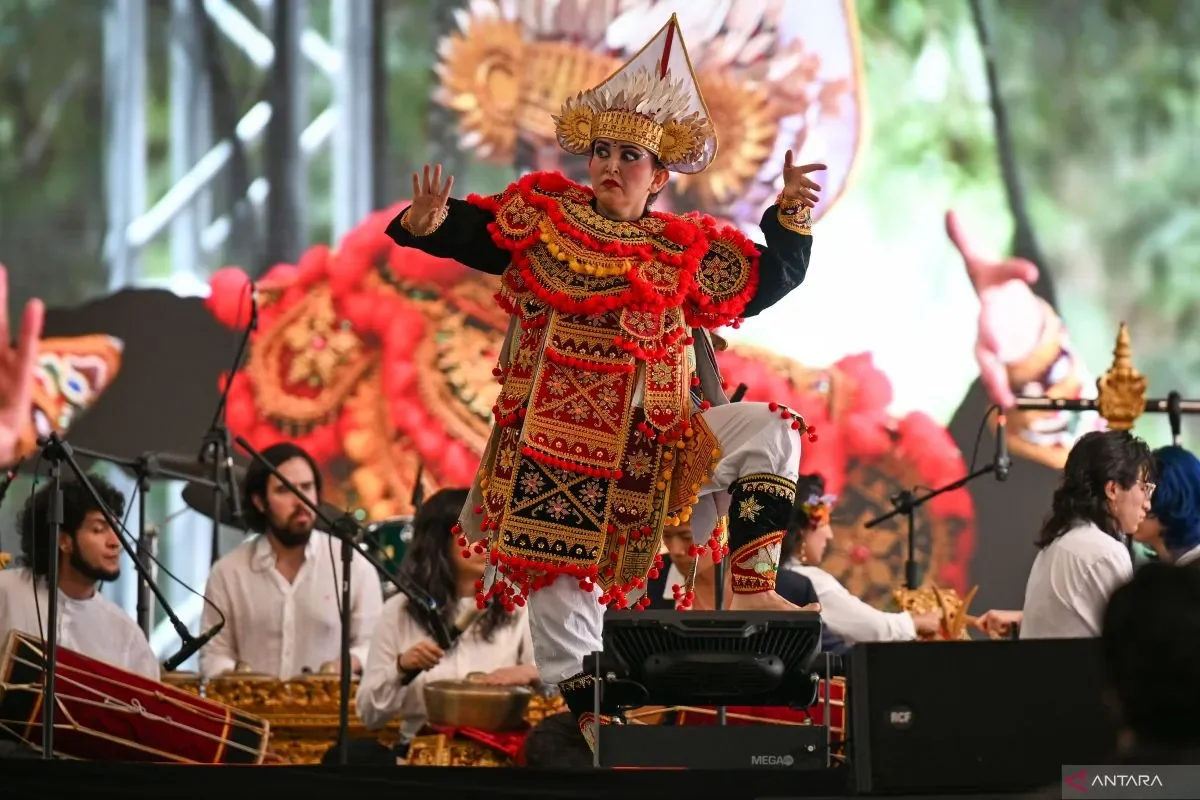
RRI.CO.ID, Mexico City - In the heart of Mexico City, a landscape fundamentally defined by the fast, brassy acoustic rhythms of traditional mariachi music, the intricate, metallic chimes of Balinese gamelan safely crossed the Pacific Ocean to captivate an audience of thousands.
At the Aldea Global 2026 Cultural Festival, hosted at the Puerta de los Leones in Bosque de Chapultepec, a unique local ensemble named Gamelan Luz y Fuerza (Light and Power Gamelan) staged an explosive showcase of traditional Indonesian performing arts.
Sponsored directly by the Embassy of the Republic of Indonesia (KBRI) in Mexico, the performance served as a high-visibility cultural campaign designed to capture the global excitement surrounding the 2026 FIFA World Cup, currently being co-hosted across Mexico.
What transformed the dynamic performance from a standard diplomatic showcase into an extraordinary milestone of cross-cultural adaptation was the composition of the troupe itself: nearly all the musicians and dancers are native Mexican citizens who have dedicated their artistic lives to mastering the complexities of Indonesian heritage.
Under the shaded canopies of the urban park, the troupe treated crowds to a rigorous curation of classical Balinese choreography, including the synchronized movements of the Oleg Tamulilingan (The Bumblebee Dance) and the warrior posturing of the Tari Baris.
The energy reached a fever pitch when the Mexican instrumentalists transitioned into an energetic vocal orchestra, throwing their hands into the air to echo the rapid, overlapping "cak, cak, cak" syncopation of the Kecak monkey chant, transforming the park into a makeshift theater reminiscent of Bali's Uluwatu cliffs.
The ensemble’s director, Ethan Zhihao Wang, an American-born musician of Chinese descent who studied directly under Balinese master artist I Nyoman Suadin, revealed that the group deliberately engineered a specialized acoustic bridge to help the Mexican public connect with the unfamiliar music.
"With the more familiar sounds of the drums, we hope to make them more interested in watching our show," said Ethan, as quoted by Antara.
Ethan noted that the rapid, dynamic energy of Balinese gamelan holds an organic, almost magical capability to unite disparate urban communities across language barriers. The formula proved incredibly potent as hundreds of spectators abandoned the grass to surge toward the front of the stage, mimicking the sharp hand placements of Balinese dance during a collaborative, high-energy closing number that triggered a prolonged standing ovation.
For the local artists sharing the stage, the performance marked the culmination of decades of disciplined study. Mexican dancer Olinka Torres, who delivered a flawless rendition of the Oleg Tamulilingan, revealed that her obsession with Indonesian culture began more than 20 years ago when she first witnessed a Balinese dance at the age of twelve.
Torres eventually uprooted her life to live in Indonesia long-term, enrolling formally at the Indonesian Institute of the Arts (ISI) in Bali to absorb the discipline directly from its ancestral source. While she previously struggled to maintain a localized Balinese art studio in Mexico due to shifting student schedules, leaving her to perform solo routines over pre-recorded soundtracks, the rise of Gamelan Luz y Fuerza has breathed new life into her craft.
"I lived in Bali for a long time and studied at ISI Bali," Torres mentioned.
Indonesian Ambassador to Mexico, Toferry Primanda Soektikno, highly praised the technical execution of the group, noting that despite their Mexican origins, the precision and emotional delivery of the ensemble rivaled professionals performing on the ground in Indonesia.
The ambassador revealed that after passing the highly competitive selection process for the Aldea Global festival, the troupe is being propelled onto an even grander geopolitical stage. During the first week of July 2026, the embassy will sponsor the group to headline a massive public showcase at the El Palacio Nacional in the iconic Zócalo plaza, the true geographic and historical heart of Mexico City.
"Next, the gamelan music and Balinese dances will echo even wider at the Zócalo in the first week of July 2026," Toferry explained.
The strategic timing of the upcoming Zócalo performance is synchronized directly with a massive World Cup public viewing event, which is expected to pack more than 10,000 international and local football fans into the historic square.
Ambassador Toferry emphasized that this high-volume public platform provides an unparalleled soft-power opportunity to broadcast Indonesian identity to Latin America. To sustain this momentum beyond major festivals, the embassy continues to operate the Indonesian Cultural Center in Mexico City, allowing local citizens to study gamelan and traditional dance directly from state-backed instructors. ***
News Recomendation
Loading latest news.....