



Dayak Kenyah Urged to Preserve Global Heritage Amid Modernization
- 29 Mei 2026 19:13 WIB
- Voice of Indonesia
Key Points
- MADN President and DPD member Marthin Billa emphasized that the main challenge for the Dayak Kenyah people is preserving their culture rather than gaining recognition.
- Evidence of the Dayak Kenyah’s global presence can be found in Dutch archives, museums, foreign writings, and historical photographs.
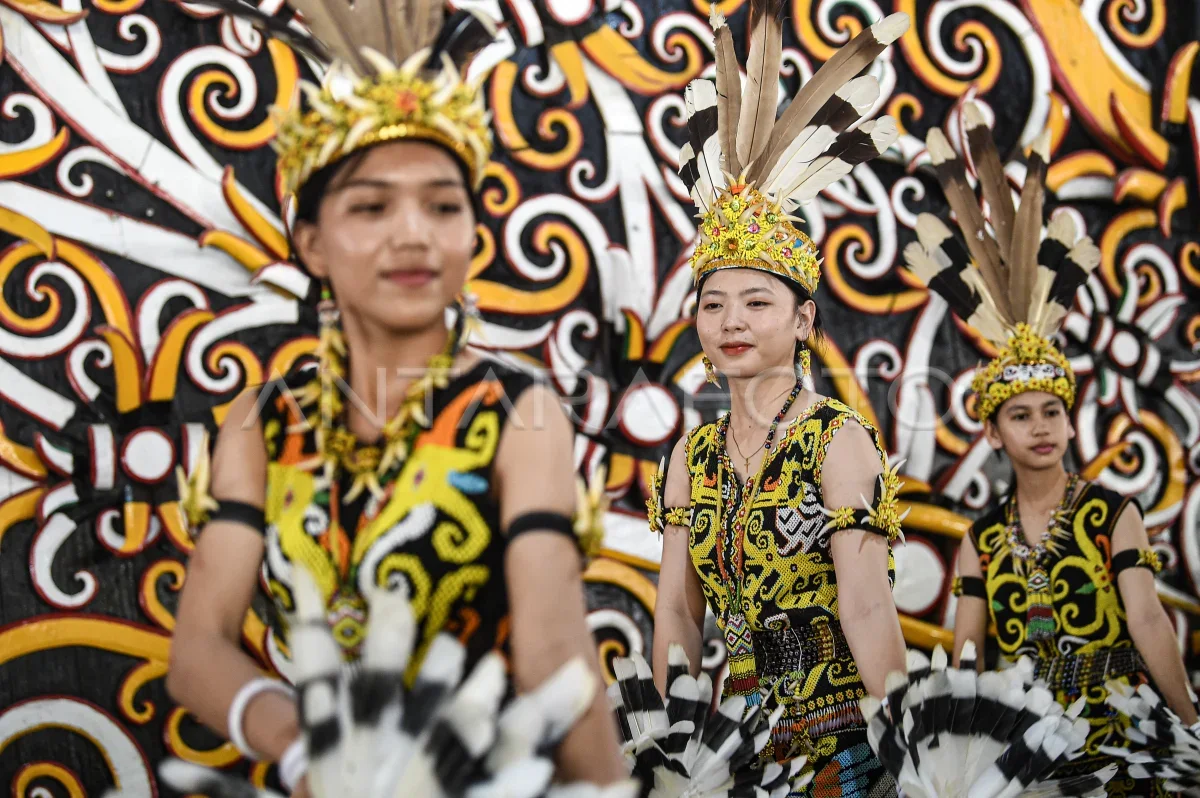
RRI.CO.ID, Tanjung Selor - The Dayak Kenyah people of North Kalimantan had already left their mark on the world long before indigenous heritage became a global concern, which are in Dutch archives, foreign writings, and museums thousands of kilometers from their ancestral forests. Today, the challenge is no longer recognition, but preservation.
That was the central message delivered by the President of the National Dayak Customary Council (MADN) and a member of the Regional Representative Council (DPD), Marthin Billa. He spoke at the Grand Deliberation of the Dayak Kenyah Customary Institution (LADK) of Bulungan Regency, North Kalimantan Province, held at the Tebengang Lung Jelarai Selor Youth Building in Tanjung Selor on Thursday, May 28, 2026.
"Dayak Kenyah is already known throughout the world, through our culture, our carvings, our dances, and our ornaments. Whether it is the ornaments on our homes, our clothing, our hats, our baby carriers, or our cultural statues. This is proof of a civilization of very high value," he said, as quoted by Antara.
| Baca juga: Indonesia Urges Cultural Heritage Protection |
Marthin, who served as Regent of Malinau from 2001 to 2011, was careful to ground his remarks not in pride alone but in direct personal observation. Having visited the Netherlands and several other countries on multiple occasions, he said the evidence of Dayak Kenyah's global reach is documented and tangible.
"Many of our records are there. Photographs of our ancestors, our ornaments, that many have been written about by foreigners, and that is our pride," he said.
He acknowledged that the Dayak Kenyah are not alone in this recognition, noting that other ethnic communities across the archipelago share a similar heritage. But the deliberation forum, rich with cultural performances and artistic displays, gave him cause to issue a direct appeal: this culture must not be allowed to disappear.
He invoked the words of scholars to press the point home, noting that an ethnic group is strong only when it can preserve, sustain, and love its own culture. When it can no longer do so, he warned, it is only a matter of time before that group fades from the world's memory.
"That is what learned people say. Therefore, every ethnic group must have its culture. Its customs and culture must be defended," he said.
Marthin was, however, careful to distinguish preservation from rigidity. He said that modernization and creativity have their place, which are in the materials used, in the craftsmanship, in how the forms are adapted to contemporary life.
Where traditional necklaces once used real animal fangs, plastic replicas are now acceptable. Where human hair was once woven in, goat hair or fur may substitute.
"This is modernization, but the motif and the essence must not be lost. That is why people say the frame may be new, but the content must remain original. The dances may develop in any style, but the spirit of the Hornbill must never disappear," concluded Marthin. ***
News Recomendation
Loading latest news.....