



'Suluh Bangsa' Exhibition Marks Fourth Annual Tribute to Buya Syafii's Legacy
- 26 Mei 2026 21:40 WIB
- Voice of Indonesia
Key Points
- The fourth "Suluh Bangsa" exhibition focuses on a critical reflection of moral leadership.
- The collective showcase features over 20 diverse works by 18 distinct artists.
- The exhibition acts as both a tribute and an unyielding call for national optimism.
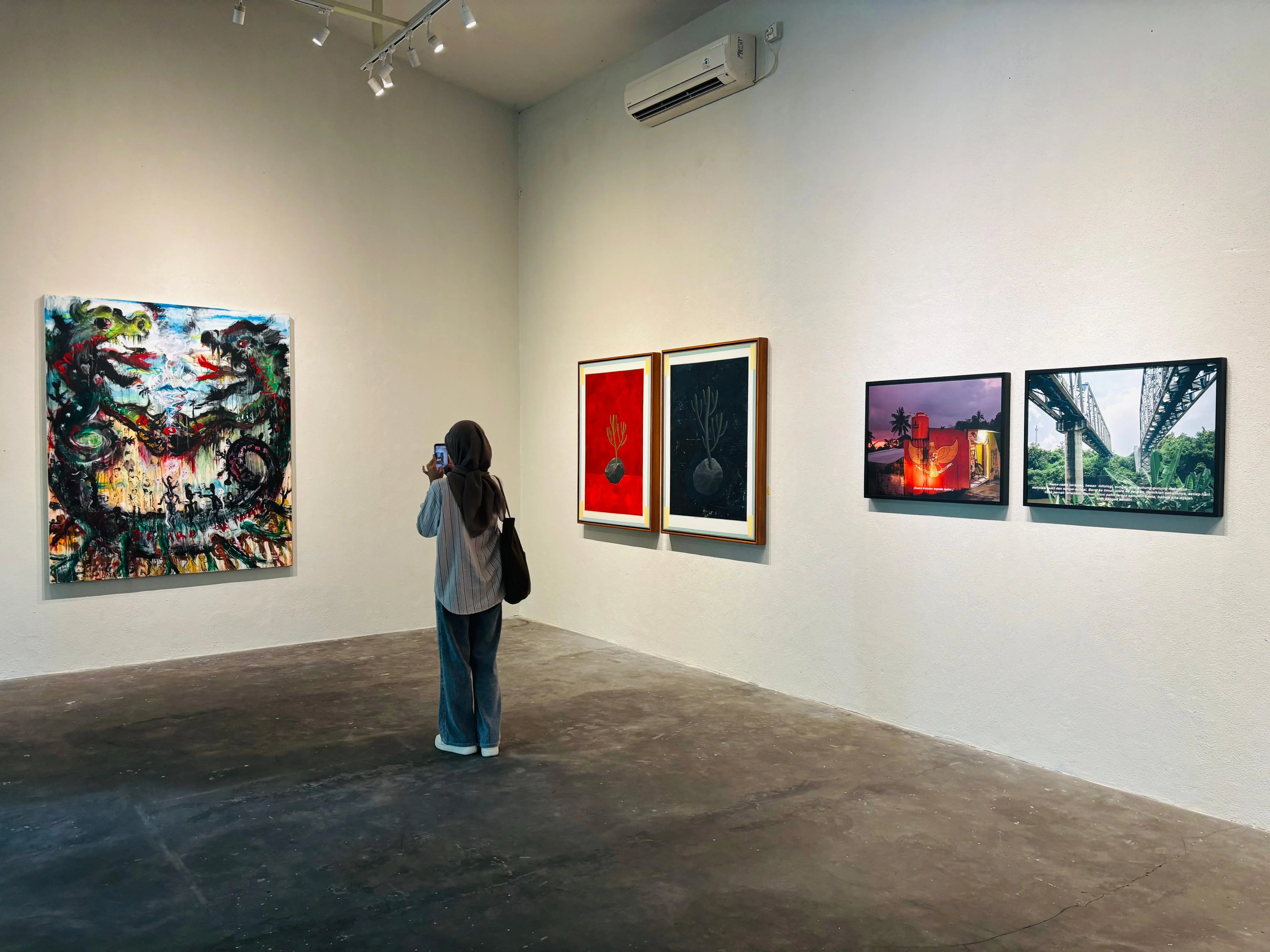
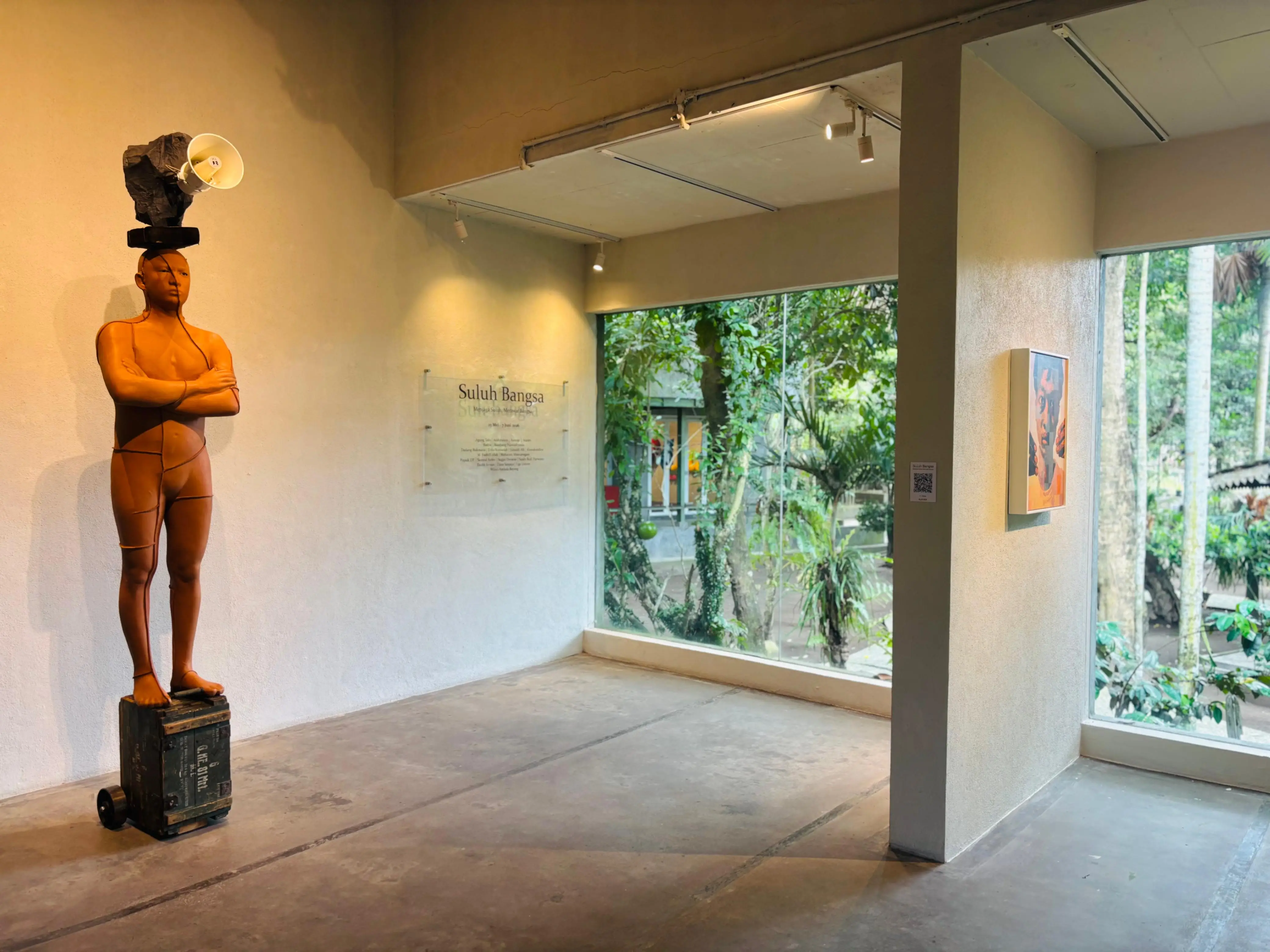
RRI.CO.ID, Yogyakarta - The Suluh Bangsa* exhibition, held at Kiniko Art in Bantul, Yogyakarta, from May 24 to June 7, 2026, marks the fourth edition organized since the passing of Ahmad Syafi’i Ma’arif, one of Indonesia's prominent national figures.
More than a memorial, the event uses Ahmad Syafi’i Ma’arif’s legacy as a lens to reflect on Indonesia’s ongoing crisis of moral leadership and the collective longing for a national teacher: a figure who embodies clarity of thought, moral courage, and social responsibility.
Ahmad Syafi’i Ma’arif, widely known as Buya Syafii, was a respected Muslim intellectual, educator, and former chairman of Muhammadiyah, one of Indonesia’s largest Islamic organizations.
Born in West Sumatra in 1935, he devoted his life to advancing progressive Islamic thought, fostering interfaith dialogue, and strengthening Indonesia’s democratic values.
Often regarded as the nation’s “moral teacher”, Buya consistently reminded leaders and citizens alike that integrity, fairness, and compassion must underpin public life.
His writings and speeches emphasized pluralism, social justice, and the ethical responsibilities of leadership--contributions that continue to shape Indonesia’s intellectual and moral discourse today.
Unlike exhibitions that glorify national figures through heroic portraits, Suluh Bangsa takes a reflective approach. It positions Buya’s memory as a reminder that society once had a leader respected not for political power or image-making, but for integrity and consistency.
His moral courage and intellectual clarity remain central to the exhibition’s narrative. “We commemorate both Buya’s birth and passing in May. Since his death, we have routinely held this exhibition," artist Jumaldi Alfi, who also manages Sarang Building and Kiniko Art Space, explained on Monday, May 25, 2026.
"Buya wanted his ideas on social life, progressive Islam, and nationhood to be disseminated. This event is one way for us, his ideological students, to carry forward that mission,” Jumaldi added.
The exhibition features works from 18 artists, including Agung Tato, Arahmaiani, Asmujo J. Irianto, Badrie, Bambang Pramudiyanto, Dadang Rukmana, Enka Komariah, Jumaldi Alfi, Kemalezedine, M. Fadhlil Abdi, Maharani Mancanegara, Pupuk DP., Samsul Arifin, Sugijo Dwiarso, Susilo Budi Purwanto, Taufik Ermas, Tisna Sanjaya, Ugo Untoro, and Wimo Ambala Bayang.
Together, they present more than 20 works--mostly new--spanning painting, interactive art, and object-based pieces.
Alfi also reflected on Buya’s consistency and moral clarity. “The theme Suluh Bangsa means guarding the nation’s light and conscience. After Buya’s passing, we feel there is no longer a moral compass guiding this country. When Buya was alive, he spoke out even when misunderstood, because he wanted society to think fairly,” he noted.
“Buya’s thoughts, words, and actions were always aligned, never fragmented. That was Buya. I have known him personally for about 20 years, growing up in the same village. From childhood, we were told stories about him, and as I matured, I saw firsthand how his integrity shaped the community,” he added.
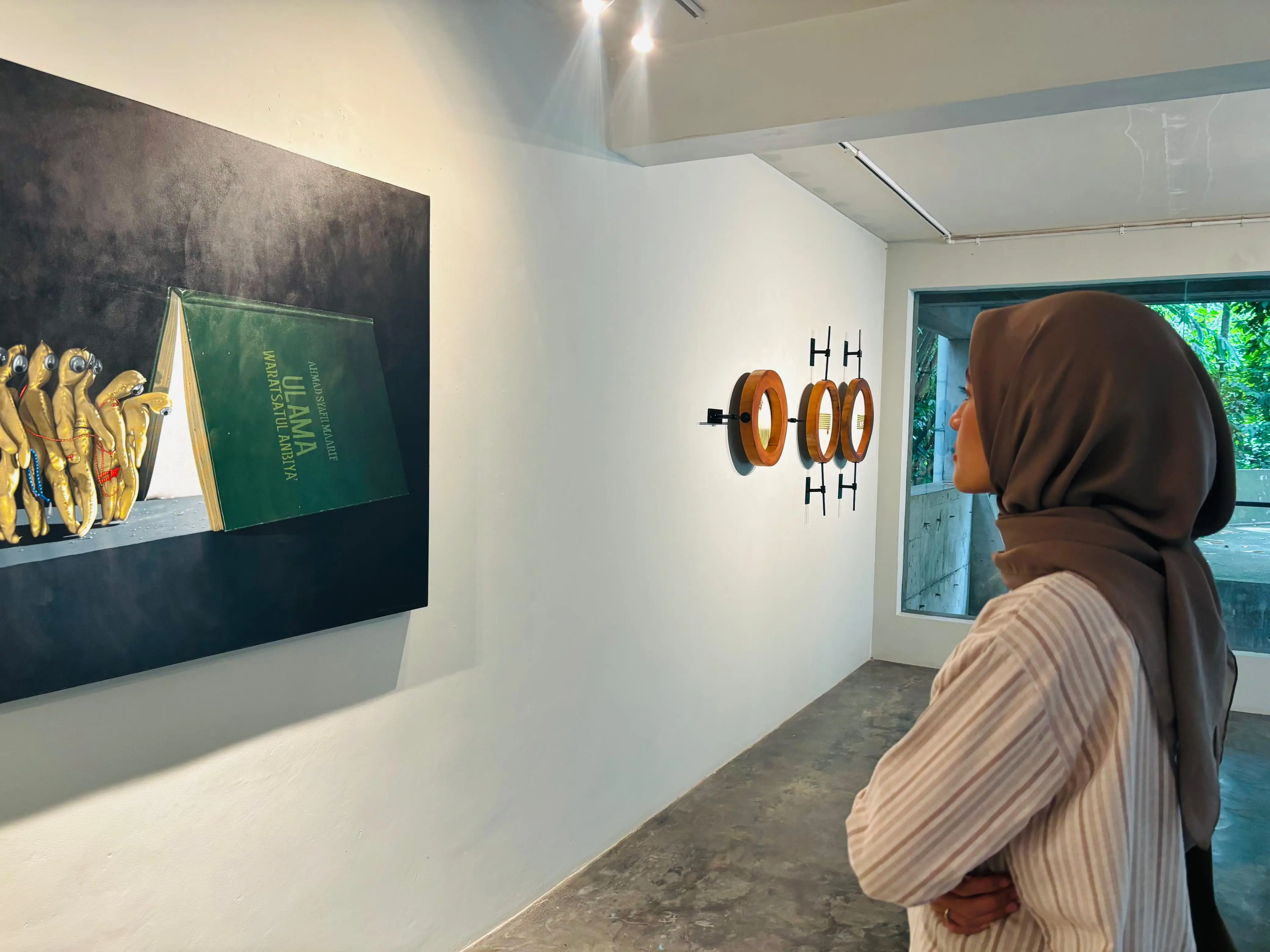
Supported by the Ma’arif Institute and the Indonesian Ministry of Culture, the exhibition also stresses Buya’s optimism. Despite his sharp critiques of Indonesia’s political and social turmoil, he insisted that the Qur’an encourages hope, not despair.
“Buya reminded us that even amid chaos and moral decline, we must remain optimistic. If the Qur’an had verses encouraging pessimism, Buya would have been the first to despair. But it doesn’t, so he held on to optimism,” Alfi reaffirmed.
Ultimately, Suluh Bangsa is not only about remembering Buya but also about sustaining his vision of integrity and optimism.
“This exhibition is meant to remind society that even amid disorder, Indonesians must remain dignified and optimistic. We hope this agenda continues beyond Buya, extending to other national teachers like Gus Dur and others,” Alfi concluded.
The fourth edition of Suluh Bangsa thus stands as both tribute and provocation: a call for reflection on Indonesia’s moral compass, and a reminder that Buya’s legacy of clarity, courage, and optimism must continue to guide the nation forward.
The exhibition is open daily from 10 a.m. to 5 p.m. local time, except on Tuesdays and national holidays when it remains closed. Importantly, admission is free of charge, making it accessible to the wider public. ***
News Recomendation
Loading latest news.....