



NTB Museum Traces Sacred Pesujudan Islamic Textile History
- 26 Mei 2026 07:44 WIB
- Voice of Indonesia
Key Points
- The State Museum of West Nusa Tenggara (NTB) has launched a field study to trace the history and cultural function of the sacred Pesujudan woven textile within Lombok's Islamic communities.
- The research gained momentum after South Australian antique collector Michael Abbot returned a rare Pesujudan cloth in November 2025, bringing the museum's total collection of the textile to 12 pieces.
- Researchers traced the living memory of the fabric to three historical pockets on Lombok Island, which are Pujut (Central Lombok), Bayan (North Lombok), and Sembalun (East Lombok).
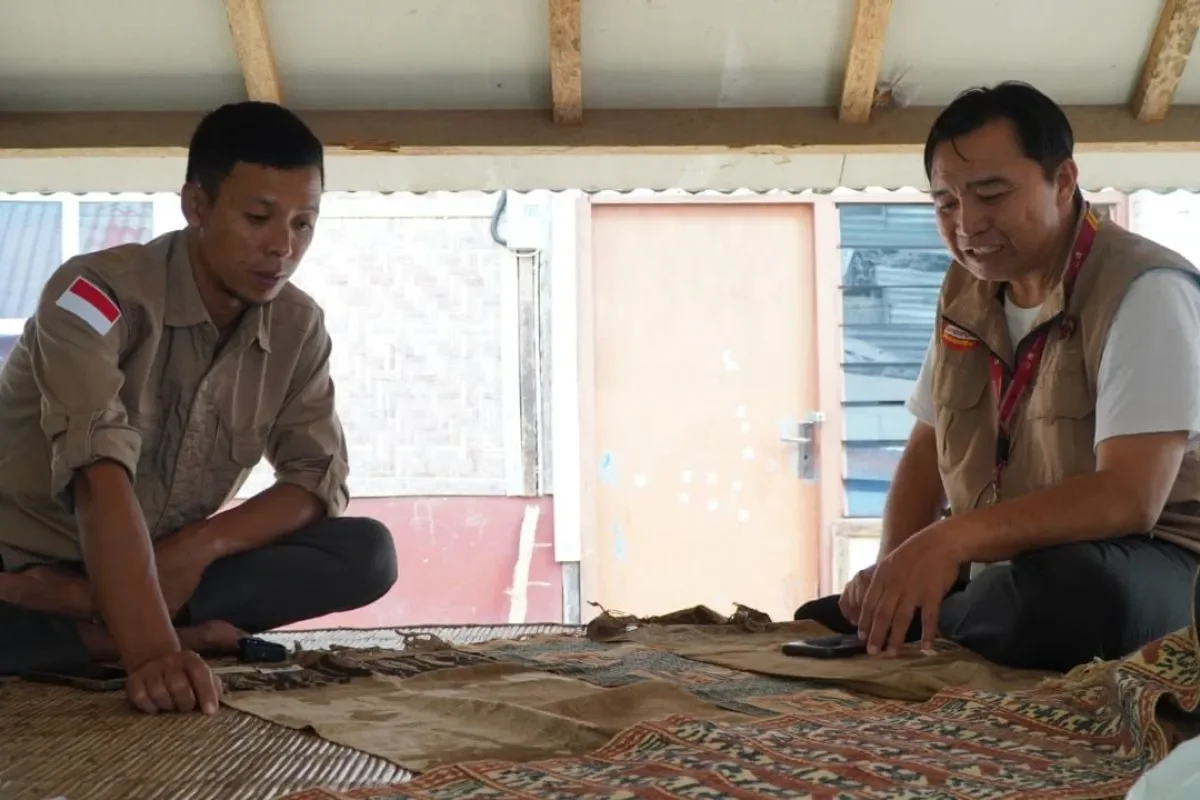
RRI.CO.ID, Mataram - The State Museum of West Nusa Tenggara (NTB) has launched an in-depth historical investigation into the fading legacy of the Pesujudan textile to reconstruct its profound cultural and religious significance within Lombok’s Islamic communities.
Spurred by a recent repatriation, the field study seeks to bridge critical documentation gaps and preserve the vanishing heritage of a sacred woven fabric that once stood at the crossroads of community life, faith, and traditional customs.
The research initiative gained significant momentum following a donation in November 2025, when South Australian antique collector Michael Abbot returned a rare piece of Pesujudan cloth to the museum.
This artifact expanded the museum’s repository to 12 Pesujudan textiles, anchoring an institutional drive to safeguard traditional fabrics. Fieldwork traced the living memory of the textile to three distinct cultural pockets on Lombok Island, which are Pujut in Central Lombok, Bayan in North Lombok, and Sembalun in East Lombok.
The Head of the Museum's Collection Assessment and Care Section, Aulia Rahman Adiputra, emphasized the urgency of the fieldwork during an official briefing in Mataram on Monday, May 25, 2026. He noted that the primary objective is to enrich existing archival data which had long remained scarce.
"We conducted this study to strengthen the information on the collections stored in the museum," explained Aulia, as quoted by Antara.
He added that the team mapped their field sites systematically by revisiting the geographic origins logged in the museum’s legacy records. "We determined the location based on the origin of the Pesujudan cloth collection. We visited the areas identified in the collection data as the origin of the objects."
The field findings revealed that the Pesujudan cloth transcends standard textile craftsmanship, functioning instead as a sacred medium for spiritual and social rituals. While local elders and customary leaders still retain vivid memories of its active use, the practice faces a steep decline driven by modern socio-cultural shifts and a severe lack of intergenerational knowledge transfer.
The head of the NTB Museum Assessment Team, Bunyamin detailed that in the districts of Bayan and Sembalun, the textile is locally referred to as Kain Musela or Musla. Within these communities, the fabric was traditionally reserved for Islamic clerics (kyai) and religious registrars (penghulu) to use during formal prayers and customary rites.
Beyond clerical use, common citizens frequently borrowed the cloth from the penghulu to use during Islamic marriage solemnization ceremonies for grooms. Furthermore, the textile served a practical religious function as a protective wrapping for sermon manuscripts whenever a kyai traveled to deliver Islamic discourses.
Historical tracing led Bunyamin to conclude that the Pesujudan textile was originally introduced to Lombok by Islamic missionaries arriving from the neighboring island of Java. This historical trajectory is deeply mirrored in the fabric's distinct iconography, which features explicitly religious motifs including depictions of figures in prayer, mosques, sailing vessels, and diamond-shaped lalang ketupat patterns linked to early Islamic propagation.
The creation of the textile was bound by strict customary law, with local weavers adhering to rigid traditional conditions and utilizing the warige, which is the Sasak ethnic group's traditional calendar system, to determine auspicious days for the weaving process.
However, the living tradition has nearly ceased, museum records indicate that the Pesujudan cloth was last utilized in Sembalun during the 1980s, while the active tradition of weaving this sacred textile was observed for the final time in Bayan in 2010. ***
News Recomendation
Loading latest news.....