



Lesung Osap Festival Showcases Dayak Kenyah Heritage
- 26 Mei 2026 10:08 WIB
- Voice of Indonesia
Key Points
- The event supports cultural preservation and boosts tourism in Berau.
- The Lesung Osap Festival celebrates Dayak Kenyah harvest traditions in Bena Baru Village.
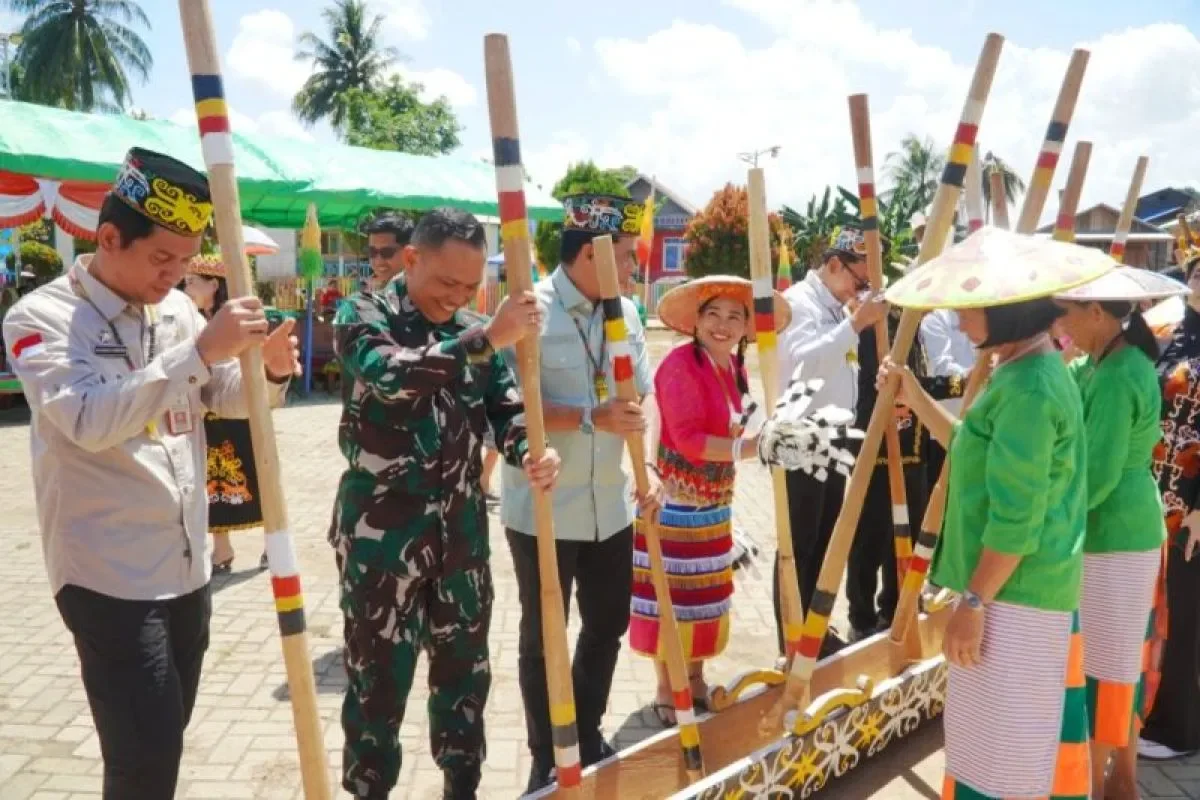
RRI.CO.ID, Berau - Pounding rice rhythmically in traditional wooden mortars, the indigenous residents of Bena Baru Village brought their ancestral heritage to life during the annual Festival Budaya Lesung Osap (Lesung Osap Cultural Festival) Sambaliung Subdistrict, East Kalimantan held from May 21 to May 23, 2026.
Serving as a generational tradition passed down by the community in Sambaliung Subdistrict, this vibrant three-day celebration acts as a profound communal expression of gratitude for the agricultural yields harvested each year.
Bena Baru Village itself holds a unique position in East Kalimantan's cultural landscape, standing as one of the largest local communities for the Dayak Kenyah tribe. The village has gained widespread recognition for its ability to fiercely safeguard its customary laws and cultural identity in the modern era.
The festival featured a highly structured itinerary designed to showcase traditional sports, arts, and rituals over three consecutive days. On the first day, the event commenced with an official opening ceremony, followed by traditional sporting competitions and cultural art performances.
The schedule continued on the second day with advanced traditional sports tournaments and an evening cultural arts stage. Finally, the third day focused entirely on a communal post-harvest thanksgiving ritual, which culminated in the official closing ceremony of the Lesung Osap Festival.
A primary highlight of the opening ceremony was a massive, colossal dance performance that poetically chronicled the life cycle of the Dayak Kenyah people through the lens of traditional rice farming. The performance artfully depicted every phase of agriculture, from clearing the wilderness to the final harvest.
The sequence of traditional dances was precisely choreographed to tell this generational story, starting with the Kancet Ajai which depicted the raw energy, courage, and hard work required to open new agricultural land. This was followed by the Ledek, a performance symbolizing the careful clearing and preparation of the farming soil.
Next, the Nogan dance told the story of planting rice seeds through gotong royong, or mutual communal cooperation. The choreography then transitioned into the Tari Majau to represent a joyous collective harvest process, followed by the Tari Datun which acted as a sacred symbol of deep gratitude for the successful harvest yield.
The performance concluded with the Mejung Lesung, illustrating the traditional physical activity of lifting the heavy wooden mortar used to process raw rice, and the Mecaq Ontad, which dramatically brought to life the ancient tradition of manually pounding rice inside the wooden mortar.
This community-led preservation has drawn strong commendation and structural support from the Berau Regency Administration. Local authorities view these living traditions as a crucial element in expanding the region's appeal, noting that cultural tourism heavily complements Berau's famous natural destinations, which stretch from pristine marine waters to scenic mountain ranges.
Asistent I of the Berau Regency Secretariat, Hendratno, formally extended the administration's appreciation to the rural and urban communities that continue to protect their localized customs. He emphasized that these festivals do not just preserve history—they actively power the local economy by drawing travelers.
"I thank the community and traditional leaders who continue to preserve the culture to this day," Hendratno said on Monday, May 25, 2026, as quoted by Antara.
"Cultural activities like Lesung Osap not only preserve ancestral traditions but also serve as a cultural tourism attraction in Berau Regency. Besides representing the community's identity, this activity also has great potential to support the regional tourism sector," he explained.
Moving forward, the Berau administration plans to maintain close collaboration with tribal elders and village administrations to ensure that events like the Lesung Osap Festival receive the structural support necessary to remain a permanent fixture on Indonesia's cultural tourism calendar. ***
News Recomendation
Loading latest news.....