



West Bangka Names 'Kopiah Resam' as Official Heritage Craft to Revive Makers
- 22 Mei 2026 10:14 WIB
- Voice of Indonesia
Key Points
- The West Bangka administration has designated kopiah resam, a traditional cap woven from wild fern fibers, as one of its 386 Traditional Knowledge Cultural Advancement Objects to preserve the craft and boost local economy.
- The heritage craft faces a shortage of practitioners; out of 626 craft MSMEs in West Bangka, only 102 artisans still produce the caps, treating it as a part-time, secondary source of income.
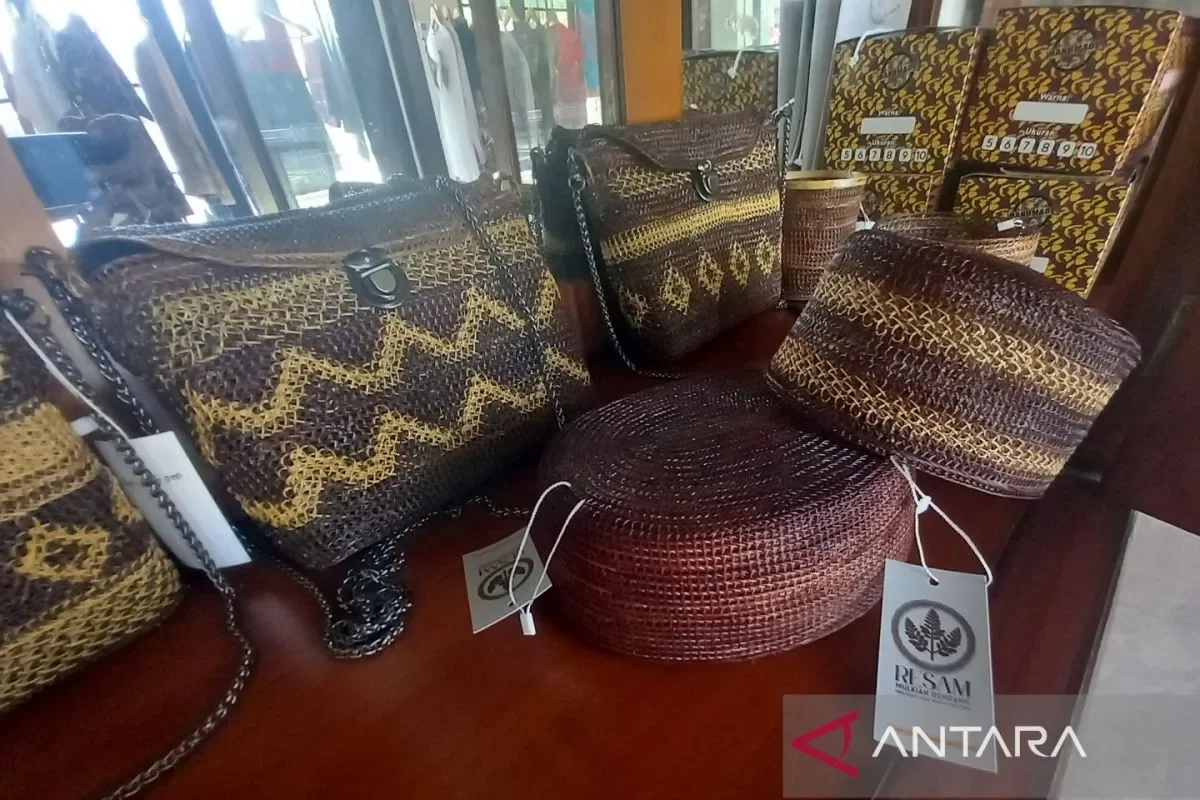
RRI.CO.ID, Bangka Barat - While mass-produced modern headwear dominates urban fashion, West Bangka Regency is turning to its roots to preserve a centuries-old artisanal craft.
The West Bangka Regency Administration has officially recognized kopiah resam, a traditional cap woven from wild fern fibers, as one of its 386 Traditional Knowledge Cultural Advancement Objects.
This recognition signals a major push to transform the dwindling heritage craft into a sustainable economic driver. Dating back to the 1880s, as documented in historical KITLV photographs, kopiah resam is believed to have been introduced during the spread of Islam in Bangka by Banjar scholar Tuan Guru Syaikh Abdurrahman Siddik.
"According to our estimates, Tuan Guru was called back to Indragiri in 1920, and by that time, he had already passed down the skill of weaving resam to be used as a head covering during prayers," Head of Culture Division at West Bangka Tourism and Culture Agency, Muhammad Ferhad Irvan, said on Thursday, May 21, 2026, as quoted by Antara.
Despite its deep historical significance, the craft faces a critical demographic bottleneck. Out of 626 craft-based micro, small, and medium enterprises (MSMEs) in West Bangka, only 102 artisans, concentrated heavily in the villages of Kacung and Dendang, continue to practice this meticulous weaving art.
Unlike the full-time artisans of Bali or Yogyakarta, West Bangka's weavers treat this craft as a secondary income, working only during their spare time or upon receiving direct orders. To reverse this trend, the West Bangka Regency is drafting a new regent regulation concerning traditional attire.
The upcoming policy will mandate kopiah resam as part of the official regional dress code for formal government functions, a strategic move designed to immediately stimulate local demand and boost production.
Efforts to support the artisans extend beyond legislation into economic infrastructure. The government has established dedicated sales galleries across strategic hubs, including the Cual MSME Center in Mentok and the National Crafts Council (Dekranasda) Gallery at Tanjungkalian Port, alongside partnerships with modern shopping malls in Pangkalpinang.
"For product marketing, we have prepared several galleries, and we facilitate consignment sales in a modern shopping center in Pangkalpinang, while some artisans also sell their products independently," Head of the Industrial Division at the West Bangka Industry and Labor Agency, Agus Setyadi, said.
To elevate product quality to a global standard, the local administration has partnered with Dekranasda to bring in technical experts from the Craft Center in Yogyakarta for advanced artisan training.
The unique value of kopiah resam lies in its grueling, fully manual production process. Artisans harvest flexible resam ferns from local forests, soak them for three days, and painstakingly shave the inner stalks into fine fibers.
These fibers are then woven around a wooden head-mold using simple tools and dyed naturally using boiled samak tree bark.
Because price correlates directly with the fineness of the fiber and the density of the weave, market values vary drastically. A standard, loose-weave cap can be completed in half a day and retails for IDR 50,000 (USD 3).
Conversely, a premium, ultra-fine kopiah resam takes a full month of meticulous labor to complete and commands prices between IDR 1 million (USD 56) and IDR 2 million.
These high-end caps boast extraordinary durability, lasting for decades, and feature a unique structural flexibility that allows them to be folded completely flat without damage. ***
News Recomendation
Loading latest news.....