



Heritage in Harmony: Borobudur Hosts Inaugural "Kirab Pusaka Nusantara"
- 18 Apr 2026 08:35 WIB
- Voice of Indonesia
Key Points
- Kirab Pusaka Nusantara debuts at Borobudur Temple to mark World Heritage Day and National Keris Day.
- Fadli Zon emphasizes cultural inclusivity and community involvement to boost preservation and local economic impact.
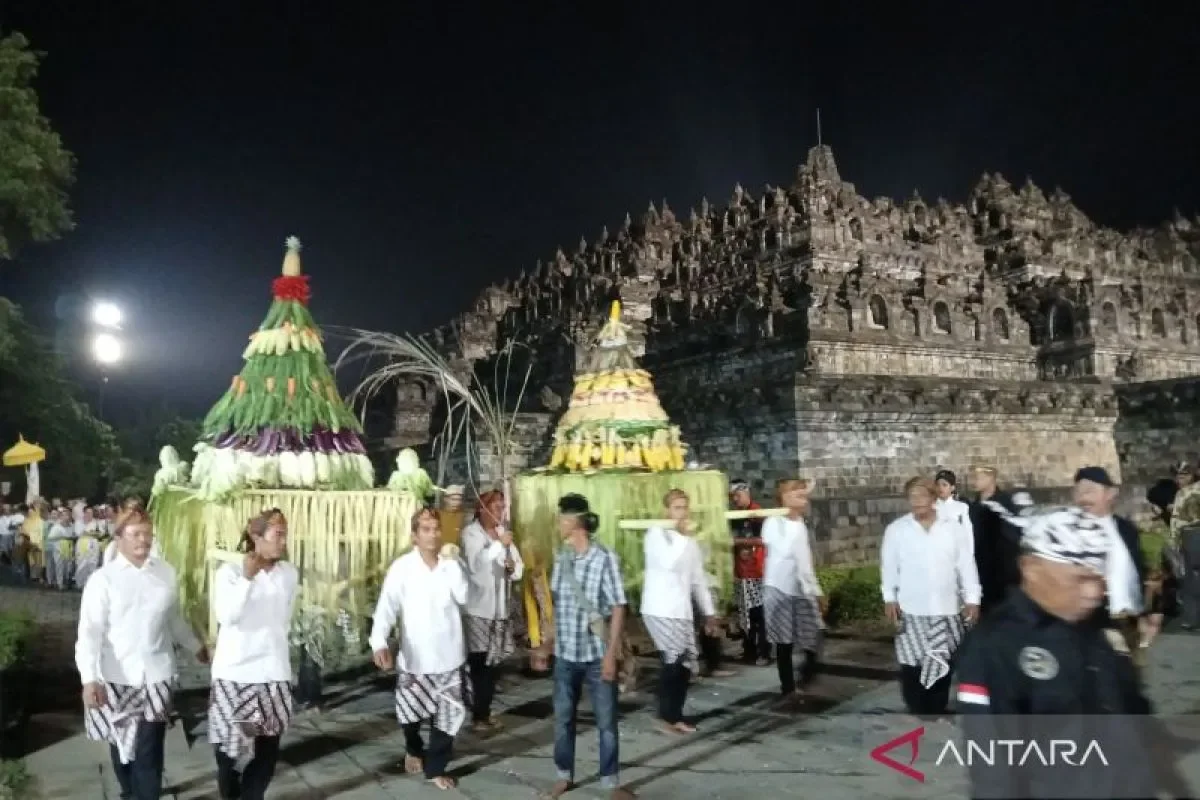
RRI.CO.ID, Magelang - In a historic fusion of tradition and world heritage, the first-ever Kirab Pusaka Nusantara (Archipelago Heritage Procession) was held at the foot of the majestic Borobudur Temple in Magelang Regency, Central Java on Friday evening, April 17, 2026. The event was organized to commemorate World Heritage Day on April 18 and National Keris Day on April 19.
Indonesian Minister of Culture, Fadli Zon, who attended the event, highlighted the inclusive nature of the procession. "This activity involves various cultural stakeholders, ranging from cultural observers, artists, and religious figures to the village communities surrounding the Borobudur area," he said in Magelang, as quoted by Antara.
The procession saw participants walking through the margautama (main path) and circling the ancient Buddhist temple once before heading toward the Kenari courtyard on the western side. In a gesture of harmony with nature, the Minister also released birds and ducks as part of the ritual.
The event featured a rich display of traditional attributes, including cultural attire as participants donned diverse traditional costumes representing the Indonesian archipelago. Additionally, community members collaborated to prepare Gunungan, a mountain-shaped cone-like arrangement made from agricultural produce, and Tumpeng, is a cone-shaped mound of yellow or white rice, surrounded by various side dishes offerings, which included tumpeng lanang (male cone-shaped rice) and tumpeng wadon (female cone-shaped rice) to symbolize fertility and gratitude.
Minister Fadli Zon noted that while heritage processions are typically associated with the royal courts (Keraton) of Solo and Yogyakarta, holding this event at Borobudur underscores the site’s status as a universal symbol of cultural advancement. "This participation shows that Borobudur is a shared cultural heritage, not only for the Indonesian people but for the world," he added.
The Minister emphasized that the event aligns with the Law on the Advancement of Culture, which promotes the principle of "utility." By involving local villagers in the preparation of traditional offerings and performances, the Kirab aims to provide tangible social and economic benefits to the local population.
"We hope that through this activity, cultural preservation can be further enhanced while simultaneously providing a positive impact on the social and economic lives of the community around the Borobudur area," the Minister concluded.
The debut of the Kirab Pusaka Nusantara at Borobudur marks a significant shift in how Indonesia manages its world-class monuments. By moving the Kirab, a practice deeply rooted in Javanese court tradition, to a public monumental space like Borobudur, the government is effectively democratizing sacred heritage.
This event serves as a bridge between the tangible heritage of the stone temple and the intangible heritage of the living community. In the context of National Keris Day, the choice of Borobudur is particularly poetic; the temple's reliefs contain some of the earliest visual records of Indonesian weaponry and daily life.
By revitalizing these traditions in a contemporary festival format, the Ministry of Culture is ensuring that Borobudur remains a "living monument" rather than a stagnant museum, fostering a sense of ownership among the local desa (villages) who are the true guardians of the site. ***
News Recomendation
Loading latest news.....