



Urip-urip: The Sacred Breath and Spiritual Vitality of Balinese Architecture
- 17 Apr 2026 07:39 WIB
- Voice of Indonesia
Key Points
- Urip-urip is a sacred marking applied during the Melaspas ritual to symbolically give “life” or spiritual essence to buildings in Balinese Hindu tradition.
- The use of directional colors linked to Catur Lokapala reflects a balance between the microcosm and macrocosm, ensuring spiritual harmony and protection.
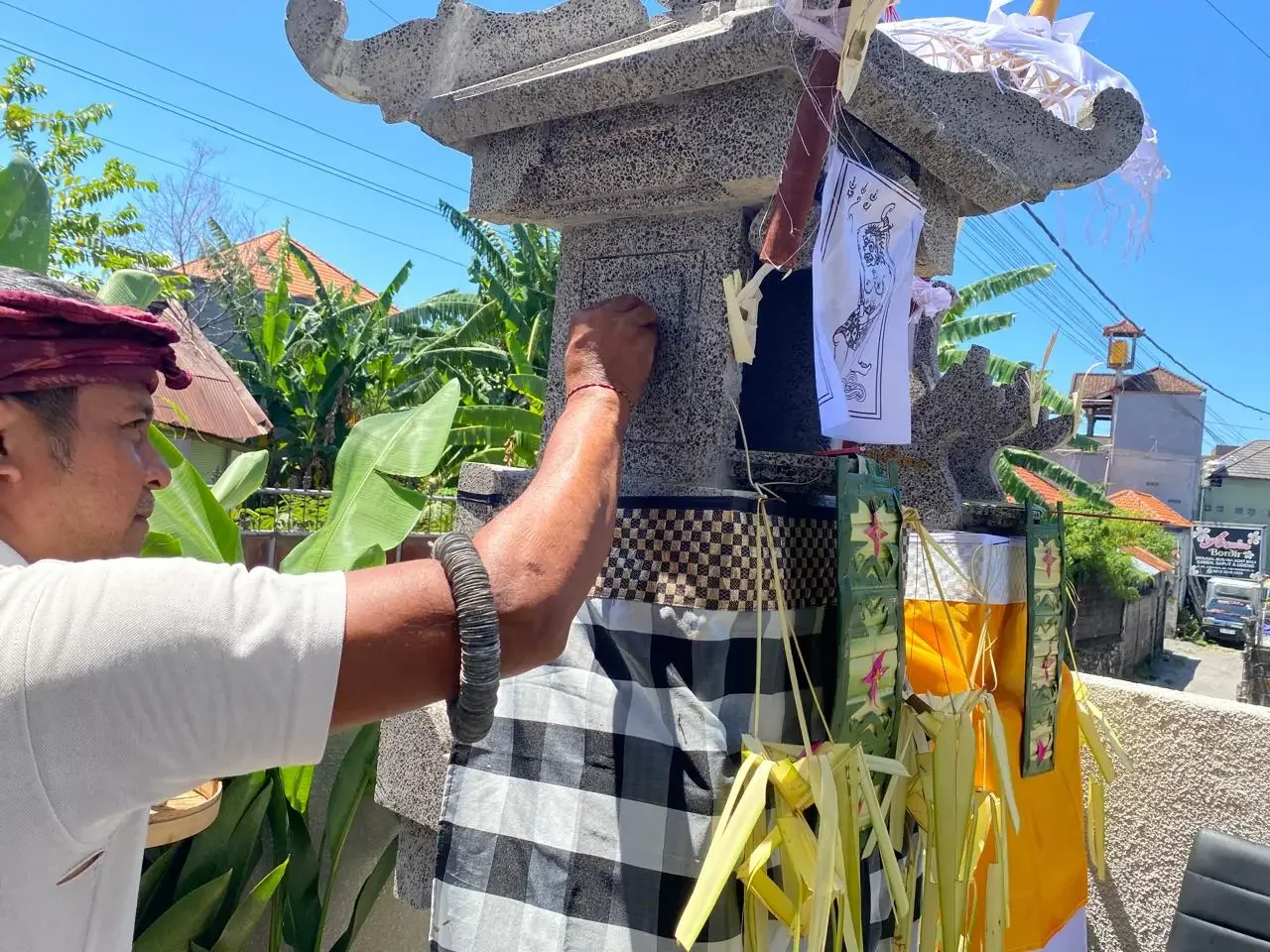
RRI.CO.ID, Denpasar - In the intricate world of Balinese Hinduism, a newly constructed shrine or building is not considered "complete" simply because the physical work is finished. To the local community, a structure remains "dead material" until it undergoes the ritual of Melaspas, which includes the application of Urip-Urip, simple yet profound markings in the shape of a cross (tapak dara).
Etymologically, the word urip in Balinese translates to life. By applying these markings, a building is symbolically given its breath or soul, transforming it from a mere object into a spiritual entity. This practice teaches that everything in the universe possesses a soul, fostering a deep respect for the life energy within all things.
According to Jro Mangku I Made Agus Wiranata, a priest at Pura Dadia Manik Aji, in Denpasar, Bali, the colors used for Urip-urip are not aesthetic choices but are strictly aligned with the cardinal directions, known as Catur Lokapala.
Each color represents a specific deity and spiritual power, beginning with white for the East, which is created using pamor (lime) to symbolize purity and the power of Lord Iswara.
In the South, red is applied using blood to represent creative energy and the power of Lord Brahma, while yellow in the West is created using turmeric to symbolize prosperity and the strength of Lord Mahadewa. Finally, black or dark tones are placed in the North using charcoal, representing protection, calm, and the enduring power of Lord Wisnu.
While four colors are ideal for total balance, it is also common to see Urip-urip using the Tridatu colors: Red, White, and Black.
The application of these marks according to the compass points serves a vital function: balancing the micro-cosmos (the object itself) with the macro-cosmos (the universe). When a shrine is marked with these four colors on its sides, it is symbolically locked by the powers of the four directions, ensuring it possesses a firm and harmonious spiritual foundation.
The practice of Urip-urip is a beautiful reminder that in Balinese culture, architecture is an extension of biology. By treating a stone shrine as a living being that requires "breath," the Balinese maintain a symbiotic relationship with their built environment. This isn't just decoration; it is spiritual engineering.
The use of organic materials, lime, turmeric, charcoal, and blood, further grounds the ritual in the natural world. By "locking" the four corners of a building with the energies of Iswara, Brahma, Mahadewa, and Wisnu, the practitioner creates a spiritual shield, protecting the sanctity of the space from external imbalances.
It is this profound connection between the tangible material and the intangible soul that gives Balinese heritage its unique Taksu, or divine inspiration. (Naura Sofia/Bambang MBKA)
News Recomendation
Loading latest news.....