



Preserving Tradition Through 'Ebeg' Performance in Purwokerto
- 13 Apr 2026 11:15 WIB
- Voice of Indonesia
Key Points
- Four 'ebeg' groups performed at Grendeng Square, showing Banyumas traditional arts remain cherished by the community.
- Rituals and fasting precede performances, reflecting the spiritual depth and ancestral respect in 'ebeg' tradition.
- The trance phenomenon ('jantur') captivates audiences, reinforcing 'ebeg' as a unique cultural heritage worth preserving.
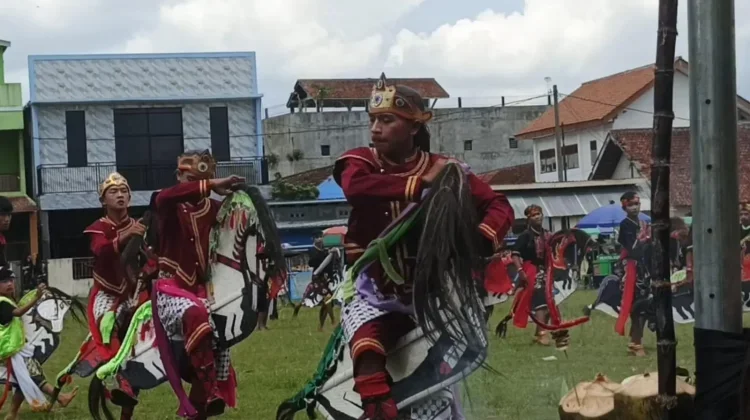
RRI.CO.ID, Banyumas - To keep regional culture alive, a traditional kuda lumping or ebeg (trance dance) performance was staged at Grendeng Square, North Purwokerto, on Sunday, April 12, 2026. From 11 a.m. onwards, local artists prepared to showcase their best attractions before the community.
Four groups took part in the event: Turonggo Jati Pabuaran, Wahyu Turonggo Jati, Trenggini Sukmo Jati, and Aji Wilonggo Sari. Their presence underscored that Banyumas traditional arts continue to hold a special place in society.
The handler of Turonggo Jati Pabuaran, Fajar Abu Galunggung, explained that a ritual must be performed before the show begins. The ceremony is intended to seek safety and smooth proceedings throughout the performance.
“There is a ritual for our ancestors. We pray for protection, health, and success during the show,” he said.
Beyond prayer, performers also undergo spiritual preparation such as fasting. “At minimum, three days and three nights of fasting before the performance, so we are ready both physically and spiritually,” Fajar added.
He further described the phenomenon of jantur -- a trance state often seen during ebeg shows. In this condition, performers are not fully aware of their actions. “When in jantur, it feels unconscious. Only afterward does the body ache, but during the performance it usually doesn’t,” he explained.
Fajar emphasized that ebeg is a hereditary art form that must be preserved. “This art has been passed down from my grandfather to today. My hope is that ebeg will always be safeguarded,” he stressed.
Among the audience was Sunarto, who came specifically to witness the show. He admitted being drawn to the unique attractions, especially the jantur phenomenon. “I enjoy Banyumas arts like ebeg. Watching jantur is fascinating; it looks strange but real,” he said.
According to Sunarto, the unusual acts are what make the performance compelling. “Sometimes performers eat leaves, even hard objects. That’s what makes me curious and eager to watch,” he noted.
He expressed hope that younger generations will continue to protect local traditions amid modernization. “I’m glad when young people still want to preserve Banyumas culture, such as ebeg and other traditional arts,” he concluded. (Annaila Azzahra/Sri Wahyuni)
News Recomendation
Loading latest news.....