



Puter Kayun: Banyuwangi’s Historic Carriage Tradition Honors Ancestral Legacy
- 31 Mar 2026 10:26 WIB
- Voice of Indonesia
Key Points
- Puter Kayun in Banyuwangi honors Ki Buyut Jakso through a dokar procession retracing ancestral journeys.
- The Syawal tradition blends history, spirituality, and tourism as part of Boyolangu’s cultural heritage series.
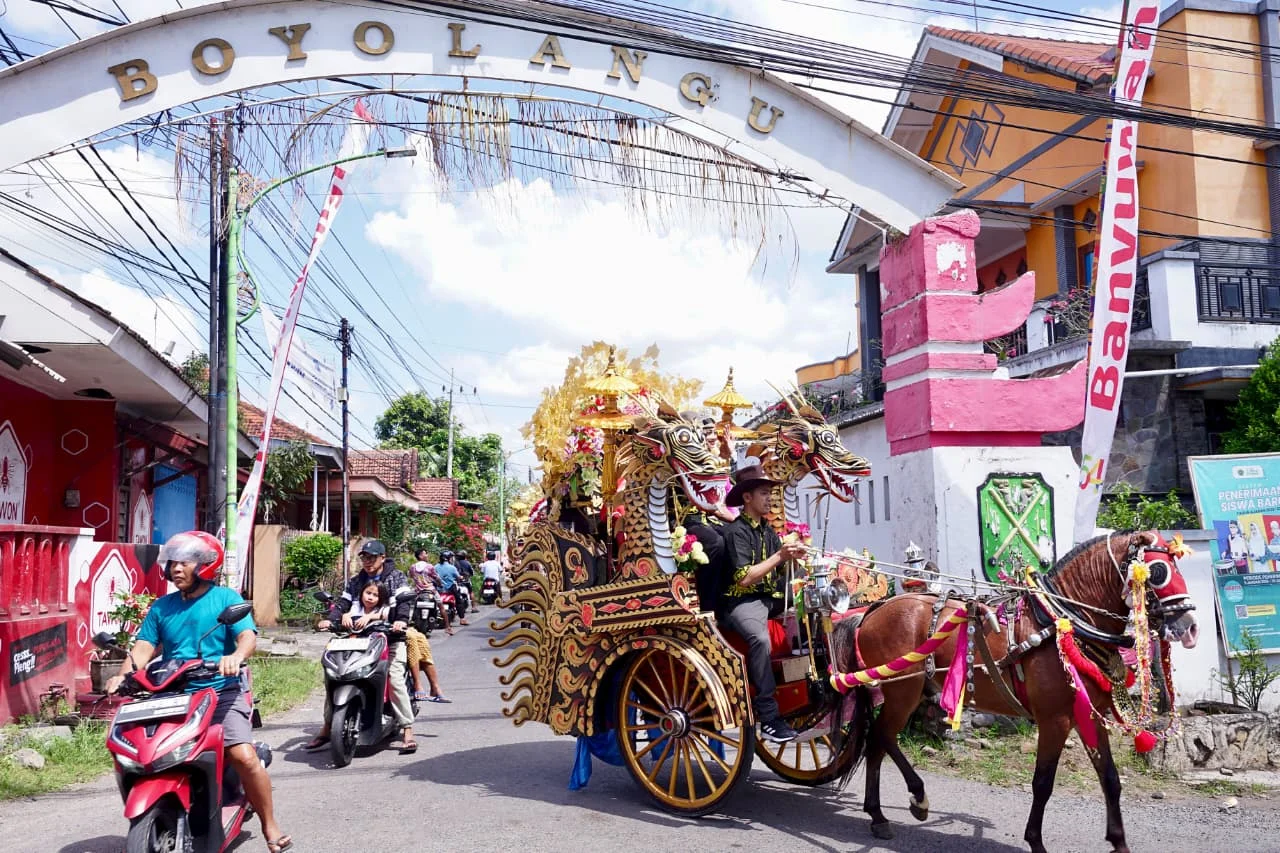
RRI.CO.ID, Banyuwangi - The streets of Boyolangu Village came alive with the clip-clop of decorated horse carriages (dokar) on Monday, March 30, 2026, as local residents celebrated the ancestral tradition of Puter Kayun. Held annually on the 10th of Syawal, this unique ritual serves as a living monument to the history of northern Banyuwangi and the legendary figure of Ki Buyut Jakso.
Puter Kayun is a "sacred promise" kept by the descendants of Boyolangu to honor their ancestors who successfully opened road access through the rugged northern terrain during the colonial era. Historically, the procession involves a journey via decorated dokar (traditional horse carriages) from Boyolangu to Watu Dodol Beach.
The tradition is rooted in the heroic tales of Ki Buyut Jakso, a figure of great spiritual strength. According to local lore, the Dutch sought his help when they encountered a massive rock formation that blocked the construction of the northern coastal road.
"It is said that while opening the northern road, the Dutch asked for Ki Buyut Jakso's help because there was a mountainous mound that could not be dismantled," explained the event chairman, Risyal Alfani, as quoted by Infopublik.id.
Through meditation and spiritual prowess, Ki Buyut Jakso successfully opened the path. The area was subsequently named Watu Dodol, derived from the phrase watu didodol, meaning "dismantled stone." Ki Buyut Jakso later mandated that his descendants perform a pilgrimage to the site as a mark of respect.
Because the majority of Boyolangu residents historically worked as carriage drivers, the dokar became the official vessel for this pilgrimage. For veterans like 65-year-old Abdul Mufid, the ritual is a lifelong commitment.
"I have been a coachman since 1971. Every year I follow the Puter Kayun tradition together with the residents here. Because in this tradition, the most important thing is the retracing of the steps," Abdul shared.
Due to heavy traffic congestion near the Ketapang Port this year, the route was modified to circle the city area rather than reaching Watu Dodol Beach, with many residents switching from cars to motorcycles to maintain the procession's flow.
The Puter Kayun ritual is the grand finale of the Boyolangu Traditional Culture series, which begins on the 7th of Syawal with Lebaran Kopat (Rice Cake Festival) and continues with the Kebo-keboan (Buffalo-man) tradition on the 9th of Syawal.
Acting Head of the Banyuwangi Culture and Tourism Agency, Hartono, reaffirmed the administration's support for such grassroots heritage.
"Banyuwangi is committed to raising and preserving local traditions. In addition to maintaining existing traditions and rituals, this tradition is also part of the tourist attractions in Banyuwangi," he stated.
By blending spiritual duty with vibrant public spectacle, the people of Boyolangu ensure that the story of Ki Buyut Jakso and the "dismantled stones" of Watu Dodol remains an indelible part of East Java's cultural identity. ***
News Recomendation
Loading latest news.....