



Exploring Halal Bihalal, Indonesia’s Unique Eid Tradition
- 26 Mar 2026 08:59 WIB
- Voice of Indonesia
Key Points
- Halal bihalal is a uniquely Indonesian post-Eid tradition centered on mutual forgiveness and social reconciliation.
- The practice involves gatherings among family, neighbors, and colleagues, often accompanied by shared meals and expressions of apology.
- Despite evolving in form—from in-person events to virtual gatherings—its core purpose of strengthening social cohesion remains unchanged.
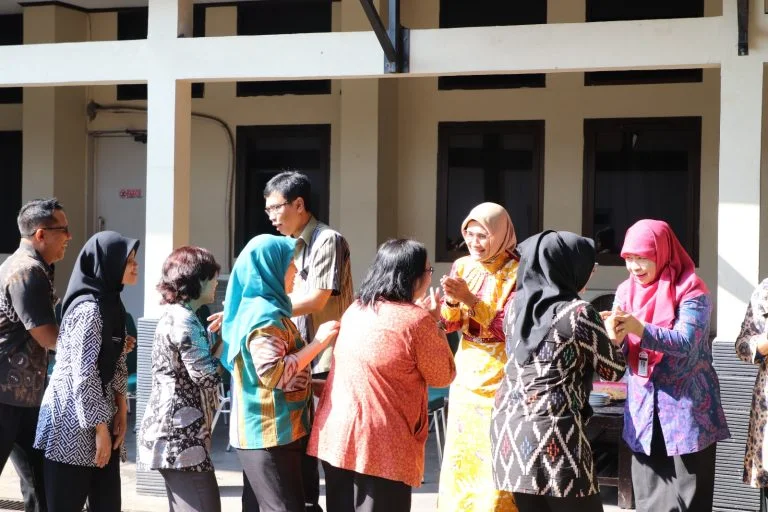
RRI.CO.ID, Jakarta - Indonesia has a unique tradition that always follows the celebration of Eid al-Fitr, locally known as Lebaran. This tradition is called halal bihalal.
Halal bihalal is an activity centered on mutual forgiveness and reconciliation after a full month of fasting during the holy month of Ramadan. In this tradition, people typically gather with family members, neighbors, and colleagues.
During these gatherings, participants exchange handshakes and convey apologies for past mistakes or wrongdoing. The occasion is also commonly accompanied by shared meals, featuring a variety of traditional Eid dishes enjoyed collectively.
According to the official website of the Ministry of Religious Affairs of the Republic of Indonesia, halal bihalal is a cultural tradition that developed uniquely within Indonesian society. Although the term is derived from Arabic, it is not recognized in standard Arabic usage and is regarded as an Indonesian expression employing Arabic lexical elements.
There are several versions of how the tradition originated in Indonesia. One version suggests that the term was introduced by Abdul Wahab Hasbullah, an Islamic scholar and co-founder of Nahdlatul Ulama (NU), in 1948. At that time, President Soekarno sought to reconcile political figures who were in conflict. Following Hasbullah’s suggestion, a post-Eid gathering was held to encourage mutual forgiveness.
Another version traces the term back to the 1930s in Solo, Central Java. A martabak vendor—selling a thick, pancake-like dish of Indian origin—promoted his product at Sriwedari Park using the phrase, “martabak Malabar, halal bin halal.” The expression later gained popularity among the public and gradually came to refer to the practice of visiting one another and maintaining social ties during Eid. From there, the term halal bihalal evolved into a tradition of seeking forgiveness.
Today, halal bihalal is not only held in homes but also in offices, schools, and various institutions. It is often organized as a gathering or “open house.” Even during the pandemic, the tradition continued virtually. While it has evolved over time, its core meaning remains the same: fostering forgiveness and strengthening social bonds.
News Recomendation
Loading latest news.....