



The Meaning of the Balinese Penjor, A Symbol of Gratitude and Harmony with Nature
- 19 Mar 2026 18:52 WIB
- Voice of Indonesia
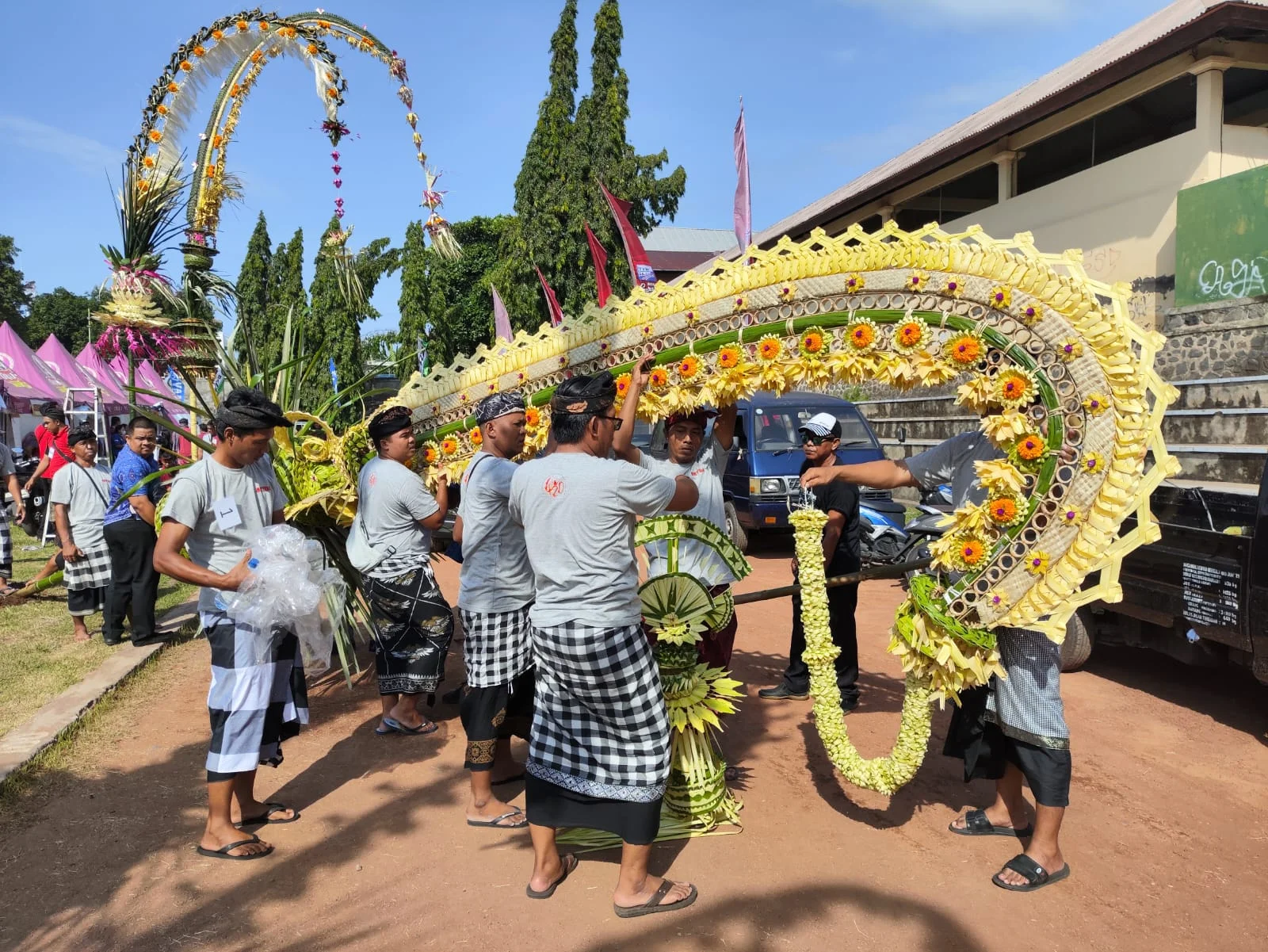
RRI.CO.ID, Jakarta - The penjor is an important symbol in the Balinese Hindu tradition, often seen across the island during Galungan celebrations.
A penjor is a tall bamboo pole with a curved tip, decorated with young coconut leaves and distinctive ornaments. Rising to about 10 meters, its shape symbolizes a mountain, representing purity and life. For Balinese Hindus, mountains are believed to be the dwelling place of gods and ancestors, with Mount Agung regarded as a sacred spiritual center.
The penjor expresses gratitude for the earth’s bounty from Sang Hyang Widi Wasa and reflects hopes for prosperity and well-being. In the Jayakasunu palm-leaf manuscript, the penjor is said to symbolize Mount Agung, while the Basuki Stawa manuscript likens the mountain to the king dragon, Naga Basuki.
In mythology, Mount Agung is associated with Naga Basuki, depicted with its head in the sea and its tail in the mountain, representing the natural cycle from mountain to sea.
Each ornament on the penjor carries a symbolic meaning. The sanggah represents the dragon’s head and serves as a place for offerings. Circular coconut leaf decorations symbolize the dragon’s hair, while the curved tip represents its tail. Agricultural products such as rice, corn, tubers, and fruit hung on the penjor symbolize prosperity.
In practice, penjor are divided into two types: sacred and decorative. Sacred penjor are used in religious ceremonies and are equipped with coconut leaves, agricultural products, and offerings such as snacks, coins (kepeng), and a sanggah. Decorative penjor are more ornamental and lack the full sacred elements.
Each component of the penjor has deep symbolic meaning. Bamboo represents the power of Lord Brahma, young coconut leaves symbolize Hyang Mahadewa, coconuts signify the power of Lord Rudra, and crops reflect the blessings of Lord Vishnu.
Altogether, the penjor embodies the balance of nature and humanity’s relationship with God. This tradition plays a vital role in preserving Balinese spiritual and cultural values. (Misni Parjiati/Lasti Martina)
News Recomendation
Loading latest news.....