



Pura Besakih, a Spiritual Symbol on the Slopes of Mount Agung
- 18 Mar 2026 16:00 WIB
- Voice of Indonesia
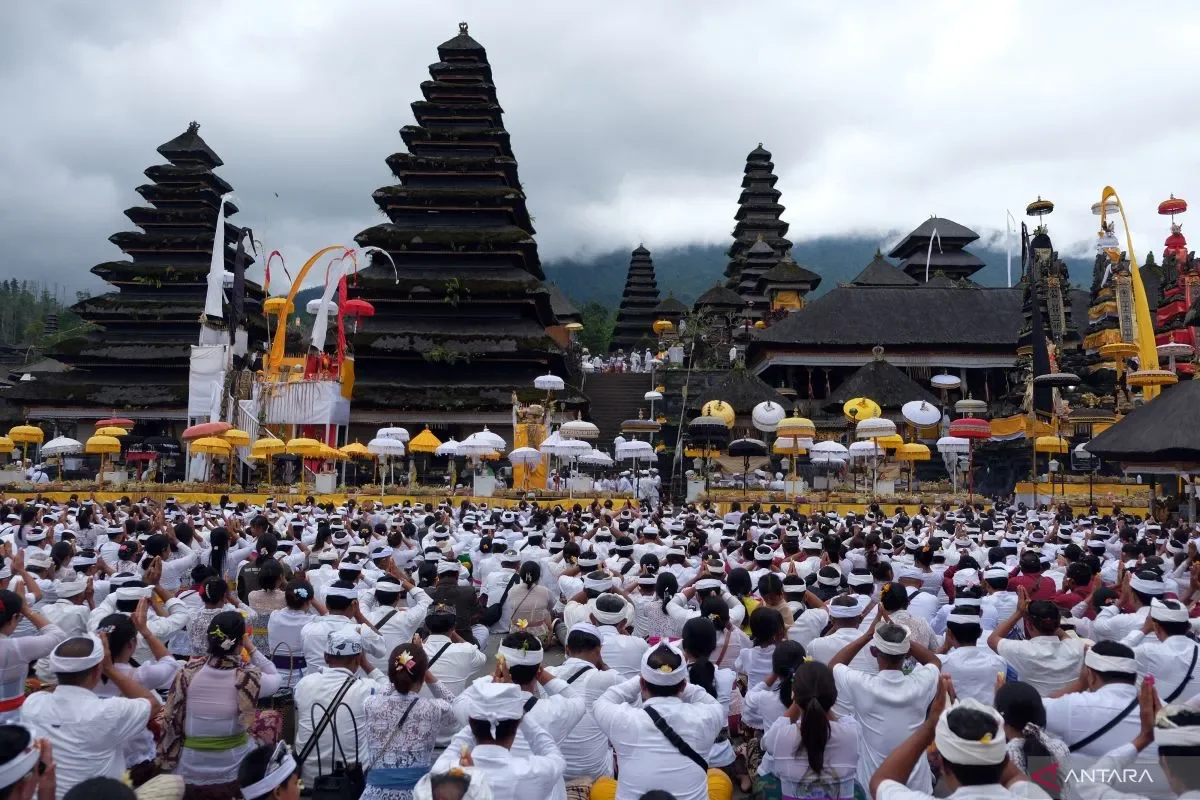
RRI.CO.ID, Jakarta - Amid the rapid growth of modern tourism in Bali, Pura Besakih remains a central symbol of the island’s historical heritage, cultural legacy, and local Balinese identity.
Located on the slopes of Mount Agung, it is the largest and most sacred temple complex on the “Island of the Gods.” Pura Besakih is not only a destination for religious tourism, but also a living cultural‑education center that continues to play an active role in Balinese society today.
Known as the Mother Temple of Bali, Pura Besakih is the biggest temple complex on the island and serves as the main spiritual reference for Balinese Hindus from all over Bali. Its presence is not merely a relic of the past, it is an integral part of contemporary Balinese life and collective identity.
Pura Besakih has a very long history. Based on archaeological studies and local Balinese traditions, the area has been used as a place of worship for thousands of years, even before Hinduism became strongly established on the island.
Its earliest structures are believed to date back to prehistoric times, later evolving alongside the arrival and spread of Hindu teachings from Java. From that period onward, Pura Besakih grew into Bali’s principal religious center, with each ruling dynasty and kingdom contributing to its development.
These contributions took the form of new constructions, rituals, and the strengthening of the temple’s spiritual functions. Over time, Pura Besakih became a living witness to Bali’s historical journey, embodying continuity across changing eras.
Pura Besakih is far from a silent monument visited only by tourists. To this day, the complex serves as the focal point for major Hindu ceremonies in Bali.
Thousands of devotees from various regions come to attend religious rituals, especially during odalan temple anniversaries and other large‑scale ceremonies. In addition to its spiritual role, the temple complex functions as an open‑air classroom on Balinese history, traditional architecture, and the philosophy of life of Balinese Hindus.
The spatial layout of Pura Besakih, which follows the contours of Mount Agung’s slopes, symbolizes a spiritual ascent from the profane realm to holiness. This arrangement aligns with the Balinese philosophy of Tri Hita Karana, which emphasizes harmony between humans and God, and between humans and nature.
Moreover, Pura Besakih stands as a strong emblem of Balinese local identity. It reminds observers that Bali is not only about tourist attractions, but also about values, traditions, and spirituality.
For the Balinese people, Pura Besakih is not merely a sightseeing spot, but also a spiritual center that unites believers. For younger generations, it is a powerful reminder of the importance of preserving cultural roots amid rapid social change. (Annaila Azzahra/Bambang MBKA)
News Recomendation
Loading latest news.....