



Reviving the Past, Free Kawi Script Class Opens in Yogyakarta
- 08 Nov 2025 07:57 WIB
- Voice of Indonesia
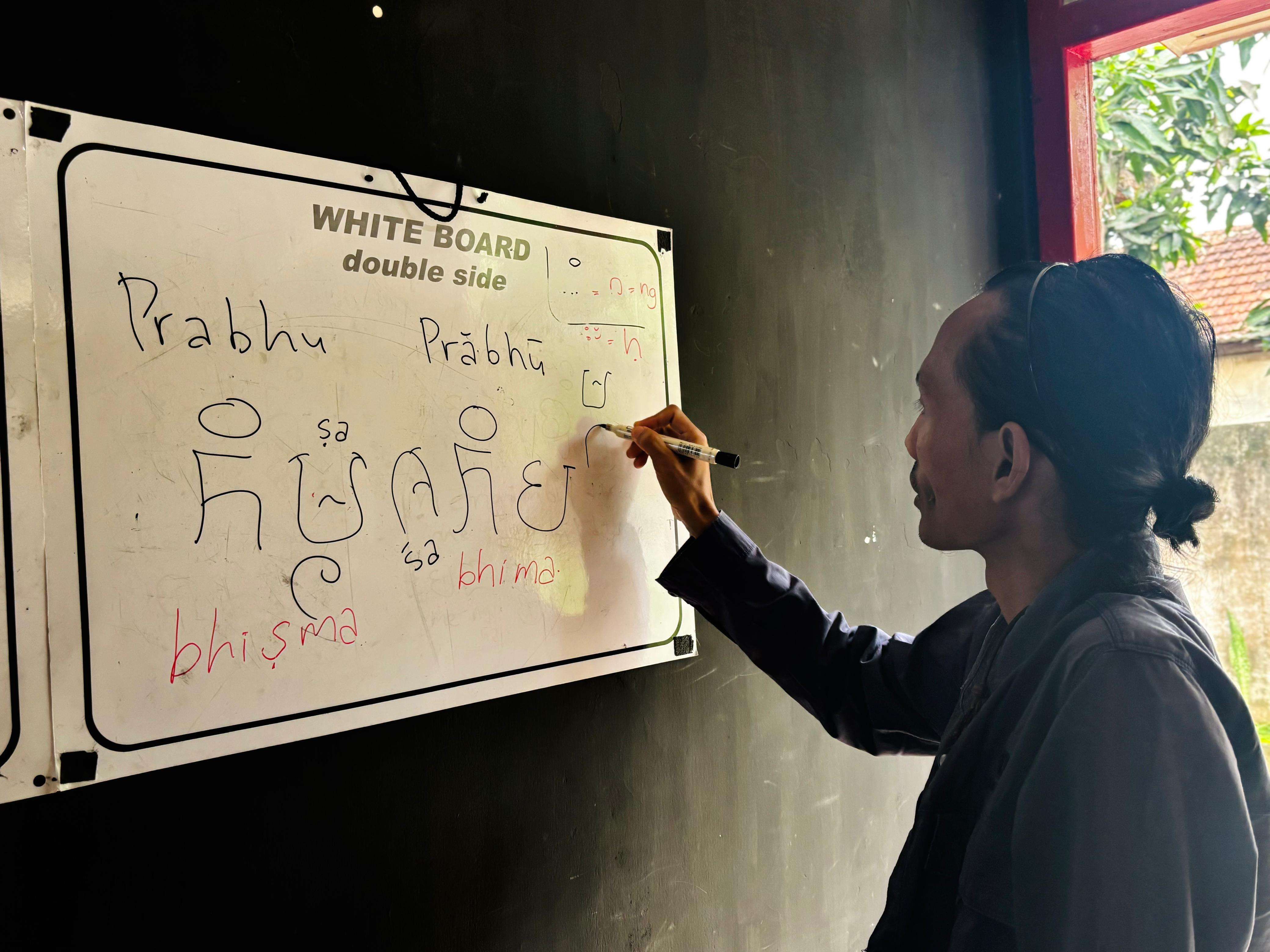
KBRN, Yogyakarta: In an effort to revive Indonesia’s fading cultural heritage, a free public class has been launched in Yogyakarta to teach the Kawi script, an ancient form of writing derived from Brahmi and once widely used across the archipelago before the Latin alphabet became dominant.
Strategically located at Keselatan, Jalan Langenarjan Lor No. 8, Panembahan Village, Kraton Subdistrict, Yogyakarta, just 500 meters from Alun-Alun Kidul (Yogyakarta’s Southern Royal Square), the course seeks to reconnect the nation with its lost cultural identity.
Designed as an intimate learning experience, each session accommodates 4 to 5 students to ensure better comprehension. However, the class is open to all ages and does not impose a limit on the total number of participants.
Peri Mardiono, affectionately known as Feri, is a passionate advocate for the Kawi script. Before teaching at Keselatan, he was a student at Taman Sesaji, a place known for cultural learning.
This new class was established to fill a gap; until now, Kawi script lessons were only available in Bantul or Sleman, not within Yogyakarta City itself.
Since its launch, the class has held eight sessions and continues every Friday afternoon at around 3 p.m. local time. No registration is required; anyone interested is welcome to join by simply showing up.
Feri explained that information about the Kawi script class has yet to be shared on social media, as participation so far has grown organically through word-of-mouth.
“The Kawi script is the great-great-grandparent of the Hanacaraka script. We can find examples of Old Javanese writing carved into stone inscriptions,” he said on Friday, November 7, 2025.
He noted that while the Hanacaraka script consists of 20 characters, the Kawi script comprises around 50, made up of 33 consonants and 24 vowels. Its form evolved across different historical periods and was first discovered in the 5th or 6th century at ancient sites such as Borobudur, Prambanan, and Plaosan Temples.
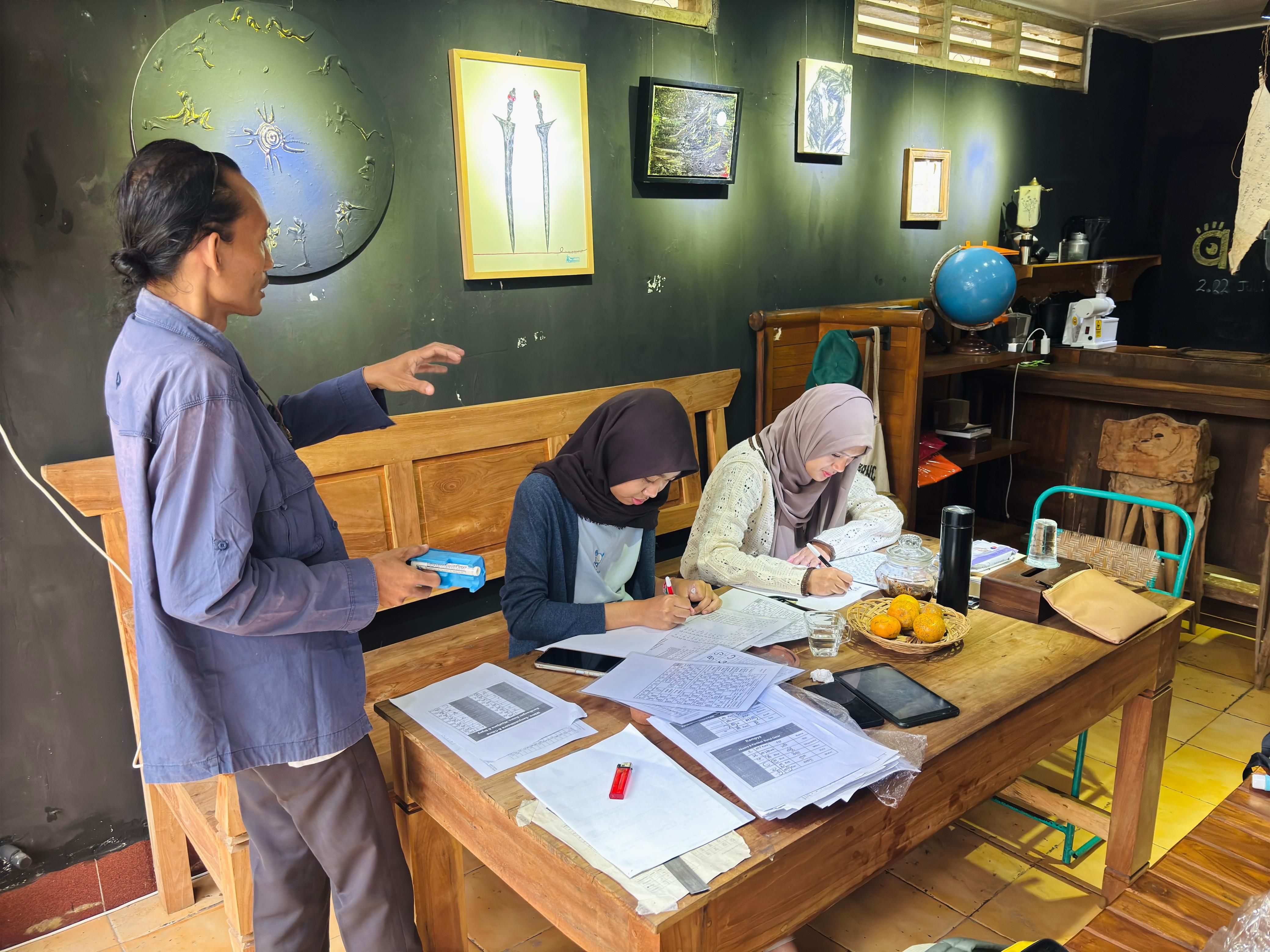 Feri was seen guiding a group of young learners through a hands-on session on writing the Kawi script. (Photo: RRI/Diva Rifdah Rizkia Puspitaningnala)
Research into the Kawi script began during the colonial era, particularly following the arrival of Sir Thomas Stamford Bingley Raffles, Governor-General of the Dutch East Indies.
“The original purpose of this class is to help us reconnect with the fact that our ancestors already had a writing system to express ideas and record knowledge,” Feri explained. “Every generation, especially the younger ones, should understand the Kawi script, which is now nearly extinct.”
Known as Aksara Kawi, the script is often associated with poetic and scholarly expression, traditionally used by bards and writers. Feri believes its obscurity today stems from its gradual decline and replacement by the Hanacaraka script, which is still taught in schools and used in daily life.
His personal interest in the Kawi script began in high school after reading Kalangwan: Sastra Jawa Kuno Selayang Pandang (Kalangwan: A Survey of Old Javanese Literature) by P.J. Zoetmulder. “I became fascinated by how the Ancient Mataram Kingdom already had a form of writing. That history really captivated me,” he said.
The class has attracted participants from diverse age groups and backgrounds, underscoring its accessibility. “Even a tourist from France joined a few sessions and was able to grasp the material quite easily,” Feri shared, noting that each session lasts about two hours to allow for focused learning.
He emphasized that participants come with varied motivations. “Some want to explore Javanese history, others are looking to sharpen their memory by learning something new. The goals are personal and diverse,” he said.
Among the attendees in the eighth week of the class was Nayla, one of the youngest students. She discovered the class through a friend and was drawn by its cultural significance.
“A friend invited me to join, and I was really intrigued by how culture can be preserved through written texts. I want to understand how people used to read and write in ancient times,” Nayla said.
She expressed satisfaction with her learning experience. “Through this class, I’ve learned how to read and write using Aksara Kawi, the ancient Javanese alphabet. I’m happy to gain this knowledge and hope to explore more about Javanese culture,” she concluded.
Nayla’s enthusiasm reflects a growing interest among younger generations in reviving and preserving Indonesia’s traditional writing systems. ***
News Recomendation
Loading latest news.....