


Karo House Architecture: A Timeless Model of Sustainable Living
- 30 Okt 2025 16:00 WIB
- Voice of Indonesia
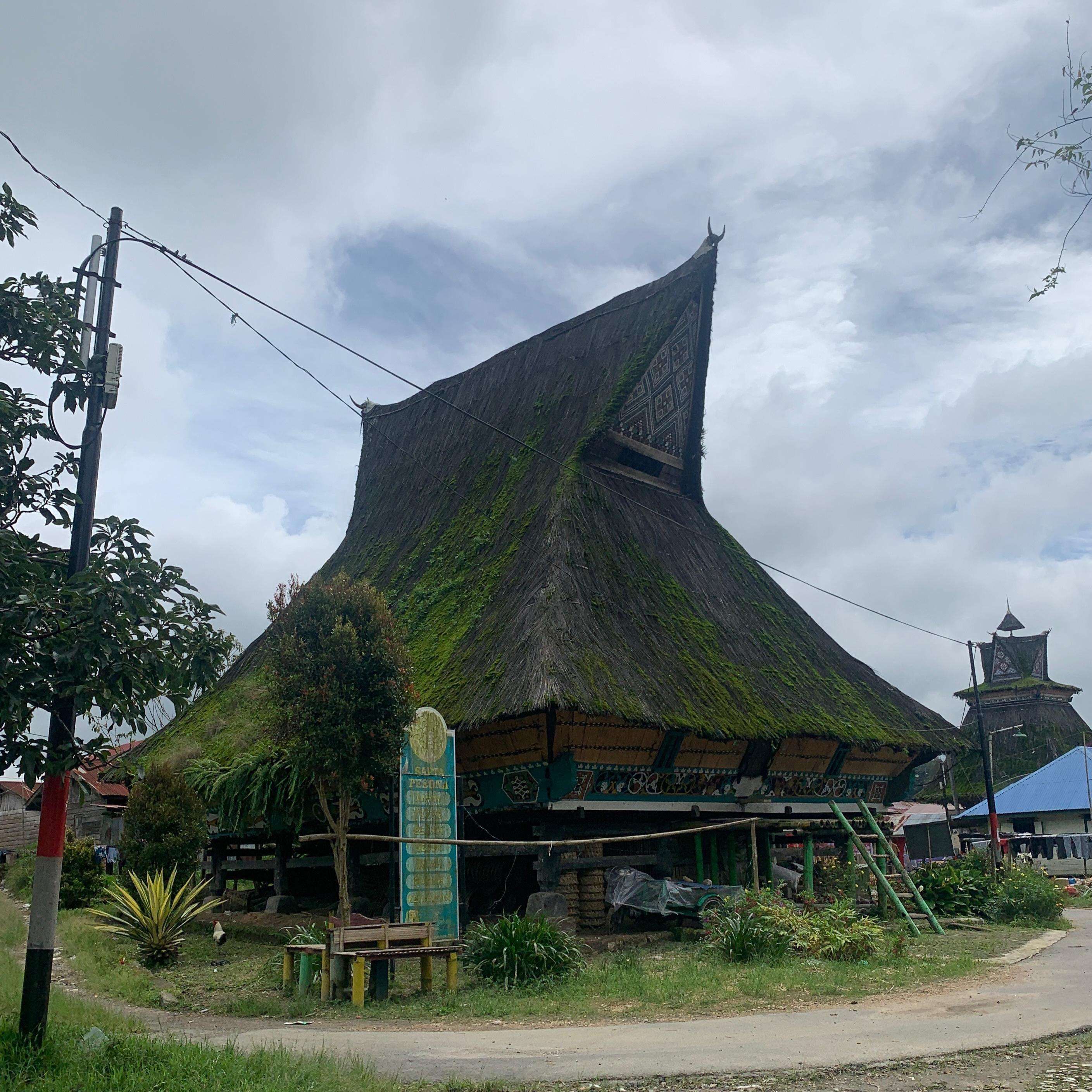
KBRN, Jakarta: While the modern world continues to search for sustainable living concepts, the Karo people, an Indigenous ethnic group from North Sumatra, have quietly practiced them for centuries.
Through their traditional houses, known as Siwaluh Jabu, they demonstrate how humans can live in harmony with nature, uphold social balance, and foster a deep sense of togetherness.
Standing tall amid the misty highlands of North Sumatra, the Karo traditional house is built on stilts with a sharply pointed roof. Remarkably, it uses no nails, only wooden pegs and rattan ties to hold its structure together.
Valentino Barus, Deputy Chairman of the Batak Center, describes Siwaluh Jabu as a reflection of the harmonious relationship between humans, ancestors, and nature.
“Our ancestors embraced sustainability long before the term was coined,” Valentino said during a recent interview on 92.8 FM Pro4 RRI Jakarta.
In the Siwaluh Jabu architectural system, eight families live under one roof without physical partitions. Each space is allocated according to customary law, reflecting the social structures of merga silima (five clan groups) and rakut si telu (a triadic kinship system). Within this framework, values of mutual cooperation and equality are upheld. “Eight families can live harmoniously because they understand their social roles. No one is superior; everyone supports one another,” Valentino explained.
A House That Embodies Ecological Wisdom
Research published in the Journal of Multidisciplinary Research confirms that Karo traditional houses are built with ecological balance in mind.
The stilted design helps retain soil moisture and protects residents from wild animals. Natural materials such as ironwood and palm fiber enhance durability without harming the environment. The guiding philosophy is clear: nature is not to be exploited, but befriended.
Beyond its ecological function, Siwaluh Jabu also serves as a social institution governed by customary law. Each jabu, or family space, carries specific rights and responsibilities.
Major decisions, including marriage, inheritance, and conflict resolution, are made through consensus under the same roof. “This house is not merely a residence; it is a center for character education and traditional democracy,” Valentino emphasized.
Architecture Rooted in Ancestral Values
The name Siwaluh Jabu literally means “eight houses,” signifying the eight families who inhabit it.
The house features a communal hearth and open-plan interior, with no dividing walls, yet each space is governed by strict customary rules.
The structure is primarily made of nderasi wood, with palm fiber roofing, bamboo terraces and stairs, and a stone foundation designed to absorb seismic shocks. The peg-and-tie technique, along with crossbars connecting the posts, ensures earthquake resilience.
Kinship hierarchy is reflected in the placement of timbers. The base of the timber, known locally as bena kayu, is reserved for elder families, such as village founders. The tip is occupied by younger families related to those at the base.
According to the Ministry of Tourism’s official site, bpodt.kemenpar.go.id, the Karo people view Siwaluh Jabu as more than a dwelling, it is a spiritual home for ancestral spirits.
Its construction involves a series of rituals, from site selection and tree cutting to frame erection and household establishment, all carried out through communal cooperation.
The house also features symbolic carvings and ornaments. Geometric motifs and colors, red and black for courage, white for purity, and green for fertility, reflect the Karo people's integration of art, function, and philosophy.
Preserving a Living Heritage
Despite its cultural richness, Siwaluh Jabu faces existential threats from modernization. Many young Karo people now know the house only through photographs, disconnected from its deeper meaning. “They see the image but not the philosophy,” Valentino lamented.
To address this, the Batak Center, an organization representing the broader Batak cultural groups, including the Karo, is working with schools in Tanah Karo to develop cultural visit programs and integrate local wisdom into the curriculum.
Digital media has also become a vital tool. Valentino stressed the importance of cultural campaigns on social platforms to engage younger audiences. “Culture must be communicated in modern ways to stay alive in young hearts,” he said.
The Batak Center is now producing short documentaries and virtual tours of Siwaluh Jabu to make it more accessible to the public.
Efforts to preserve Siwaluh Jabu face significant challenges. As societal norms evolve, some traditional rules may no longer align with contemporary life. Without immediate action, these architectural masterpieces risk being neglected, lost, and eventually forgotten.
Clarifying Cultural Identity: Karo and Batak
It is essential to note that, while the Karo people are part of the broader Batak ethnolinguistic family, they maintain distinct cultural traditions, languages, and identities.
The Batak umbrella includes several groups, Toba, Karo, Simalungun, Pakpak, Mandailing, and Angkola, each with unique customs. The Batak Center serves as a cultural institution that supports and promotes the heritage of all these groups, including the Karo. (Misni Parjiati/Ed. Lasti Martina)
News Recomendation
Loading latest news.....