


Sacred Ritual Preserves Mamuju’s Cultural Legacy Amid Modern Shifts
- 28 Okt 2025 10:57 WIB
- Voice of Indonesia
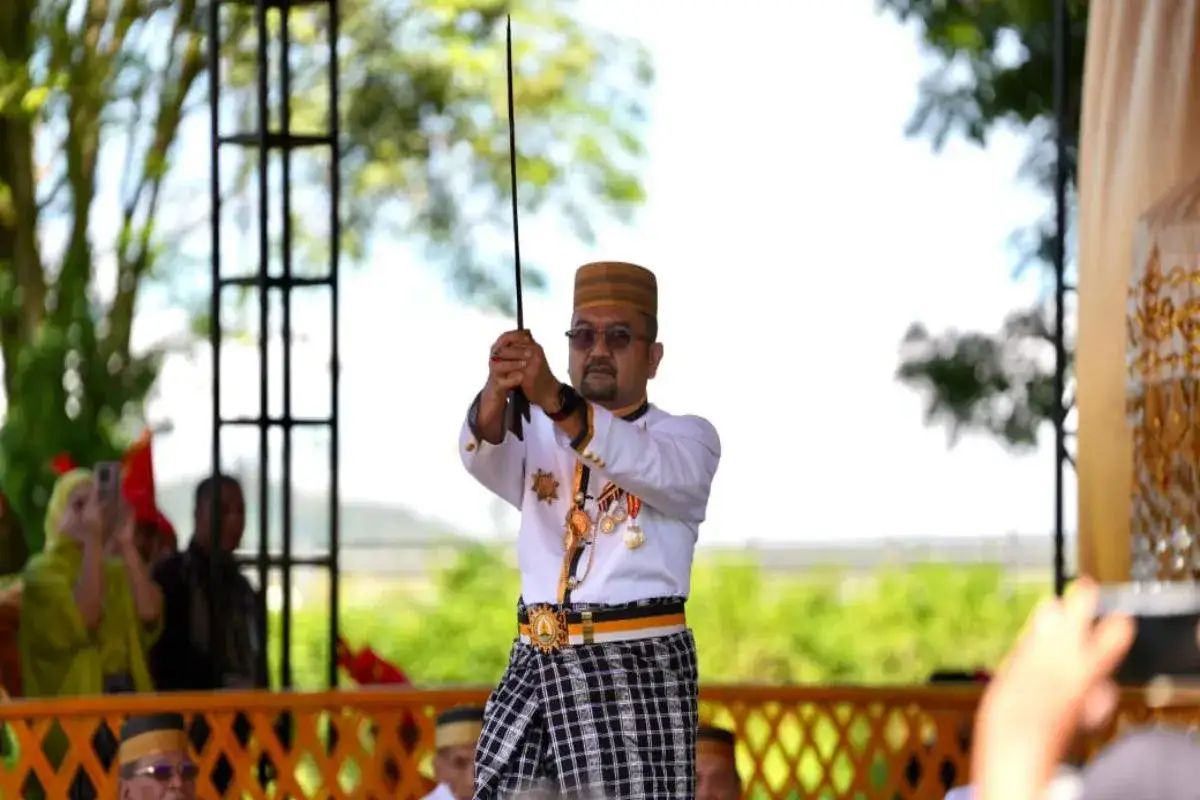
KBRN, Mamuju: In the heart of West Sulawesi, the Massossor Manurung ceremony, an ancestral ritual of cleansing sacred heirlooms from the Mamuju Kingdom, continues to serve as a powerful symbol of cultural resilience, spiritual reverence, and communal unity in the face of rapid modernization.
Held biennially in odd-numbered years, the Massossor Manurung involves the ceremonial washing of royal keris (daggers) in Mamuju Regency. The term “Massossor” translates to purification, while “Manurung” refers to royal objects, underscoring the ritual’s deep-rooted significance.
According to Maradika (King) Mamuju Bau Akram Dai, the tradition dates back to the reign of King Lasalaga around 1500 AD. It is believed that Lasalaga had a silent twin known as “Maradika Tammakana-kana,” whose spiritual presence became embodied in the sacred heirloom now called Manurung. This heirloom has long symbolized strength, leadership, and justice in Mamuju.
“Today, descendants and traditional institutions continue to perform the Sossor Manurung every two years, maintaining a legacy that has endured for centuries,” said Bau Akram Dai, as quoted by antaranews.com.
He also highlighted a local philosophy that guides Mamuju society: Sema manginung uai randanna to Mamuju, maka ia to Mamuju, meaning anyone who drinks the water of Mamuju becomes part of its community and shares the responsibility to uphold peace and contribute to its development.
As both the Maradika and Head of the West Sulawesi Tourism Office, Bau Akram Dai emphasized the kingdom’s commitment to collaborating with provincial and regency administrations to safeguard cultural values and local wisdom.
The Massossor Manurung procession begins with a cultural parade, escorting the sacred heirloom to the Rumah Adat Mamuju (Mamuju Traditional House). Upon arrival, it is greeted with a ceremonial dance believed to welcome ancestral spirits.
The ritual’s climax involves washing the heirloom with floral water and special fragrances, accompanied by prayers in the Mamuju language. The ceremony is led by Bau Akram Dai himself, alongside traditional elders.
Historically, the ritual was first performed during a period of severe drought. The king ordered the Galaggar Pitu (seven royal aides) to cleanse the sacred keris. The water used in the cleansing was then sprinkled across fields, gardens, and the sea, an act believed to have brought relief from the drought.
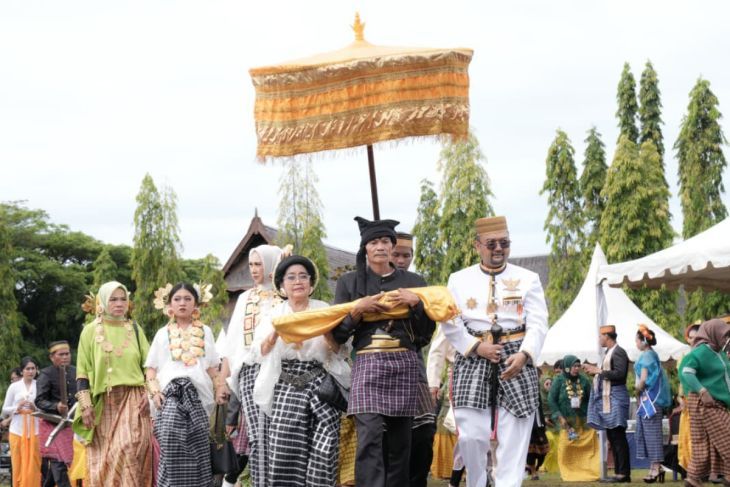 Traditional leaders, accompanied by the Maradika (Ruler) of Mamuju, Andi Bau Akram Dai, take part in the Massossor Manurung procession—a sacred ritual to cleanse the heirlooms of the Mamuju Kingdom. (Photo: Antara/HO/Diskominfo Sulbar)
Beyond its role in preserving cultural heritage, the Massossor Manurung tradition serves as a vital mechanism for reinforcing community identity and moral values. It remains a revered tradition, believed to bestow blessings upon the community and reaffirm the enduring spirit of Mamuju’s cultural heritage.
While the ritual involves physical cleansing of the sacred Manurung heirloom, its deeper significance lies in symbolic self-purification, spiritual introspection, and reflection on the socio-economic and governance journey of the Mamuju people.
West Sulawesi Governor Suhardi Duka, who attended the ceremony, emphasized that Massossor Manurung is more than a ritual of preservation; it is a moment of collective introspection and moral renewal across all layers of society.
He noted that culture shapes both identity and character, highlighting the Mamuju language as a core element of that cultural identity. He also encouraged efforts to harness the tradition’s economic potential through cultural tourism.
Drawing parallels with Bali, he suggested that Massossor Manurung could be developed into a cultural attraction capable of appealing to both domestic and international visitors. The belief that the Manurung heirloom was “born” rather than crafted imbues it with profound mystical and symbolic value, which could intrigue foreign audiences.
Mamuju Regent Sutinah Suhardi expressed gratitude for the Governor’s support in safeguarding the cultural legacy of the Mamuju Kingdom. She voiced hope that the Massossor Manurung would continue to foster social solidarity and strengthen regional pride.
Sunusi, Acting Head of the West Sulawesi Provincial National Unity and Politics Agency (Kesbangpol), affirmed the ceremony’s significance as one of the province’s foremost cultural events. He stressed the importance of generational continuity and education to ensure that the values embedded in the tradition are passed on to younger members of the community.
His agency, he added, will maintain close coordination with traditional institutions and community leaders to ensure the sustainable preservation of this custom. Such traditions, rooted in local wisdom, are essential for nurturing social cohesion and reinforcing the spirit of national unity. ***
News Recomendation
Loading latest news.....