


Balok Asa Weavers Preserve Dayak Craft Amid Modern Pressures
- 22 Okt 2025 15:38 WIB
- Voice of Indonesia
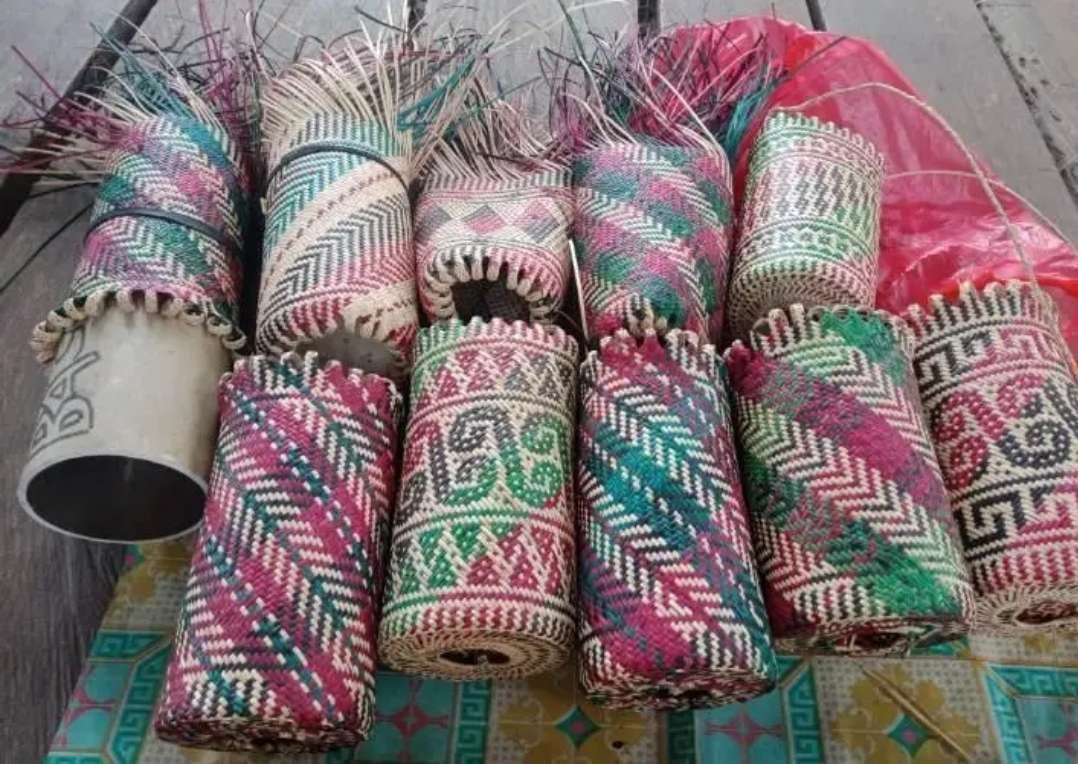
KBRN, Sendawar: Traditional rattan weaving is becoming increasingly rare amid rapid modernization and shifting lifestyles. Yet in Balok Asa Village, Barong Tongkok Subdistrict, West Kutai Regency, East Kalimantan, the spirit to preserve this legacy of craftsmanship remains strong.
The Dayak people of East Kalimantan produce a wide range of handicrafts using natural materials such as rattan, pandan leaves, and bamboo. These include lanjung (backpacks), anjat (tube-shaped backpacks), various types of hats (cahung), mats, and baskets, items used daily for carrying goods and tools.
According to Yohanes, a local craftsman who has long worked in the weaving trade, the craft is more than an economic activity. It is a vital part of the village’s cultural identity.
“We used to start with plain mats. Now we can make bags with more intricate woven motifs to keep them appealing in the modern era,” Yohanes said on Tuesday, October 21, 2025.
This reflects broader changes in West Kutai’s rattan craft industry, which has undergone a transformation. Artisans are introducing new motifs, diversifying product functions, and seeking wider markets.
However, challenges persist. Yohanes noted that demand dropped during the COVID-19 pandemic, and sourcing raw rattan and doyo leaves locally has become increasingly difficult.
“Sometimes we have to buy from outside the village at rising prices,” he said.
The West Kutai Regency Administration continues to support the industry through its relevant agencies. Initiatives include promoting traditional Kutai crafts at national and international exhibitions to ensure that local products not only survive but also expand their reach.
In Balok Asa, craftsmen like Yohanes hope the younger generation will take part and inherit the weaving skills. Without regeneration, he warned, the craft could eventually vanish from the village.
“We want village children to see that weaving isn’t outdated. It’s a business opportunity and a source of cultural pride,” he said.
With a commitment to updating motifs and products, leveraging social media, and collaborating with larger enterprises, Balok Asa’s artisans remain optimistic that their traditional weaving craft has a future, even in the modern age. (Misni Parjiati/Ed. Lasti Martina)
News Recomendation
Loading latest news.....