


Gangsing: Indonesia’s Ancient Spinning Top Game
- 29 Agt 2025 01:13 WIB
- Voice of Indonesia
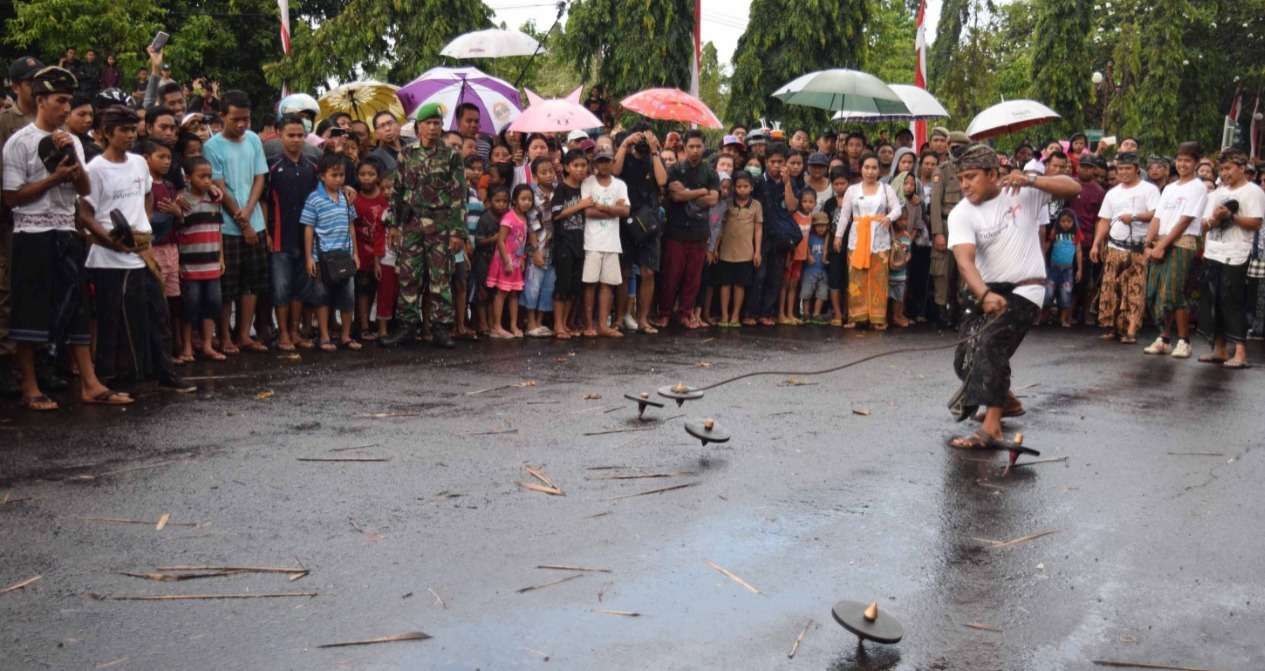
KBRN, Buleleng: The spinning top, known as gangsing, is a folk game found in many countries. But in Indonesia, it represents a deeply rooted cultural tradition with countless regional variations.
In Bali, the game is called Megangsingan or Megangsing, while in Jakarta it is known as Panggal. In North Sulawesi, locals call it Paki, in Lampung, it is Pukang, and in Maluku, it goes by Apiong, among other names.
Regarded as one of Bali’s oldest games, gangsing has been discovered at various archaeological sites, indicating its long-standing presence.
In the Buleleng region, it evolved beyond a pastime into a competitive sport. Local artisans recall that the competitive version, Adu Gangsing, offered farmers a way to unwind after a long day in the fields. The game also fostered a sense of community and social balance among players.
Traditionally, boys and men play Megangsingan, either individually or in teams composed of at least three groups, each consisting of four players and two reserves.
The game requires agility and quick reflexes, making it a physically intense experience. Players wear everyday clothing, as no special attire is required.
According to bulelengkab.go.id, artisans craft the tops, known as gangsing, from durable woods such as lime, tamarind, or other hardwoods. They embed a sharp nail or an iron tip at the bottom of the conical end to serve as a pivot for spinning.
The tops vary in shape, ranging from disk-like forms with conical tips to smaller versions resembling the kedondong fruit. A disk-shaped top can weigh up to one kilogram and measure as much as 30 centimeters in diameter.
To launch the top, players wrap a strong string, traditionally made from tree bark or woven rami fiber, around the body of the top.
With a swift throw and a sharp pull, they send the gangsing spinning across the playing field. The game takes place on a hard, flat surface divided into squares for each player.
Players use a sodo, a flat piece of wood or coconut shell, to scoop up and reposition the spinning top without halting its rotation.
Before each match, teams agree on the rules and determine the roles of attacker (regu pemukul) and defender (regu pemasang) through a spin-off or coin toss (sut).
The attacking team aims to strike and stop the opponent’s spinning top. The round goes to the top that spins the longest.
The first team to reach ten points wins the game. Players may be substituted at any time, but fouls occur if a player steps on the line, spins outside the designated square, or delays their throw.
Beyond its competitive appeal, Megangsing serves important social and educational functions. As a communal activity, it strengthens social ties and promotes camaraderie.
It teaches sportsmanship, encouraging players to accept victory and defeat with grace and to compete with integrity and respect.
The game’s dynamic movements help develop motor skills and kinesthetic intelligence.
Its group-based nature fosters social interaction, patience, cooperation, and teamwork. With its structured rules and educational value, this ancient tradition holds the potential to evolve into a modern competitive sport. ***
News Recomendation
Loading latest news.....