


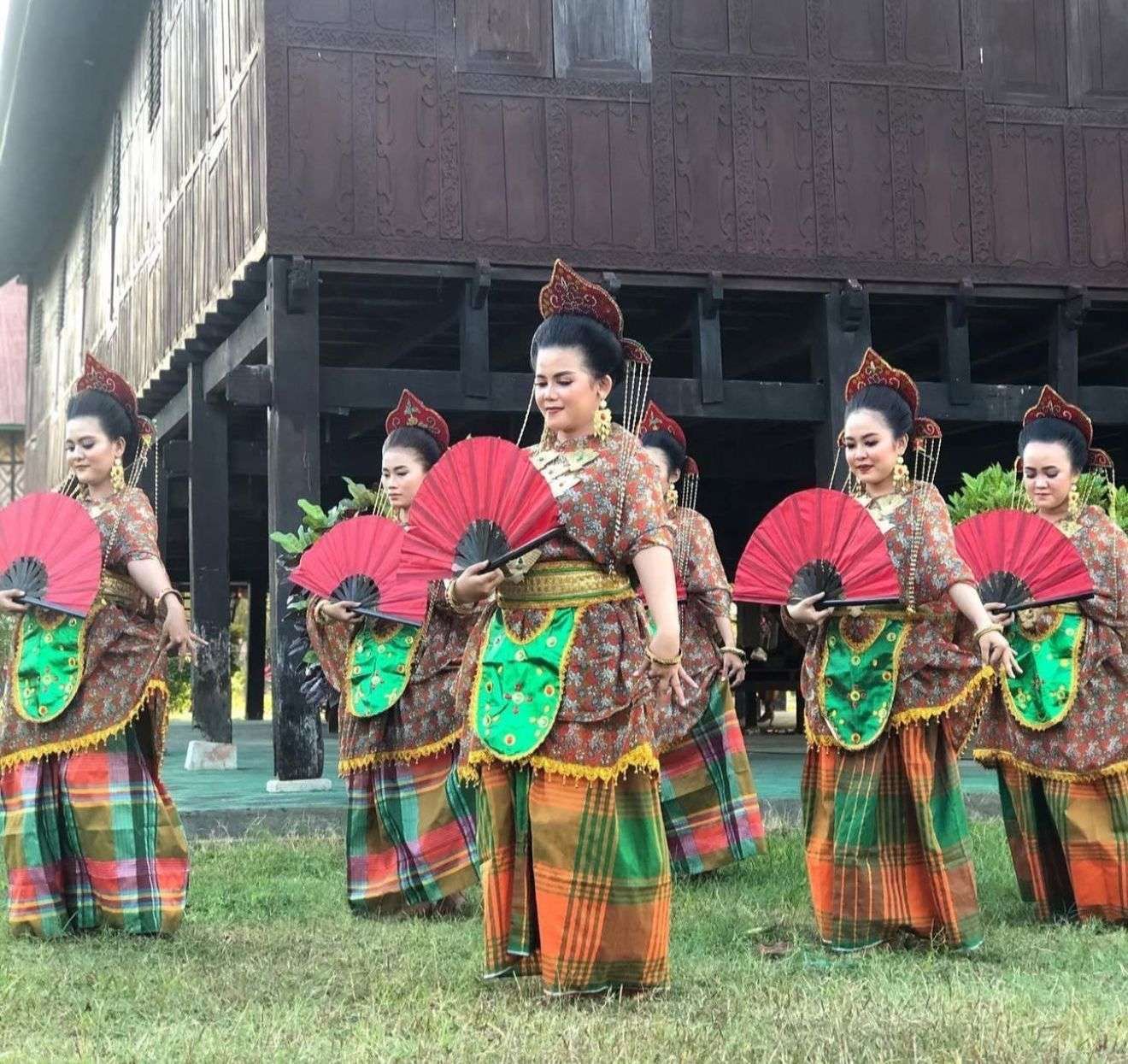
KBRN, Bone: The Pajoge dance, a traditional art form of the Bugis people in Bone, carries deep historical and philosophical significance.
Traditionally performed by young women from commoner backgrounds, rather than nobility, the dance was staged in the royal palace to entertain the king and his guests.
A. Muhammad Yunus, choreographer and head of the Arung Palakka Art Studio, explained that the Pajoge Makkunrai dance first emerged during the reign of Bone’s 30th monarch, We Fatimah Banri Datu Citta Matinroe Ri Bolampare'na, one of the kingdom’s female rulers.
“Pajoge served as palace entertainment and also functioned as a medium for social interaction at the time,” Yunus said on Wednesday, August 27, 2025.
He emphasized that the dance’s meaning goes beyond mere entertainment. Its movements are rich in symbolism.
The Mappakaraja gesture, for instance, signifies respect, while Massampeang represents the act of casting away negativity and embracing goodness.
The dancers’ costumes also reflect historical influences. They wear a pakambang, a kimono-like cloth approximately two meters long, paired with a jungge headdress.
According to Yunus, these elements suggest Chinese cultural influence in the evolution of this Bugis tradition.
Today, the Pajoge Makkunrai dance continues to be preserved and regularly performed at cultural events. It has also become a subject of academic study among dance students, underscoring efforts to safeguard the traditions and cultural identity of the Bone community. ***
Translator: Naura Sofia
Editor: Lasti Martina
News Recomendation
Loading latest news.....