


Balinese Mapandes Ceremony, A Spiritual Rite of Passage
- 26 Agt 2025 14:58 WIB
- Voice of Indonesia
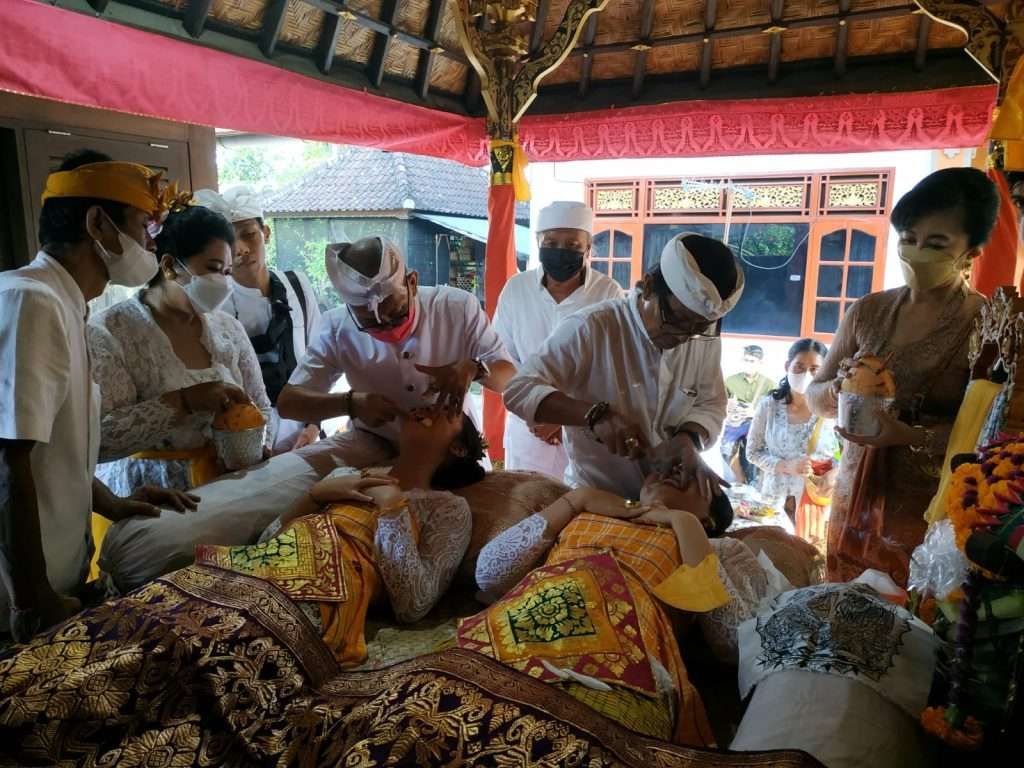
KBRN, Denpasar: The Mapandes ceremony, also known as Masangih, Matatah, or teeth filing, is one of the most important Manusa Yadnya (human rituals) in Balinese Hindu tradition. This ceremony is performed when a person transitions from adolescence to adulthood.
I Made Gede Chandra Narayama, a Hindu religious instructor at the Ministry of Religion in Denpasar, shared this information during the Surya Puja program on Pro 4 RRI Denpasar, FM 106.4 MHz, on Saturday, August 23, 2025.
Narayama explained that the word Masangih itself comes from the word Sangih, which means "sharp". During the ceremony, a person's front teeth, especially the canines, are filed or leveled. "This process symbolizes the cutting or purification of the bad human traits known as Sad Ripu or the six enemies within a person," Narayama said.
He added that Masangih is not just a physical act but a symbol of an individual's spiritual and social transformation to become a more mature, wise, and responsible person.
The Masangih ceremony has a profound philosophical meaning and noble values. The first is self-purification, or Sarira Samskara.
"Masangih is a form of self-purification from bad traits like lust (Kama), anger (Krodha), greed (Lobha), confusion (Moha), arrogance (Mada), and envy (Matsarya)," he said.
The second noble value of Masangih is self-control over the six worldly tastes, or Sad Rasa. Masangih teaches that controlling the six worldly pleasures, sweet (Madura), sour (Amlah), salty (Lawana), bitter (Tiktak), spicy (Katu), and astringent (Kasaya) is crucial, as they are all symbols of worldly enjoyments that can lead to a person's downfall if not controlled.
Third, Masangih marks the transition from adolescence to adulthood. This ceremony is a sign that a person is ready to enter the adult phase of life, both physically and socially, as well as spiritually.
Fourth, Masangih serves as preparation for the next stage of life, from Brahmacari (student phase) to Grahasta (married life). In Balinese Hindu tradition, a person who has not undergone the teeth-filing ceremony is considered not yet ready to get married, as they are not deemed fully mature spiritually, morally, or mentally.
"Therefore, in this Mapandes ceremony, there is a tradition or a series of rituals called Sad Rasa or 'enjoying or tasting the six worldly flavors,' which represent the worldly pleasures that need to be controlled," Narayama concluded. ***
Translator: Diva Rifdah Rizkia Puspitaningnala
Editor: Bambang MBKA
News Recomendation
Loading latest news.....