



Lontara Lives On: Reviving the Script That Wrote Bugis History
- 23 Agt 2025 00:06 WIB
- Voice of Indonesia
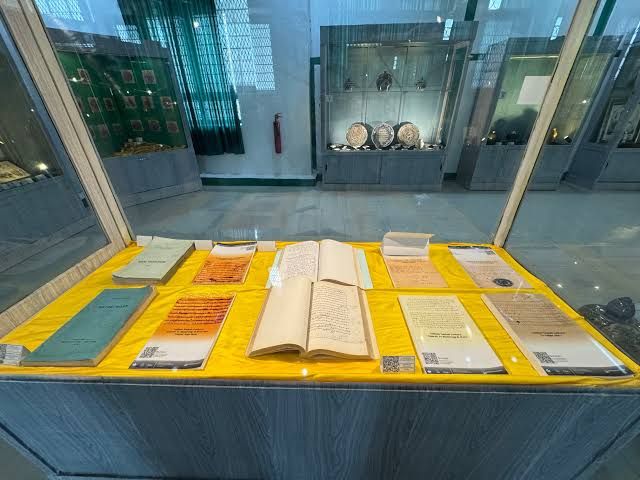
KBRN, Jakarta: In the heart of South Sulawesi, the elegant strokes of the Lontara script once danced across palm leaves, chronicling the lives, legends, and laws of the Bugis people.
From the 14th century until the early 20th century, Lontara served as the primary writing system for daily communication and literary expression. Today, its legacy teeters between reverence and obscurity, as Latin script gradually supplanted its role in modern life.
Yet hope for its survival remains strong. Nurhayati Rahman, a professor of linguistics at Hasanuddin University and a leading philologist of Lontara, envisions a future where the script thrives in the digital age.
“Lontara should be typed and displayed on electronic devices,” she said, as quoted by indonesia.go.id. “Its development must preserve the original characters, or we risk rewriting its history.”
Indonesia’s cultural landscape is a mosaic of over 1,300 ethnic groups, according to the 2010 census.
Among them, the Bugis community holds a prominent place in South Sulawesi, inhabiting regions such as Luwu, Wajo, Soppeng, Bone, Sidenreng Rappang, Pinrang, and Barru.
The term “Bugis” stems from “to ugi,” meaning “people of Ugi,” a reference to La Sattumpugi, the first king of a local kingdom historically known as "Cina," not to be confused with the modern nation of China.
The name “Cina” in this context refers to an ancient kingdom located in present-day Pammana, Wajo Regency.
Its origin lies in local linguistic traditions, with scholars proposing that it may derive from the word sinna, meaning “light,” symbolizing the kingdom’s glory, or sinae, meaning “cloth,” reflecting its reputation as a center of fine textile production.
Much like Majapahit or Sriwijaya, "Cina" Kingdom is a historical name rooted in the archipelago’s own cultural narrative, bearing no ethnic or geopolitical ties to East Asia.
La Sattumpugi’s lineage intertwines with Bugis mythology. His daughter, We Cudai, married Sawerigading, son of Batara Lattu. Their union produced La Galigo, a legendary figure whose name graces one of the world’s longest epic poems.
Composed in the 15th century on palm leaves using Lontara script, the I La Galigo spans an estimated 9,000 folio pages. UNESCO recognized its cultural significance in 2012 by inscribing it into the Memory of the World Register, placing it alongside India’s Mahabharata and Ramayana.
The Lontara script, also known as Lontaraq, is deeply embedded in Bugis and Makassarese heritage. Its name derives from the lontar palm, a native species of South Sulawesi whose leaves served as writing material long before paper became commonplace.
In traditional manuscripts like I La Galigo, the text appears on thin, elongated palm leaves wound around wooden spools, resembling cassette tapes.
Readers unfurl the scroll from left to right, revealing the script in a continuous flow. One such manuscript resides in the Tropenmuseum in Amsterdam, a testament to its global cultural reach.
The origins of Lontara trace back to Daeng Pamette, a royal minister and harbor master under Karaeng Tumapakrisi Kallonna, the ninth king of Gowa, a powerful maritime kingdom in South Sulawesi that flourished between the 14th and 17th centuries.
Gowa played a central role in regional trade and politics, with its influence extending across much of eastern Indonesia. At the king’s request, Daeng Pamette devised the script to serve the kingdom’s administrative and diplomatic needs.
Over time, its use spread beyond Gowa’s borders, becoming a medium for recording messages and official documents.
Lontara is an abugida script composed of 23 base characters, written from left to right in a style known as scriptio continua, without spaces between words and with minimal punctuation.
It lacks a virama, or vowel-suppressing mark, which can lead to ambiguity for readers unfamiliar with its conventions. For instance, “Mandar” appears simply as “mdr,” while “sr” might mean “sarang,” “sara,” or “sara’,” depending on context.
Visually, Lontara stands apart from other scripts. It eschews curves in favor of vertical strokes, with a distinctive break where upward and downward lines meet.
This design reflects the Bugis ethos: a commitment to honesty symbolized by straight lines, and a cultural maxim that it is better to break than to bend. The script’s technical style also conveys philosophical meaning.
Thick upward strokes represent ambition and progress, while delicate downward lines embody gentleness and moral integrity.
Though Lontara’s prominence waned with the rise of the Latin script, it remains part of the local curriculum in South Sulawesi schools. Its presence endures in street signs, building names, and public markers.
A striking example appears on the wall of the Southeast Asia and Caribbean Studies Center in Leiden, the Netherlands, where a large Lontara-inscribed poem greets visitors.
Efforts to preserve the script have gained momentum since the 1990s, led by the Aksara Lontaraq Nusantara Foundation.
Their advocacy culminated in Lontara’s inclusion in Unicode, making it the first Indonesian script to be digitally standardized for global use.
This milestone ensures that the straight lines of Bugis identity continue to speak, across screens, across borders, and across generations. ***
News Recomendation
Loading latest news.....