


Botanical Art Exhibit Champions Indonesia's Native Flora
- 14 Jul 2025 15:48 WIB
- Voice of Indonesia
/u0l5bry8wr80129.jpeg)
KBRN, Yogyakarta: Amidst the looming shadows of environmental degradation and the fading echoes of local wisdom, an urgent call to reconnect with Indonesia's natural heritage emerges through art. The Ragam Flora Indonesia 5: Khazanah Alam Nusantara exhibition, a tapestry of botanical artistry, invites all to rediscover and cherish the archipelago's indigenous plant wealth.
This exhibition is a testament to powerful collaboration, born from the synergy between the Indonesian Society of Botanical Artists (IDSBA), Kebun Raya Bogor, BRIN, and Bentara Budaya, with vital support from various partners. This joint effort bridges the realms of art, science, and the wider public, fostering a commitment to safeguarding Indonesia's rich biodiversity, particularly its unique flora.
This exhibition isn't just a local endeavor. It's a thread in the global tapestry of Botanical Art Worldwide 2025, an initiative spanning over 30 countries across six continents. Throughout 2025, participating nations are simultaneously hosting botanical art exhibitions, all culminating in the Worldwide Day of Botanical Art on May 18, 2025.
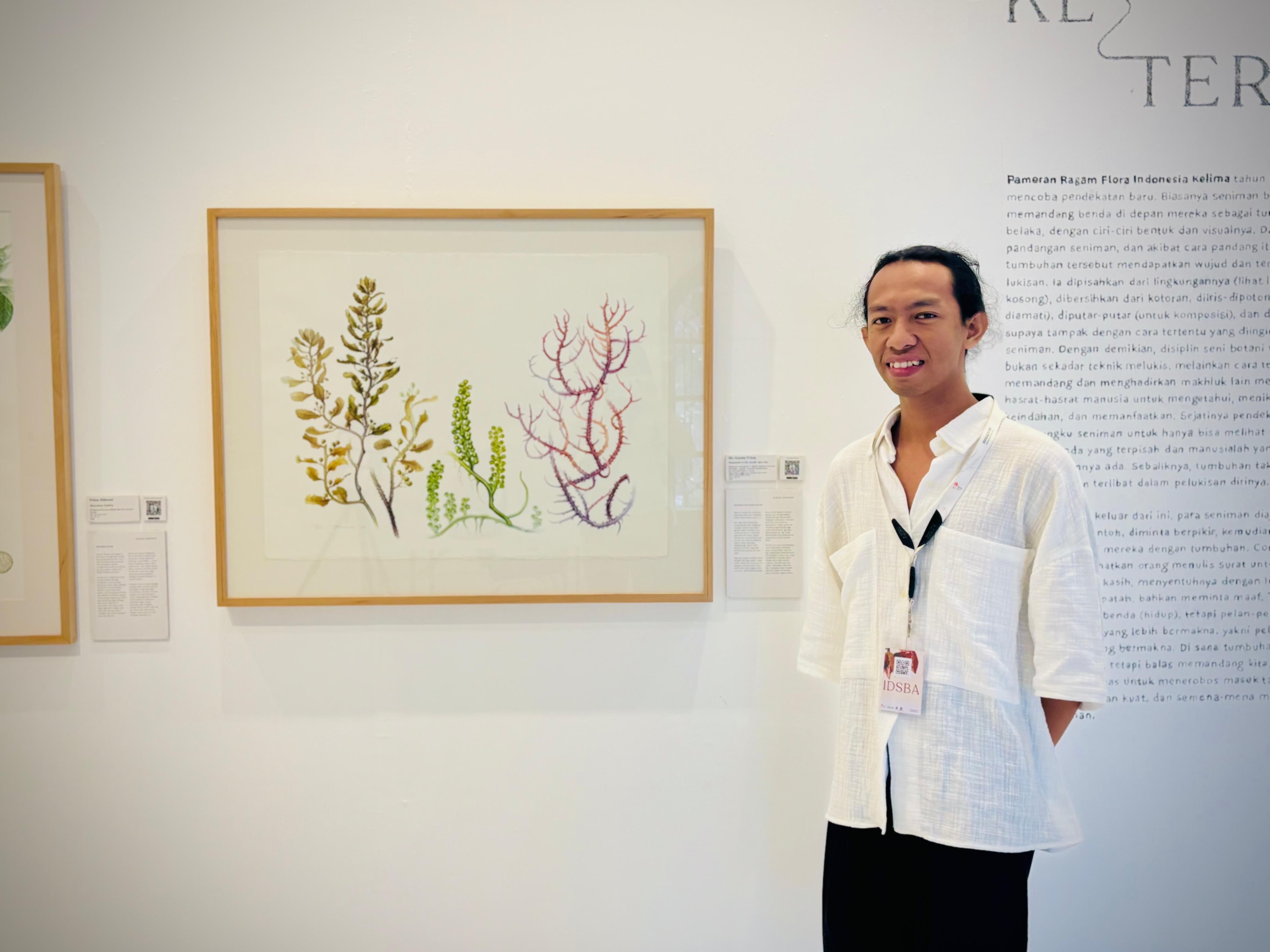
Tulungagung artist Rio Ananta Prima, whose four featured works—three solo and one collaborative—drew inspiration from his surroundings, with one piece titled 'Seaweed in the South Java Sea' notably reflecting his observations from the beach near his home. (Photo: RRI English/Diva Rifdah Rizkia Puspitaningnala).
"This exhibition was first held at Griya Anggrek, Kebun Raya Bogor, from May 18 to June 1, 2025, and then moved to Bentara Budaya Yogyakarta, running from July 12-19, 2025. IDSBA is indeed focused on documenting plants through art and illustration," stated Rio Ananta Prima, an IDSBA member, on Monday, July 14, 2025.
The overarching theme, "crop diversity," casts a vital spotlight on the often-overlooked diversity of useful native Indonesian plants—those providing food, clothing, shelter, medicine, and energy—which are increasingly marginalized by the pervasive rise of mass agriculture, monoculture, and exploitative extractive practices.
"What makes the artworks here different is the collaboration of art and science in their creation; plants are depicted and illustrated completely and accurately, making them informatively clear for recognition as a specific plant species," said Rio.
In Indonesia, this unique exhibition, titled Khazanah Alam Nusantara (Treasures of the Archipelago's Nature), is spearheaded by IDSBA. Here, a collection of 65 botanical artworks from 43 artists across various regions showcases 71 species of useful plants native and endemic to Indonesia, inviting viewers into a world of detail and delicate beauty.
The chosen title encapsulates the intention to re-elevate the plant world's significance as a cherished, intergenerational legacy.
/n5cwdrge0cw3d3z.jpeg)
Icka Gavrilla's artwork, 'Red Thorns', depicted Durio dulcis, a rare red-skinned durian with yellow flesh native to Kalimantan, highlighting a protected Indonesian plant currently undergoing propagation effort. (Photo: RRI English/Diva Rifdah Rizkia Puspitaningnala).
As explained by exhibition curator Kurniawan Adi Saputro, Khazanah Alam underscores the plant world's role as a repository of invaluable treasures. It’s a gentle yet firm reminder that these botanical wonders are to be cared for, respected, and preserved, ensuring their presence for all our tomorrows.
"Why is the relationship between artists and plants crucial in botanical art? First and foremost, this connection is vital because of life itself, both are living. The most important element for a botanical artist to create is the plant. Only when there are living plants can there be botanical artists, but not vice versa," explained Kurniawan.
"Secondly, the relationship between humans and plants is often misunderstood. Humans, especially those in urban areas, frequently mistakenly believe that they are the ones who create places for plants: pots, garden beds, parks, gardens, rice fields, and even forests," he added.
Beyond mere scientific precision, the artworks on display offer a deeply personal narrative from each artist, revealing not just the accurate morphology of plants but also inviting profound cultural interpretations and intimate connections. Each piece, potentially featuring more than one plant species, skillfully illuminates its subject, fostering a sense of wonder and deeper understanding.
The exhibition's focus on crop diversity is carefully categorized, showcasing Indonesia's rich botanical heritage. Visitors can explore sections dedicated to plants used for food, encompassing everything from fruits and leaves to other edible parts, as well as categories for shelter (papan), clothing (sandang), medicine (obat), aromatic uses, and spices.
This arrangement creates an immersive journey through the myriad ways these vital plants intertwine with Indonesian life and tradition, leaving visitors with an appreciation for their multifaceted roles.
/3gm8t4kwtk57n4d.jpeg)
IDSBA founder Eunike Nugroho's artwork, Cerita Cengkeh (Clove Story), depicted her long-held desire to illustrate spices with profound Indonesian histories, particularly cloves, a Maluku native whose significance once spurred extensive European expeditions and the eventual colonization of the Archipelago. (Photo: RRI English/Diva Rifdah Rizkia Puspitaningnala).
The Ragam Flora Indonesia (RFI) exhibition series, which began its journey in 2018 at the Bogor Botanical Gardens, continued its artistic bloom in 2019 at Sangkring Art Space, Yogyakarta, then in 2022 at the National Gallery of Indonesia, Jakarta, and most recently in 2024 at NuArt Sculpture Park, Bandung.
This fifth iteration of RFI holds special significance as it marks Indonesia's second participation in the global Botanical Art Worldwide initiative, setting it apart from previous RFI showcases by joining a simultaneous worldwide exhibition of botanical art communities. This collective global effort creates a palpable sense of shared purpose, where art transcends borders to celebrate and highlight the world's plant diversity.
Beyond the original artworks, visitors are transported globally through a digital compilation showcasing over 1,200 botanical pieces from more than 30 countries, illustrating plants crucial for food, clothing, shelter, medicine, and energy worldwide.
Adding another layer of immersion, scanning a barcode on each artwork's label connects directly to an audio narration, where the artist personally describes their piece and the plant it depicts, creating an intimate, whispered journey through each botanical story.
"In this exhibition, visitors gain two primary experiences. First, an aesthetic visual presentation of botanical artworks. Second, an invitation to recognize the diversity of Nusantara flora, which is hoped to foster awareness of Indonesia's rich biodiversity,” stated Ilham Khoiri, General Manager of Bentara Budaya and Communication Management of Kompas Gramedia.
From its launch in Bogor, Indonesia's renowned city of science, the Ragam Flora Indonesia 5: Khazanah Alam Nusantara exhibition journeys onward to Yogyakarta, the vibrant city of art and culture.
Presented in two cities with distinct characters, the exhibition aims to broaden public access to botanical art while simultaneously cultivating a deeper awareness of the crucial importance of plant diversity as an integral part of the nation's identity, heritage, and future.
"The message of this exhibition is that through botanical art, the wider community can become more familiar with and care about the plant species found in Indonesia, especially the beneficial plants we consume, whose preservation we must safeguard for our future generations," concluded Rio. ***
News Recomendation
Loading latest news.....