


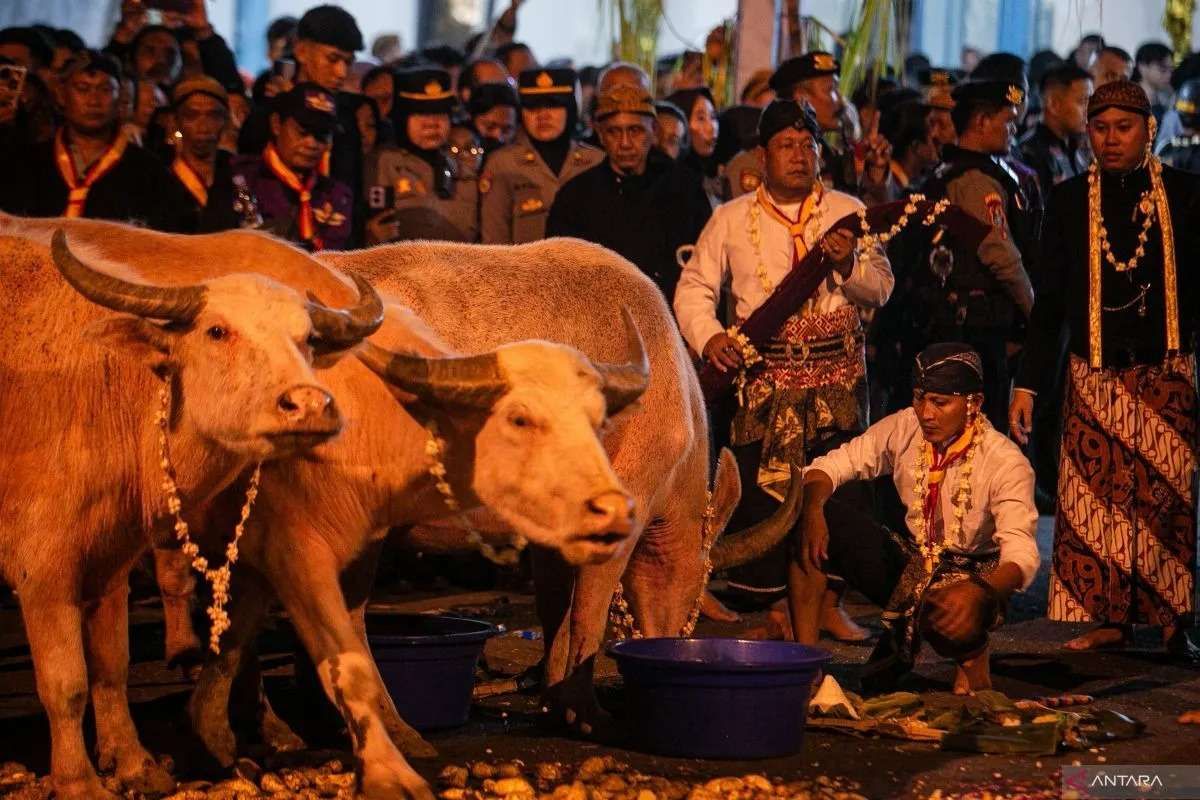
KBRN, Jakarta: Malam Satu Suro (the Eve of 1 Suro) holds a special place in Javanese culture. More than just the turn of the year in the Javanese-Islamic calendar, this night is believed to be a sacred time, rich with spiritual and mystical meaning.
The tradition of commemorating Malam 1 Suro developed due to the acculturation of Islamic values and local culture, which has been ongoing since the 17th century AD as quoted by antaranews.com.
This year, Malam 1 Suro falls on Thursday night, June 26, 2025, starting at 6.00 PM local time (after Maghrib prayer time). Meanwhile, 1 Suro itself coincides with Friday, June 27, 2025, which is also 1 Muharram 1447 Hijriah and has been designated as a national holiday for the Islamic New Year.
The name "Suro" originates from the Arabic word "Ashura," meaning "ten," referring to the 10th day of the month of Muharram, which holds special significance in Islamic teachings. However, over time, the pronunciation of this word changed among the Javanese people, becoming "Suro" as the name of the first month in the Javanese calendar.
The celebration of Malam Satu Suro is rooted in the political and cultural policy of the Islamic Mataram King, Sultan Agung Hanyokrokusumo. On Friday Legi, the month of Jumadil Akhir in the year 1555 Saka, coinciding with July 8, 1633 AD, Sultan Agung inaugurated the Javanese-Islamic calendar. This new calendar system combined elements of the Saka calendar (Hindu-based) with the Hijriah calendar (Islamic-based).
This step was not merely an administrative measure for timekeeping, but a cultural strategy to unite the Javanese society, which at that time consisted of two large groups: santri (devout Muslims) and abangan (nominal Muslims, more inclined to traditional Javanese beliefs). This calendar allowed the integration of deeply rooted Kejawen (Javanese mysticism) values with the development of Islamic principles in Java.
In the view of the Javanese people, Malam 1 Suro is believed to be a moment when the boundary between the unseen realm and the human world becomes thin. This night is considered when ancestral spirits descend to provide protection and blessings.
Therefore, the Javanese community fills this night with various forms of spiritual practices such as tirakat (asceticism), collective prayers, grave pilgrimages (ziarah kubur), and selametan (communal feasts) as a form of gratitude and self-introspection.
These activities are carried out individually and in groups, with the main goal of drawing closer to God, purifying the soul, and seeking safety for oneself and family. This tradition is a manifestation of the synergy between Islamic teachings and local Javanese culture that prioritizes harmony and spirituality.
One significant legacy of Sultan Agung is the custom of conducting grave pilgrimages every Friday Legi, performed along with religious activities such as recitation gatherings and haul (commemorations of deceased religious figures). When 1 Suro falls on a Friday Legi—like this year—that night is believed to be even more sacred than usual.
During this moment, the Javanese people are more cautious and choose not to engage in worldly, frivolous activities, but rather fill it with religious and spiritual endeavors.
The celebration of Malam Satu Suro did not emerge from a cultural vacuum, but resulted from a long process that unified two belief systems, namely Islam and Kejawen. Through the wise approach of Sultan Agung Hanyokrokusumo, this tradition became a symbol of harmony and unity and a reminder of the importance of spirituality in life.
Malam Satu Suro serves as a concrete example of how the Javanese community has preserved cultural heritage without abandoning religious values. This tradition continues to be maintained to this day, becoming an inseparable part of the cultural identity of the Javanese people, who are spiritual, introspective, and full of local wisdom.
Although some prohibitions are mythological, Malam 1 Suro remains an important reminder of the need for introspection, closeness to God, and appreciation for the local wisdom that shapes the identity of the Javanese people. ***
News Recomendation
Loading latest news.....