


Nyenuk Dance, Sacred Ritual Preserving Balance of Bali's Nature
- 04 Mei 2025 11:10 WIB
- Voice of Indonesia
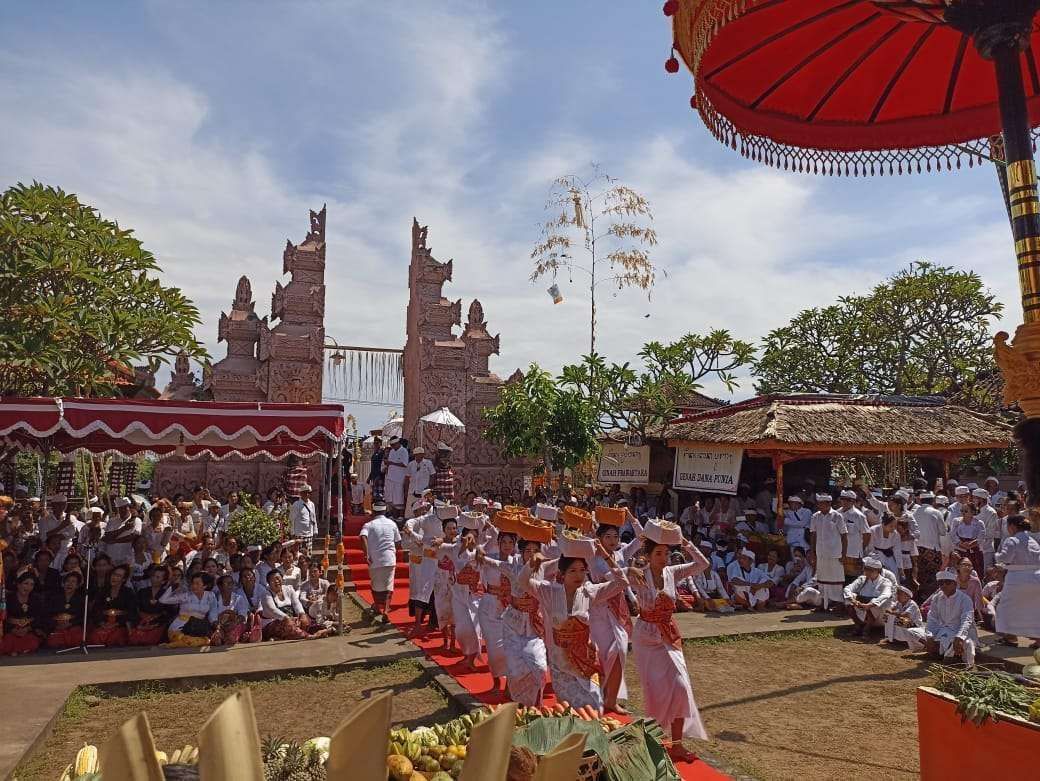
KBRN, Singaraja: Amidst the relentless tide of modernization and shifting times, Bali remains steadfast in preserving its identity through sacred ceremonies rich in deep meaning. Among these is Nyenuk Dance, an obscure yet profoundly philosophical ritual, performed only once every few decades.
This dance recently graced the Padudusan Agung Menawa Ratna ceremony at the Sangsit Dauh Yeh customary village hall, Sawan Subdistrict, Buleleng Regency. The rare event is held every 74 years.
Nyenuk Dance is more than just an artistic performance. It is a reflection of the harmony between humans and the universe, known in Balinese Hinduism as bhuana alit (microcosm) and bhuana agung (macrocosm).
This dance serves as a spiritual medium that unites cosmic forces and everyday human life within a framework of gratitude and reverence for the Creator. Head of Sangsit Dauh Yeh Customary Village, I Wayan Wisara, said that the Nyenuk Dance holds profound values.
"During the temple festival (piodalan), the ngenteg linggih (installation of deities), and the Padudusan Agung Menawa Ratna, the community expresses gratitude for the protection and blessings that have been bestowed upon them," Wisara said on Friday, May 2, 2025, as quoted by rri.co.id.
He added that Nyenuk Dance is performed at the final part of this series, carrying the meaning of deep gratitude for the smooth completion of all the religious processes that have been undertaken.
Nyenuk Dance dancers wear distinctive clothing with symbolic colors: red symbolizing courage, white representing purity, yellow symbolizing wisdom, black for strength and tranquility, and patterned colors reflecting diversity and harmony. Each color represents the spiritual power from the five cardinal directions.
"This dance is also one of the manifestations of Ida Sang Hyang Widhi Wasa (God Almighty) in the five cardinal directions. Lord Shiva in the east is white, Lord Brahma in the south is red, Mahadewa in the west is yellow, Lord Vishnu in the north is black, and the center represents the five elements (panca datu)," Wisara explained.
Before performing, the dancers participate in a memasar procession, which takes the form of a bale pedanaan (offering pavilion). This procession is not just a ceremony but contains the meaning that the community must contribute to social and spiritual life.
"The memasar process represents the social, economic, and cultural life of the community when people are in the market," he continued.
Uniquely, Nyenuk Dance is not only performed within the temple grounds. A cultural parade spanning a kilometer is also held, starting from Sangsit Village Temple, circling the market, and returning to the temple.
In this procession, people from various backgrounds and ages carry agricultural products as offerings, such as coconuts, sugarcane, tubers, rice, and flowers.
Besides bringing offerings in the form of agricultural products, Wisara said, men and women have specific duties in this ceremony. Men carry 'tegen-tegenan' (head carriers) containing coconuts, sugarcane, fruits, and tubers. Meanwhile, women carry rice, sugar, flowers, and ritual offerings.
"These offerings are a sincere expression of gratitude from the community for the smooth running and blessings in their lives," he said.
The ceremony concludes with artistic performances such as gamelan music, traditional songs (tembang), and dances that strengthen the sacred atmosphere and beautify the series of rituals.
More than just a performance, Nyenuk Dance is a noble heritage that strengthens the relationship between humans, nature, and God.
"This ceremony reflects the beauty of Balinese culture, where togetherness and gratitude are highly valued, carrying a message for future generations about the importance of preserving this meaningful cultural heritage," Wisara concluded. ***
News Recomendation
Loading latest news.....