


Mataram Grand Mosque: Preserving Tradition, Fostering Community
- 05 Mar 2025 20:06 WIB
- Voice of Indonesia
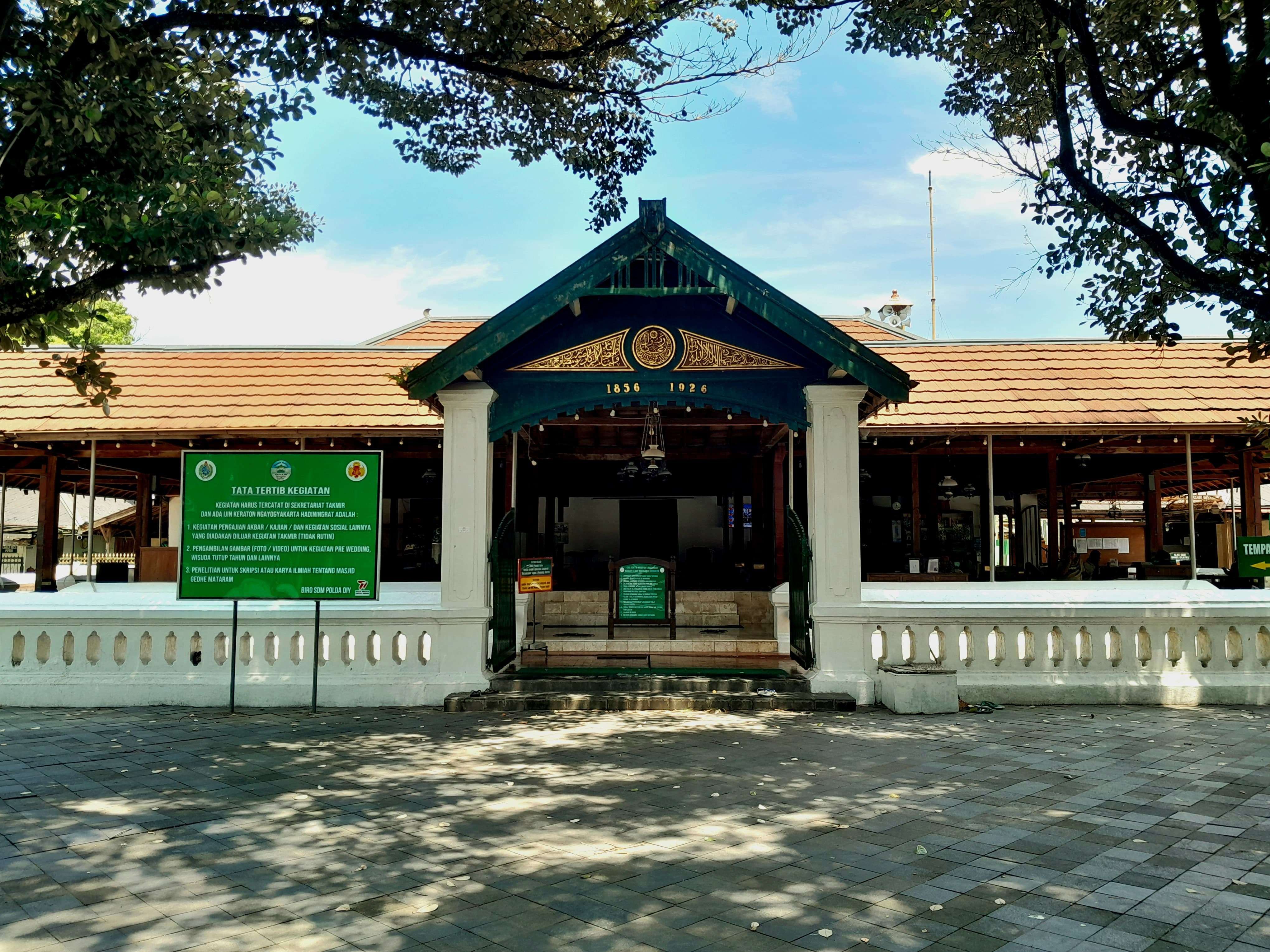
KBRN, Bantul: Kotagede is a cultural heritage site that preserves the legacy of the Islamic Mataram Kingdom, which once triumphed in Java. Originally known as the Mentaok Forest, this region was granted by Sultan Hadiwijaya of the Pajang Kingdom to Ki Ageng Pemanahan.
In 1556, Ki Ageng Pemanahan, Ki Juru Martani, and Danang Sutawijaya began clearing Alas Mentaok. Prior to their efforts, cleric Sunan Kalijaga had already visited the area, seeking for a suitable location for part of the duchy of the Pajang Kingdom.
"Then he planted two banyan trees," Endah Suseno, a historical informant at Masjid Gedhe Mataram (Mataram Grand Mosque), Kotagede, said during an interview with rri.co.id on Wednesday, March 5, 2025.
It was this very place that Ki Ageng Pemanahan founded a village, which eventually evolved into the heart of the Islamic Mataram Kingdom.
To this day, Kotagede bears traces of Mataram's illustrious history, evident in the ruins of its fort, the preserved historic structures, and the tombs of the kingdom's founders.
One of the most iconic relics is the Mataram Grand Mosque Kotagede, one of the oldest mosques in Yogyakarta, located in Sayangan Hamlet, Jagalan Village, Banguntapan Subdistrict, Bantul Regency.
This mosque is a silent witness to the spread of Islam in the Mataram region and is the main attraction for tourists who want to explore the history of Kotagede.
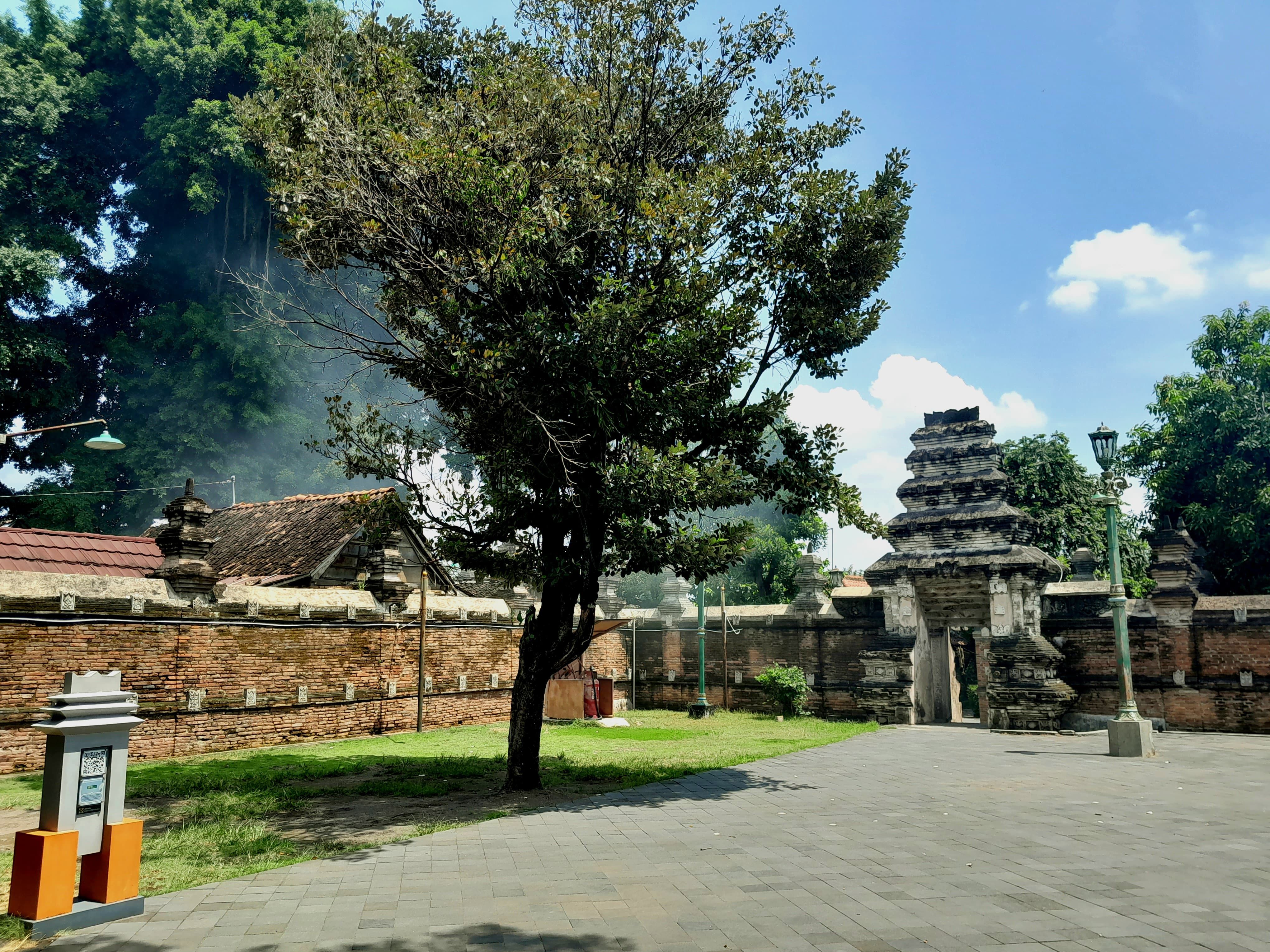
The mosque complex is located in the middle of a residential area, surrounded by a two and a half meter high brick wall. (Photo: RRI English/Diva Rifdah Rizkia Puspitaningnala)
“This mosque is an integral part of the concept of 'catur gatra tunggal'," Seno explained.
This concept embodies four key aspects central to the lives of the Mataram people: ndalem (palace) as the seat of governance, alun-alun (palace square) serving as a hub for social and educational activities, the market which functions as the economic center, and the mosque which provides a focal point for spiritual life.
The construction of Mataram Grand Mosque, which began around 1578, took place in stages. The main hall of the mosque was completed in 1589, but the construction continued over time.
Ki Ageng Pemanahan, an important figure in the construction of the mosque, died in 1584, and his son, Danang Sutawijaya (Panembahan Senopati), who succeeded him as king in 1586, continued the construction. The porch of the mosque itself was built during the time of Prabu Hanyokrowati.
Interestingly, this mosque seamlessly blends Hindu ornamental elements with Javanese architectural style.
The main building showcases the traditional Javanese joglo design, while the porch features a pyramid-shaped structure supported by teak poles, adorned with calligraphy along the edges of the roof ceiling.
/c0l5ni3a5n5ul4u.jpeg)
Nearly as old as the mosque itself, the impressive 1-meter-diameter 'bedug' (drum), Kiai Dondongan, stood within the foyer, a silent witness to centuries of prayers. (Photo: RRI English/Diva Rifdah Rizkia Puspitaningnala)
The main room of the mosque, called the 'liwan,' features a traditional joglo architectural style. Additionally, the mosque includes a prayer porch, a pawastren (women's prayer room), separate male and female ablution facilities, and two wards
"During the reign of Pakubuwono X, the mosque was expanded with the addition of a veranda, 'kuncungan' (overhang), and 'jagang' (pond surrounding the mosque)," Seno explained.
The 'jagang', once utilized for cleansing feet, has now been modified with the addition of a bridge, rendering its original function obsolete.
Each section of the mosque carries its own unique story and purpose, embodying the rich history and cultural evolution of Kotagede.
This blend showcases the profound cultural assimilation during the Islamic Mataram period, elevating the Mataram Grand Mosque beyond its role as a place of worship to a treasured symbol of cultural heritage.
"Behind the mosque, there was once a small house where Ki Ageng Pemanahan and his family resided after they cleared the Mentaok forest. Additionally, there was a spring named Kemuning, which was once safe for consumption,” Seno shared.
The mosque is not only rich in history, but also in unique architecture. One of the most striking elements is the Paduraksa Gate, the entrance gate of the mosque which is thick with elements of Hindu culture.
The gate, embodying the philosophy of "two sides of the protector," symbolically invites visitors to recite the shahada before entering the mosque, representing a spiritual cleansing where sins are forgiven.
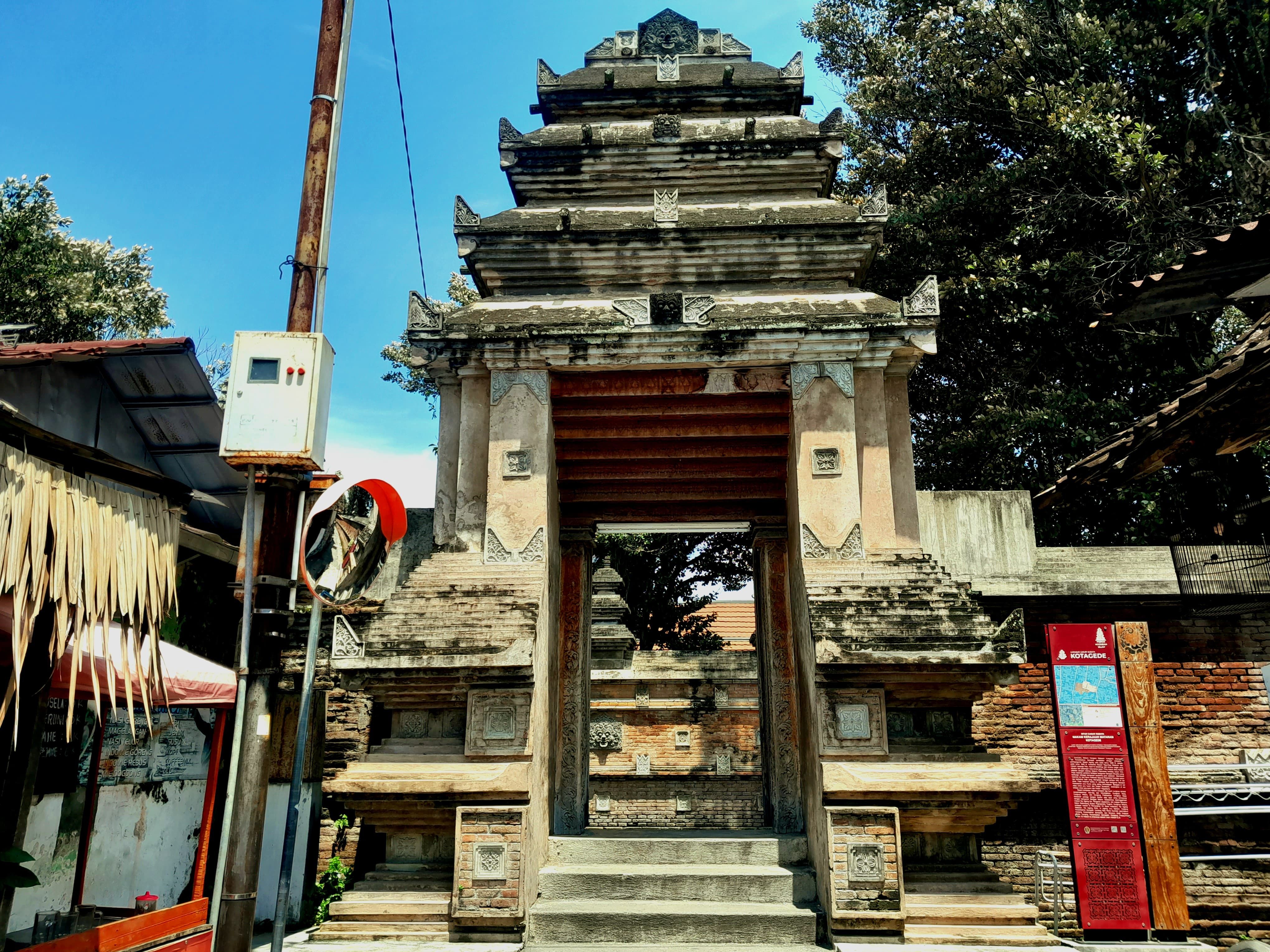
The Paduraksa Gate stood as the main entrance, displaying the mosque's unique blend of cultures. Kala (a god resembling a giant) decorations, remnants of Hindu-Buddhist influence, adorned the brick walls, a testament to the era's tolerance. (Photo: RRI English/Diva Rifdah Rizkia Puspitaningnala)
The shape of the gate ornament resembles a statue, but means shahada, reflecting harmonious cultural acculturation. In addition to Paduraksa Gate, there are two other gates: one exit gate and one gate leading to the tombs of the Mataram kings.
“In the west of the mosque complex, there are the tombs of the kings of Mataram, to the south is Sendang (spring) Kemuning, and to the northwest is Sendang Selirang,” says Seno.
In preparation for the holy month of Ramadan, the Mataram Grand Mosque undertook several activities well in advance.
According to Riyadi, the secretary of the mosque's management, these efforts began with tasks such as cleaning and repainting the mosque's fence, ensuring the space is ready to welcome worshippers during the Islamic fasting month.
During the holy month, the mosque organizes routine activities, providing 'takjil' (snacks or light meals) for breaking the fast. Every day, around 350 servings of 'takjil' are prepared for the congregation. This shows the spirit of togetherness and service to Muslims breaking fasting at the mosque.
Besides 'takjilan' ('takjil' reception), there are two Tarawih (special prayer Muslims perform at night during Ramadan) prayer sessions. The first Tarawih session is conducted right after the Isha (night) mass prayer. The second session is conducted from 2 a.m. - 3 a.m. local time.
"We also provide sahur (pre-dawn meals enjoyed before start fasting)," Riyadi, or Uri as he is affectionately called, said.
The Ramadan routine activities normally start at 5 p.m. local time. Until the time of breaking the fast (marked with the Maghrib call for prayer), a religious lecture is provided. After breaking the fast together, congregations join the Maghrib (sunset) mass prayer.
Then after the Isha (night) mass prayer, they proceed with tarawih, a special prayer performed by Muslims during the holy month of Ramadan.
The mosque also organizes i'tikaf, a spiritual practice that involves staying in a mosque for a specific period, usually during the last ten days of Ramadan, with the intention of dedicating oneself to worship, prayer, and reflection. It is a voluntary act of devotion aimed at deepening one’s connection with Allah Almighty.
With a capacity of 1,000 worshipers, this mosque serves as a vibrant hub for religious and social activities in Yogyakarta. During Ramadan, it attracts approximately 500 worshipers from various regions who gather to perform Tarawih prayers.
Beyond the month of Ramadan, the mosque remains active by hosting a variety of religious programs, including lectures, Quranic recitation sessions, and discussions on topics such as inheritance. These activities foster continuous spiritual growth and community engagement.
The mosque courtyard frequently hosts a range of social activities, including vintage markets, weddings, meetings, and pre-wedding photo sessions.
This variety of uses transforms Mataram Grand Mosque into more than just a place of worship. It serves as a vital public space that fosters community interaction and engagement. ***
News Recomendation
Loading latest news.....