



Papua and UNICEF Join Forces to Fight High Stunting Rates
- 23 Sep 2026 15:57 WIB
- Voice of Indonesia
Key Points
- The Papua Provincial Administration and UNICEF are strengthening integrated nutrition services to address the province’s 24.7 percent toddler stunting rate.
- The program provides comprehensive interventions targeting pregnant women, toddlers, school-age children, and adolescents.
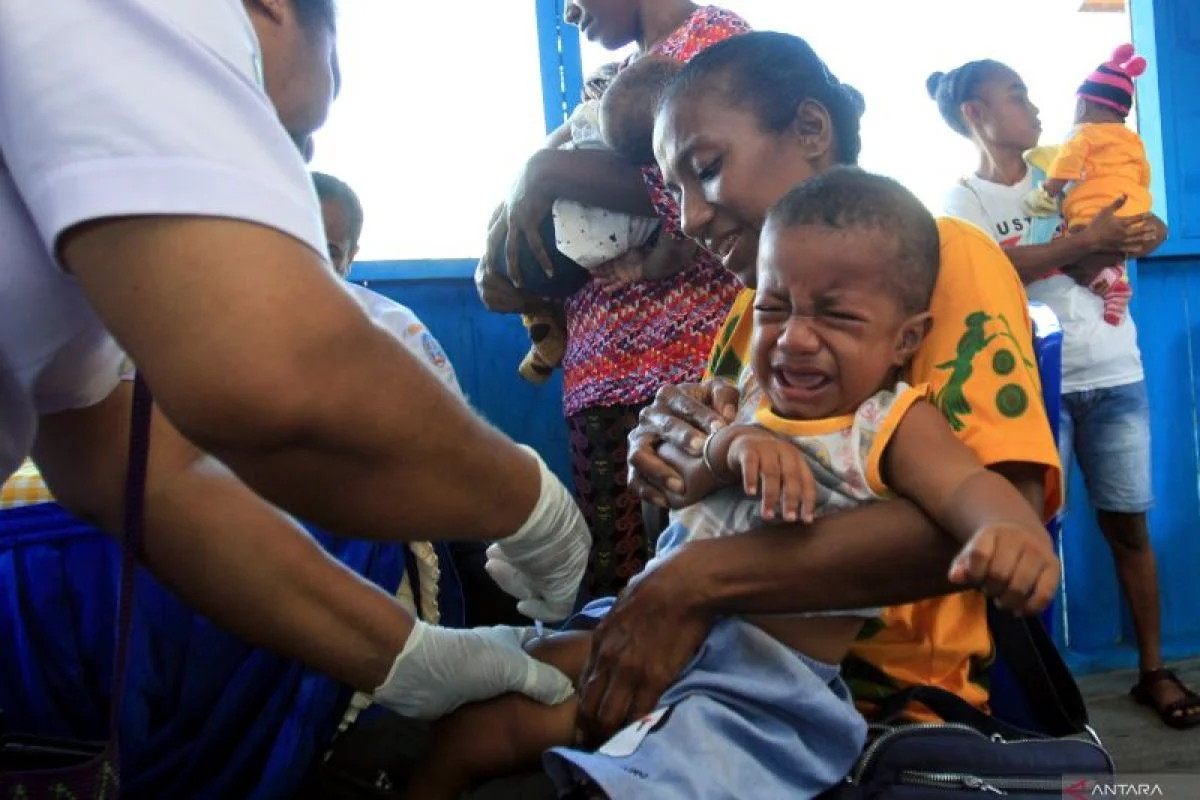
RRI.CO.ID, Jayapura - Facing a 24.7 percent toddler stunting rate, the Papua Provincial Administration and United Nations International Children’s Emergency Fund (UNICEF) are strengthening integrated nutrition services from upstream to downstream. The initiative provides comprehensive health interventions for pregnant women, toddlers, and adolescents.
Assistant for General Affairs and Administration at the Papua Provincial Secretariat, Suzana Wanggai, emphasized that nutrition issues are part of human development. Therefore, addressing them requires cross-sectoral collaboration and is not solely the responsibility of the health sector.
“What is being strengthened is not only food provision, but an integrated nutrition service system,” she said after opening the Strategic Learning Dissemination Activity on Strengthening Integrated Nutrition Programs to Realize a Healthy Papua in Jayapura City, Papua on Tuesday, September 23, 2026.
According to Suzana, this integrated service covers target identification, utilization of nutritious local food, counseling, as well as anemia prevention and sanitation. The program also focuses on improving the quality of health services at community health centers (puskesmas), integrated healthcare posts (posyandu), and schools.
“Based on the 2024 Indonesian Nutrition Status Survey (SSGI), the prevalence of toddler stunting in Papua Province is recorded at 24.7 percent, wasting at 10.6 percent, and underweight at 19.1 percent. These figures underscore that nutrition intervention in Papua is a shared responsibility that must be carried out precisely,” she said, as quoted by Antara.
She explained that nutrition issues must be addressed comprehensively and sustainably, starting from pregnant women, toddlers, school-age children, to adolescents, as this represents the continuum of care that must be implemented.
“Therefore, all elements, raging from community health centers, posyandu, cadres, to universities and regional government apparatus, need to be connected synergistically. This cross-sectoral collaboration is crucial to ensure that all nutrition services can operate in an integrated manner,” she added.
Meanwhile, UNICEF Papua Representative Office, Aminuddin Muhammad Ramdan, said UNICEF, as an administration development partner, is fully prepared to help strengthen ongoing programs.
“One of the best practices shared in this activity is supplementary feeding (PMT) integrated with other services. Such service integration is needed so that resources already allocated by the administration can be utilized more effectively to ensure children’s needs are met comprehensively,” he said.
Through this activity, the office involved participants from six provinces and nine regencies/cities across Papua to share best practices. This collaboration aims to formulate the direction of nutrition intervention through a 2027–2029 roadmap.
“Strengthening integration is needed so that programs and resources already allocated by the administration can be utilized more effectively, ensuring no aspect of nutrition intervention is overlooked from upstream to downstream,” he said. ***
News Recomendation
Loading latest news.....