



Bandung City Pavilion Proposed for Class A National Heritage Status
- 01 Sep 2026 15:48 WIB
- Voice of Indonesia
Key Points
- The Bandung City Administration plans to propose the Bandung City Pavilion for Class A National Cultural Heritage status because of its strong historical and cultural significance.
- The pavilion is closely connected to Bandung’s history, including the Wiranatakusumah family and historical traces linked to President Soekarno.
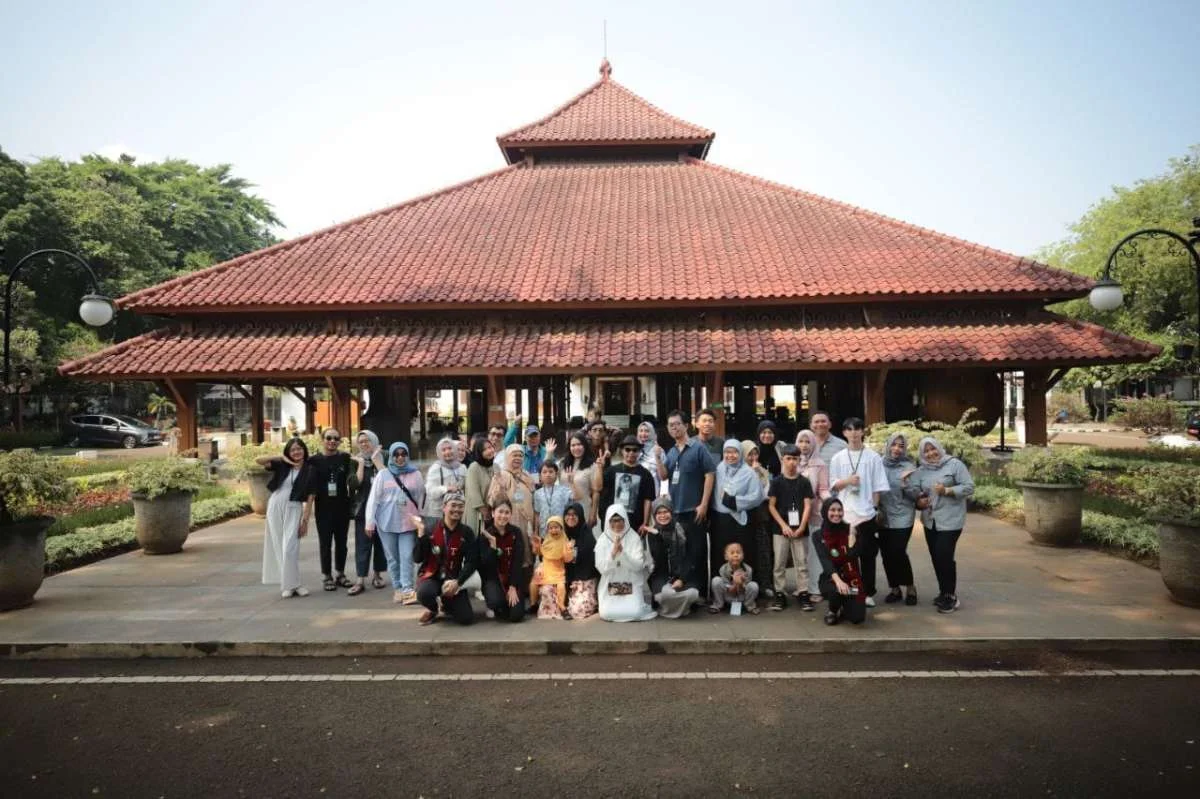
RRI.CO.ID, Bandung - The Bandung City Administration in West Java plans to propose that the Bandung City Pavilion be elevated to Class A National Cultural Heritage status. The move is being considered because the historic building holds strong historical value and is closely linked to Bandung’s history, including traces of President Soekarno’s struggle.
Bandung Mayor, Muhammad Farhan, said the Bandung City Pavilion is one of the city’s heritage buildings with connections to the history of the Wiranatakusumah family and the struggle of Indonesia’s first president, Soekarno. “As a heritage building, we will later elevate its status to Class A National Cultural Heritage. One reason is that there is actually a point there connected to one of Bung Karno’s works,” said Farhan on Tuesday, August 1, 2026.
According to him, the Bandung City Pavilion also has historical significance as the former residence of the Wiranatakusumah family. The family asset was later donated to the state, giving it important historical and cultural value for Bandung.
“It was also the residence of the Wiranatakusumah family, an asset of the Wiranatakusumah family that was donated to the state,” he said.
The mayor explained that the Bandung City Pavilion is currently undergoing renovation and reorganization based on its former design. However, he said restoring the building completely using all of its original materials would not be feasible.
“The Bandung City Pavilion is now being renovated and rearranged according to its former design. Restoring it entirely with the same materials does not appear possible. Therefore, we are returning it to its original design,” he said.
He added that one important part of the pavilion’s history is its joglo structure (towering roof supported by four main central pillars), which was completely destroyed by fire during the Bandung Lautan Api (Bandung Sea of Fire) incident. The structure was rebuilt in 1956, following the Asian African Conference in Bandung.
“Its historical foundation is therefore already very strong. That is why we are restoring its former design and function,” he said.
As part of the reorganization process, the administration will not remove all existing facilities. One example is the swimming pool, which was previously a private facility.
“It would be impossible to demolish everything, for example the swimming pool. We will convert it from a private swimming pool into a hydrotherapy pool that will be used for community-based rehabilitation, particularly for those requiring physical rehabilitation,” he said.
In addition to the exterior, improvements will also be made to the pavilion’s interior. This is considered important because once the building’s status is upgraded as a cultural heritage site, changes to its interior cannot be made arbitrarily.
At present, the pavilion remains the official residence of the Bandung mayor. However, once it is designated as a heritage site, its interior will be arranged to closely resemble its original condition.
| Baca juga: North Sumatra-Malaysia Deepen IMT-GT Ties |
“The pavilion is currently still the mayor’s official residence. Once it becomes a cultural heritage site, its interior can no longer be changed freely. We are therefore arranging it so that the interior closely reflects the original, although it cannot be 100 percent authentic,” he said.
In addition to preserving its historical value, the administration plans to turn part of the pavilion into a gallery displaying paintings and visual artworks by Bandung artists. “One part of it will later be presented as a gallery for paintings and visual arts by Bandung artists. That is very important,” he said.
Regarding the mayor’s future residence after the pavilion is no longer used as the official residence, the administration has a number of assets that could be used. Farhan said the administration would look for another property to serve as the mayor’s official residence. Assets whose lease periods have expired could also potentially be returned and used for that purpose.
“We will look for a house. We do not yet know where it will be, but we have many assets. Those whose leases have ended will be returned for that purpose,” he said.
He assured that the mayor’s new residence would not have cultural heritage status, allowing it to be arranged according to the needs of its occupants. “We will ensure that it is not a cultural heritage site. The character and preferences of the mayor and his family can then be left entirely to them,” he concluded. (Annaila Azzahra-EN)
News Recomendation
Loading latest news.....